

.png)
Summary
- Most virtual sales training fails, leaving reps underprepared, with only 16-34% of sellers considered effective in virtual selling.
- The solution is AI-powered roleplay, which provides a "flight simulator for sales" where reps can practice core conversations and handle realistic objections 24/7.
- Key techniques include using AI for instant feedback, certifying reps on new messaging, and scaling coaching by replicating the winning behaviors of top performers.
- Platforms like Hyperbound's AI Sales Roleplays enable teams to build these skills through realistic, on-demand practice and automated coaching.
In today's distributed work environment, virtual is here to stay—but most sales training hasn't kept pace. Many organizations still rely on passive webinars and outdated methodologies that fail to build real-world skills. The result? According to research from RAIN Group, only 16% to 34% of sellers are effective in critical virtual selling areas, with buyers reporting challenges like poor engagement (23%) and ineffective collaboration (34%).
If you've tried using generic AI tools like ChatGPT for sales practice, you've likely experienced the frustration of an AI that "just agrees and tells me why I'm right" rather than providing realistic pushback. This disconnect between training and reality leaves your team underprepared for actual customer conversations.
The solution? AI-powered roleplays that function as a "flight simulator for sales," allowing reps to practice, fail, and learn in a safe, repeatable environment. Let's explore seven practical techniques to integrate AI roleplays into your virtual sales training program and drive measurable performance improvements.
.png)
1. Master Core Conversations with Hyperbound's On-Demand Roleplay Simulations
The foundation of effective virtual sales training is providing reps with 24/7 access to practice environments that cover the entire sales cycle. This is especially valuable when transitioning reps from inbound to outbound roles, where structured practice tools can dramatically accelerate skill development.
Implementation Steps:
- Build a Scenario Library: Use a platform like Hyperbound's AI Sales Roleplays to create a comprehensive library of simulations that mirror your real sales process.
- Cover the Full Cycle: Ensure your library includes diverse roleplay types:
- Outbound: Cold calls, navigating gatekeepers, leaving effective voicemails
- Inbound & Discovery: Handling warm leads, asking effective discovery questions
- Mid-Cycle: Running product demos, presenting proposals
- Post-Sales: Conducting renewal conversations, identifying upsell opportunities
- Customize to Your Business: Tailor scenarios with custom AI buyer personas that reflect your specific Ideal Customer Profiles (ICPs).
Expected Outcomes:
- Reduced Ramp Time: New hires get quota-ready faster
- Improved Consistency: Every rep masters your core messaging and sales methodology
- Increased Confidence: Reps enter real calls feeling more prepared and less anxious
2. Build Resilience with Realistic Objection Handling Drills
The true test of a sales rep isn't the easy call—it's how they handle pushback. Generic AI often fails here with responses that are too agreeable or unrealistic. Advanced AI simulations can recreate the pressure and unpredictability of real objections.
Implementation Steps:
- Identify Top Objections: Crowdsource the most common and difficult objections your team faces (e.g., "We don't have budget," "We're happy with our current provider").
- Create Dynamic Scenarios: Design roleplays where the AI doesn't just state the objection but pushes back on the rep's response, asks tough follow-up questions, and displays skepticism.
- Vary the Difficulty: Use a tool that allows you to adjust the AI persona's difficulty level. As one sales professional noted, the ability to "switch up the voices and difficulty level" was crucial for making practice feel realistic.
Expected Outcomes:
- Reps move from memorizing scripts to internalizing frameworks for handling any objection
- Increased confidence and composure when faced with unexpected resistance on live calls
3. Drive Continuous Improvement with Instant, AI-Powered Feedback
Learning happens fastest with immediate feedback. In a virtual environment, reps can't wait days for a manager to review a call. AI coaching provides instant, objective feedback that accelerates the learning loop.
Implementation Steps:
- Leverage AI Scorecards: Implement a tool like Hyperbound's AI Coaching that automatically scores every roleplay against your custom sales methodology.
- Track Key Metrics: The AI should provide data on talk-to-listen ratios, questions asked, key talk tracks mentioned, and how effectively objections were handled.
- Gamify the Experience: Use leaderboards to create friendly competition around skill development and practice frequency. This fosters a culture of continuous improvement and engagement.
Expected Outcomes:
- Accelerated Skill Development: Reps can self-correct and improve on their own time
- Data-Driven Coaching: Managers can see at a glance where individual reps and the team as a whole are struggling
- Empowered Reps: Motivated reps can take ownership of their development without being solely reliant on their manager
4. Scale Manager Coaching and Replicate Top Performers
Free up sales managers from the tedious task of call reviews so they can focus on high-impact strategic coaching. Use AI to identify both coachable moments and winning behaviors that can be scaled across the team.
Implementation Steps:
- Automate Call Analysis: Use a tool like Hyperbound's AI Real Call Scoring to analyze both practice roleplays and real customer conversations. The AI can automatically score calls and create summaries, highlighting key moments and objections.
- Identify "Winning Behaviors": The AI analyzes the calls of your top reps to identify the specific language, questions, and techniques that lead to success.
- Turn Insights into Practice: Create new AI roleplay scenarios based on these identified winning behaviors, allowing the rest of the team to practice what works best.
Expected Outcomes:
- Increased Coaching Capacity: Managers can coach more effectively and strategically
- Democratized Success: The skills of your A-players are codified and scaled across the entire team
- Consistent Playbook Adherence: Ensure everyone is executing the sales methodology correctly
5. Perfect Pre-Call Preparation for High-Stakes Meetings
For mission-critical calls (e.g., a final demo, a pricing negotiation), reps need more than a quick review of their notes. A final "dress rehearsal" with a tailored AI persona can be the difference between winning and losing a deal.
Implementation Steps:
- Create a "Deal-Specific" Persona: Before a big call, have the rep use a custom scenario builder to create an AI persona based on the specific prospect they're meeting. Input the prospect's title, known pain points, and potential objections.
- Run the Full Simulation: The rep can practice their opening, the key parts of their presentation, and how they'll handle the exact objections they anticipate.
- Review and Refine: The rep can review the AI's feedback on the practice run and fine-tune their approach just before the live call.
Expected Outcomes:
- Dramatically increased confidence and polish in high-stakes situations
- Higher conversion rates on key deals and final-stage opportunities
6. Certify Readiness for New Product & Messaging Rollouts
When you launch a new product or change your messaging, "telling" the sales team is not enough. You need to ensure they can articulate it effectively. AI roleplays provide a scalable way to certify readiness.
Implementation Steps:
- Develop a Certification Program: As part of any new go-to-market initiative, create a mandatory set of AI roleplay scenarios covering the new messaging, features, and competitive positioning.
- Set a Performance Benchmark: Reps must complete the roleplays and achieve a minimum score on the AI-powered scorecard to become "certified."
- Track Completion and Proficiency: Sales enablement leaders can use the analytics dashboard to track who is certified and identify individuals who may need additional coaching before speaking with customers. This integrated approach is key, with research showing that 56% of highly effective go-to-market organizations implement simulated role-play tools.
Expected Outcomes:
- Faster, Consistent Adoption: Ensure new messaging is rolled out correctly from day one
- Measurable Readiness: Move from "hope" to data-driven confidence that your team is prepared
- Reduced Risk: Prevent reps from using old or incorrect messaging with prospects
7. Sharpen Post-Sales Skills for Retention and Expansion
Sales training shouldn't stop after the initial deal is closed. Customer Success and Account Management teams face their own set of challenging conversations that directly impact revenue retention and growth.
Implementation Steps:
- Build a Post-Sales Curriculum: Use a specialized tool like Hyperbound's AI Post-Sales Roleplays to create scenarios for CSMs and AMs.
- Focus on Critical Conversations: Design roleplays around:
- Renewals: Navigating price increases and demonstrating ongoing value
- Upselling: Identifying expansion opportunities during QBRs
- Handling Difficult Customers: De-escalating complaints and managing unmet expectations
- Simulate Customer Health Scenarios: Create AI personas that represent different types of customers: a happy advocate, a customer at risk of churning, or one who is a prime candidate for an upsell.
Expected Outcomes:
- Reduced Customer Churn: CSMs are better equipped to handle difficult renewal conversations
- Increased Net Revenue Retention (NRR): AMs become more skilled at identifying and closing expansion opportunities
- Improved Customer Satisfaction: A more skilled post-sales team leads to a better overall customer experience
A Framework for Measuring Virtual Training Effectiveness
To justify investment and drive continuous improvement, you must measure the impact of your training. A robust measurement framework looks at both leading and lagging indicators:
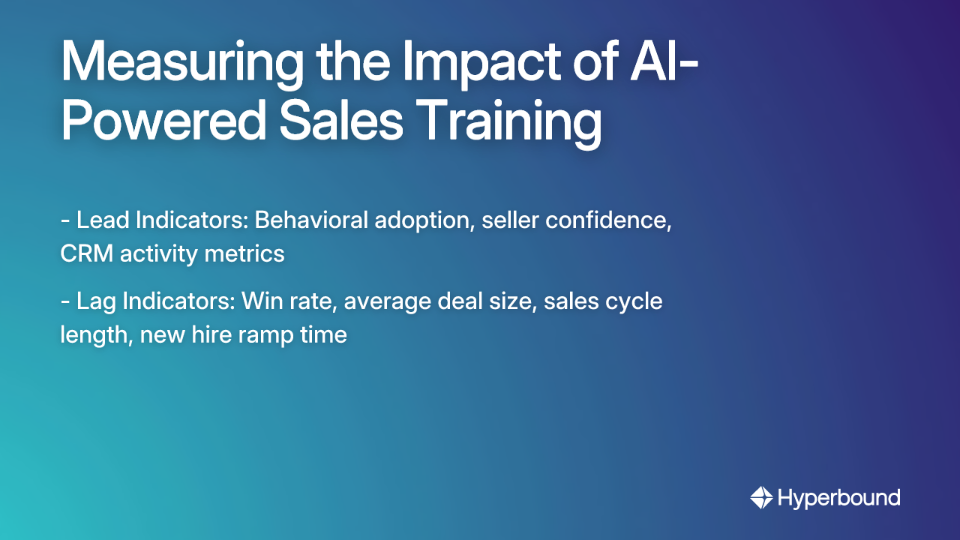
Lead Indicators (Are behaviors changing?):
- Behavioral Adoption: Track scores and improvement over time within the AI roleplay platform
- Seller Confidence Surveys: Measure self-reported confidence in specific skills before and after training
- CRM Activity Metrics: Look for correlations between practice and increases in key activities
Lag Indicators (Is it impacting the business?):
- Win Rate: The ultimate measure of sales effectiveness
- Average Deal Size: Are reps getting better at selling value?
- Sales Cycle Length: Are reps moving deals through the pipeline more efficiently?
- New Hire Ramp Time: How quickly do new reps get to full productivity?
Practice Is the New Presentation
In the world of virtual employee sales training, the most effective programs are shifting from passive information delivery to active skill development. The seven techniques outlined provide a roadmap for this transformation.
AI roleplays offer a scalable, measurable, and engaging way to ensure your remote sales team is always prepared for the next conversation. They solve the critical problem of providing realistic, on-demand practice that builds real muscle memory.
Don't let your virtual training be a forgotten recording. Turn it into a competitive advantage.
Frequently Asked Questions
What is AI-powered sales roleplay?
AI-powered sales roleplay is a training technology that uses artificial intelligence to simulate realistic customer conversations. It acts as a "flight simulator for sales," allowing reps to practice calls, handle objections, and refine their messaging in a safe, on-demand environment without needing a manager or peer to participate.
Why is AI roleplay better than traditional virtual sales training?
AI roleplay is more effective because it provides active, repeatable practice rather than passive learning. Unlike webinars, it's interactive. Unlike peer roleplays, it's available 24/7, offers unbiased feedback, and can be scaled consistently across an entire sales organization, ensuring every rep masters the core playbook.
How does AI help sales reps handle objections?
AI helps reps master objection handling by providing a space to practice without risk. You can create scenarios with the most common and difficult objections your team faces. The AI can be programmed to be skeptical and ask tough follow-up questions, moving reps from memorizing scripts to internalizing effective frameworks for any pushback they encounter.
How can AI roleplays be customized for a specific business?
Effective AI roleplay platforms allow for deep customization. You can tailor scenarios by creating custom AI buyer personas that match your Ideal Customer Profiles (ICPs), inputting your specific product information, common objections, and integrating your company's unique sales methodology into the AI's scoring and feedback system.
What makes a specialized AI sales tool different from a generic AI like ChatGPT?
A specialized AI sales training tool is purpose-built for skill development, while a generic AI is designed for broad conversation. Specialized tools provide realistic pushback, score performance against a custom sales framework, track progress over time, and provide analytics for managers. Generic AIs often agree with the user and cannot provide the structured, objective feedback needed for effective coaching.
Who on a sales team can benefit from AI roleplay?
The entire revenue team can benefit. New hires can use it to reduce ramp time and build foundational skills. Tenured reps can refine techniques for high-stakes meetings or new product launches. Post-sales teams, like Customer Success and Account Managers, can practice renewal conversations, upsell pitches, and handling difficult customers.
How do you measure the ROI of AI-powered sales training?
The ROI is measured using a combination of leading and lagging indicators. Leading indicators show behavioral change, such as improved scores in the AI platform and increased seller confidence. Lagging indicators measure business impact, including increased win rates, larger average deal sizes, shorter sales cycles, and faster new hire ramp times.

Ready to build a top-performing virtual sales team? See a demo of Hyperbound's AI Sales Coaching Platform and experience the future of sales training today.
Book a demo with Hyperbound


