.png)


.png)
Summary
- Sales confidence isn't an innate trait but a skill built through systematic preparation, consistent practice, and the right mental frameworks.
- Disorganization is a major confidence killer; a well-maintained CRM is crucial, as poor tracking can result in losing up to 30% of sales opportunities.
- Key confidence-building tools include flexible sales scripts for structure, call recording for self-review, and mental techniques like visualization to reduce anxiety.
- The most direct path to confidence is through realistic practice, which can be achieved at scale using tools like Hyperbound's AI Sales Roleplays for risk-free coaching and feedback.
You've got the prospect's number ready to dial. Your finger hovers over the call button. And suddenly, that familiar knot tightens in your stomach. "What if I fall flat on my face?" "What if they ask something I can't answer?" "What if they reject me immediately?"
If this scenario feels painfully familiar, you're not alone. Even experienced sales professionals admit they "used to be scared of cold prospecting" before developing systems to overcome that fear. The truth is, confidence isn't something salespeople are born with—it's a skill that can be systematically built with the right tools and practices.
The good news? You can transform that pre-call anxiety into unstoppable confidence by preparing with proven tools that eliminate uncertainty and boost your performance. Let's explore the top 10 tools that will have you picking up the phone with excitement rather than dread.
1. AI Sales Coaching Platforms (Hyperbound)
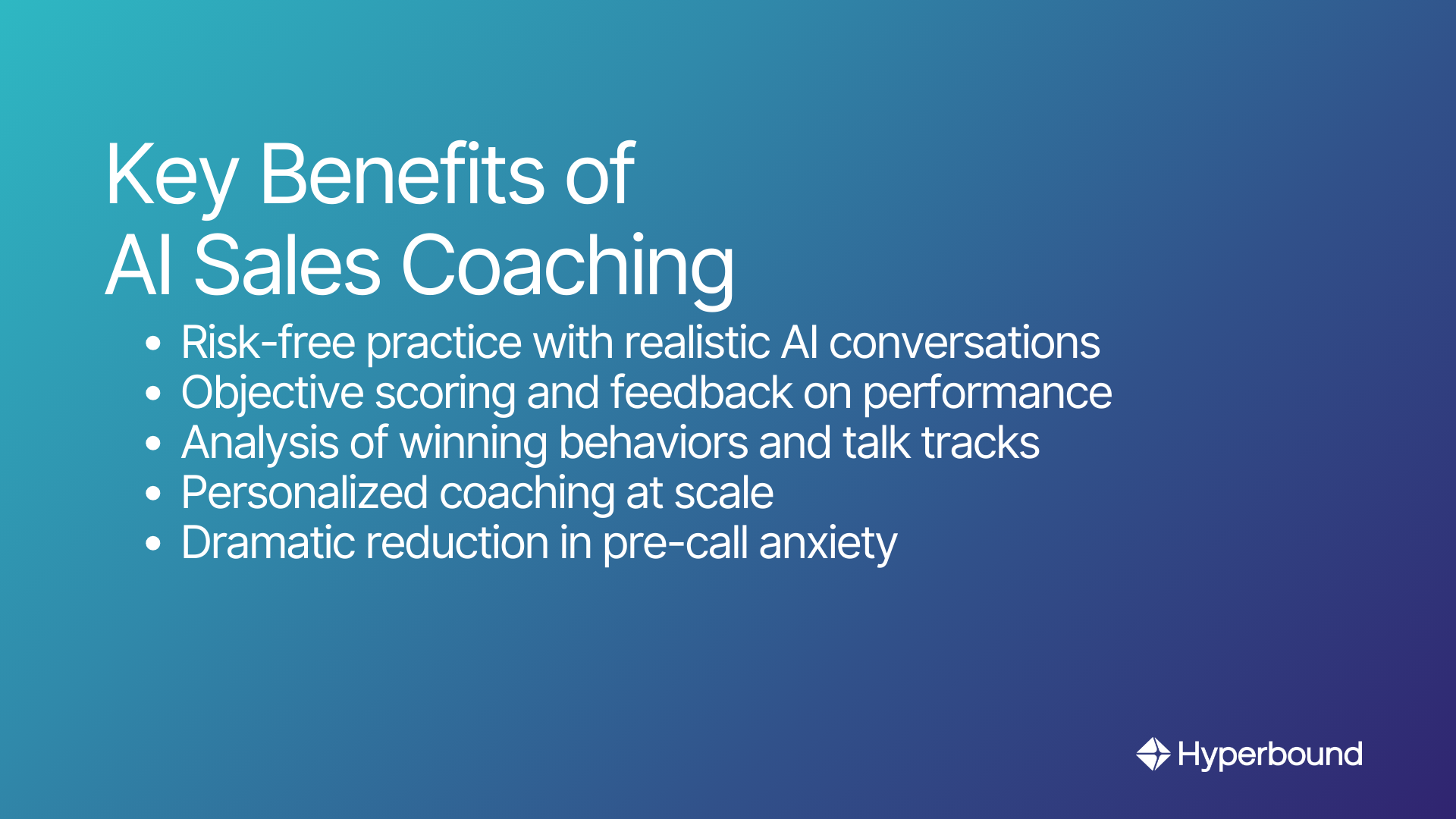
The most direct path to confidence is through realistic, risk-free practice—and nothing delivers this more effectively than AI-powered sales coaching platforms.
Hyperbound stands at the forefront of this technology, offering an advanced AI Sales Coaching platform that transforms how sales teams practice and perform. What makes it particularly powerful for building pre-call confidence is its suite of integrated tools:
AI-Powered Roleplays: Hyperbound allows you to practice critical conversations—from cold calls and discovery to demos and objection handling—with AI buyer personas that respond dynamically and realistically. This creates a safe environment to master your talk tracks without risking live deals.
As one sales manager noted: "When my reps practice with Hyperbound's AI roleplays before important calls, their confidence increases dramatically because they've already handled similar objections multiple times."
Objective Scoring & Feedback: The platform automatically scores your practice sessions against your custom methodology, highlighting areas of strength and opportunities for improvement. This data-driven feedback builds confidence through competence—you know exactly what you're doing well and where to improve.
Winning Behavior Analysis: By analyzing your team's actual sales calls, Hyperbound identifies the specific techniques and talk tracks that make your top performers successful. Following a proven playbook dramatically boosts a rep's belief that they can succeed too.
For those crucial calls where confidence matters most, having practiced extensively with AI simulations provides the mental preparation necessary to perform at your best.
2. A Well-Maintained CRM
Confidence crumbles in the face of uncertainty. Walking into a call without knowing your prospect's history, previous interactions, or potential pain points is a recipe for anxiety and stumbling conversations.
A properly maintained CRM system serves as your confidence foundation by ensuring you're always prepared with the right information. According to user research, "people who don't track opportunities lose 30% of their sales opportunities"—a sobering statistic that highlights how organization directly impacts results.
Before any call, review your CRM to:
- Refresh yourself on previous interactions and follow-up items
- Review notes on the prospect's pain points and priorities
- Check for recent company news or developments
- Identify potential upsell or cross-sell opportunities
This preparation eliminates the fear of being caught off-guard and allows you to focus on building rapport rather than scrambling to remember basic details.
3. A Flexible Sales Script
Even the most experienced sales professionals rely on frameworks to guide their conversations. A flexible sales script isn't about robotically reciting lines—it's about having a proven structure that frees your mind to focus on listening and responding authentically.
Effective scripts typically:
- Provide clear opening statements that quickly establish relevance
- Include common objection responses so you're never caught flat-footed
- Offer transition phrases to smoothly guide conversations
- Include powerful questions that drive meaningful discovery
When you have these elements prepared, you eliminate the "what do I say next?" panic that can derail your confidence mid-call. The key is to internalize the framework while allowing for natural conversation, rather than reading word-for-word.
4. Call Recording and Self-Review
Nothing builds confidence like hearing yourself succeed. Recording your calls (both practice and real) provides objective evidence of your abilities and clear direction for improvement.
This powerful tool works in several ways:
Identify Confidence Killers: Listen back to your calls to spot hesitation, overuse of filler words, or moments where your tone betrayed uncertainty. These subtle cues can undermine your message and are often only noticeable upon review.
Recognize Strengths: Hearing yourself successfully navigate a tough objection or clearly explain a complex feature reinforces what you're doing right. These wins build a reservoir of positive evidence to draw confidence from.
Track Improvement: Regular recording creates a timeline of your progress, showing how far you've come and building confidence through proof of growth.
Many platforms, including Hyperbound's AI Real Call Scoring, can automate this process by analyzing your calls and providing actionable insights on areas like talk ratio, question quality, and objection handling—giving you data-driven feedback to fuel your improvement.
5. Visualization and Mental Rehearsal
Elite athletes have long used visualization techniques to prepare for competition—and salespeople can benefit from the same practice. This tool from the psychology of selling helps reprogram the "theater you play in your mind" that influences your real-world performance.
Before important calls:
- Find a quiet space and close your eyes
- Breathe deeply to center yourself
- Vividly imagine the entire call unfolding successfully
- See yourself confidently delivering your opening, asking insightful questions, handling objections with ease, and securing the next step
- Pay attention to details—your confident tone, the prospect's positive responses, the feeling of accomplishment
As one sales professional shared on Reddit, "I imagined myself being successful at the doors" before becoming a top-performing door-to-door representative. This mental preparation primes your brain for success and helps transform your internal state from fear to empowerment.
6. The "Alter Ego" Technique
Sometimes, the fastest way to feel confident is to step into the shoes of someone who already embodies that trait. The "alter ego" technique, popularized by performance coaches like Tony Robbins, helps separate your personal feelings from your professional performance.
To implement this technique:
- Define an alter ego with the traits of your ideal sales persona: confident, articulate, resilient, and knowledgeable
- Give this persona a name and imagine their characteristics in detail
- Before calls, consciously "step into" this persona
- After calls, step back into your regular self and reflect on the experience
This creates psychological distance from the fear of personal rejection, making it easier to handle "no" and stay composed. One sales leader described it as "putting on your sales superhero cape"—a mental shift that allows you to perform at your peak regardless of personal insecurities.
7. A Pre-Call Research Checklist
.png)
Nothing builds confidence like knowing you've covered all your bases. A simple pre-call checklist ensures you never walk into a conversation unprepared, addressing the common fear of being caught off-guard by an informed prospect.
Your checklist might include:
- Review prospect's LinkedIn profile (role, tenure, recent activity)
- Check company website (mission, products, recent news)
- Research industry trends and key competitors
- Formulate 3-5 key discovery questions based on research
- Review similar past deals (common objections, successful approaches)
- Prepare relevant case studies or social proof
- Set clear call objectives and next steps
This structured approach ensures you have relevant talking points and can lead with insight, demonstrating credibility from the first moments of the call.
8. Peer-to-Peer Mock Call Sessions
While AI roleplay is excellent for scale and consistency, practicing with colleagues offers unique benefits that build confidence in different ways. Peer-to-peer mock calls create a supportive environment where you can:
- Receive human feedback on subtle elements like tone, pace, and emotional response
- Practice with someone who can throw unexpected curveballs, building adaptability
- Learn different approaches and techniques from observing others
- Build camaraderie that creates psychological safety for taking risks
To structure these sessions effectively: rotate roles between caller, prospect, and observer; use realistic scenarios; provide specific, actionable feedback; and record sessions for later review.
The confidence gained from successfully handling a tough objection in front of peers often transfers directly to real-world calls.
9. Mastering Body Language and Tonality
Confidence isn't just what you say—it's how you say it. Research shows that your physical state directly impacts your psychological state, creating a powerful tool for instantly boosting confidence.
Before calls:
- Stand in a "power pose" (hands on hips, shoulders back, feet planted firmly) for 2 minutes
- Practice deep, diaphragmatic breathing to center yourself and reduce anxiety
- Smile while speaking (even on phone calls) to naturally lift your voice and project confidence
- Use a voice recorder to practice delivering your opening with different tonalities until you find one that sounds authoritative without being aggressive
During video calls, maintain strong but natural eye contact, sit up straight, and subtly mirror the prospect's body language to build rapport. These physical adjustments create a feedback loop that makes you not only appear more confident but actually feel more confident.
10. A Continuous Learning Regimen
Ultimate confidence comes from knowing you're always growing and improving. A structured approach to continuous learning ensures you're constantly building competence, which naturally translates to confidence.
Effective learning habits include:
- Dedicating 30 minutes daily to sales education (books, podcasts, articles)
- Reviewing one of your recorded calls each week with a critical eye
- Seeking specific feedback from managers or mentors on one area of focus
- Studying your product and industry continuously to maintain expert status
- Tracking and celebrating improvements, no matter how small
Adopting the mindset of "viewing every call as a learning opportunity, win or lose" helps reframe failure as feedback—essential for building resilient confidence that can withstand occasional rejection.
Conclusion
Sales confidence isn't a personality trait you're born with—it's a skill you can systematically develop with the right tools and practices. By implementing these ten confidence-building tools, you can transform the fear of cold prospecting into an opportunity to learn, connect, and ultimately win.
Start by selecting one or two tools that address your specific confidence challenges. Whether it's practicing with Hyperbound's AI Sales Roleplays to master objection handling, implementing a pre-call research checklist, or developing a visualization routine, consistent application will yield noticeable results.
Remember what one successful sales professional shared: "Once you see prospecting for the awesome activity it is, you'll be unstoppable." With these tools in your arsenal, that unstoppable confidence is within your reach.
Frequently Asked Questions
How can I build confidence for sales calls?
You can build confidence for sales calls by systematically preparing, practicing, and adopting the right mindset. Key strategies include using AI sales coaching platforms for risk-free practice, maintaining a detailed CRM, using flexible sales scripts, reviewing call recordings, and employing mental techniques like visualization.
What is the most effective way to practice sales calls?
The most effective way to practice sales calls is by using AI-powered roleplay platforms like Hyperbound. These tools allow you to practice conversations against realistic AI buyer personas in a risk-free environment, providing objective scoring and instant feedback to help you master talk tracks and handle objections before engaging with actual prospects.
Why is pre-call preparation so crucial for confidence?
Pre-call preparation is crucial because it eliminates uncertainty, which is a primary source of sales anxiety. A well-researched call, supported by a pre-call checklist and CRM data, ensures you are never caught off-guard. This allows you to lead the conversation with valuable insights, demonstrate credibility, and focus on building rapport instead of scrambling for information.
How can I overcome the fear of sales rejection?
Overcoming the fear of rejection involves reframing your mindset and using specific psychological techniques. Methods like the "alter ego" technique create psychological distance from personal feelings. Additionally, viewing every call as a learning opportunity, rather than a win-or-lose scenario, helps transform rejection from a negative event into valuable feedback for growth.
Should I use a sales script?
Yes, you should use a flexible sales script as a framework, not a rigid set of lines to recite. An effective script provides a proven structure with strong opening statements, common objection responses, and transition phrases. This frees up your mental energy to listen actively and respond authentically, preventing the "what do I say next?" panic that can undermine confidence.
What is an AI Sales Coaching platform?
An AI Sales Coaching platform is a tool that uses artificial intelligence to help sales professionals practice and improve their skills. Platforms like Hyperbound offer features such as AI-powered roleplays for practicing conversations, automated scoring of both practice and real calls, and analysis of winning behaviors to create a data-driven, personalized coaching experience at scale.
Book a demo with Hyperbound


