.png)


.png)
Summary
- Measure What Matters: Modern AI can now objectively measure the 10 most critical soft skills in sales calls—like empathy and active listening—with data showing AI assessments are twice as effective as traditional methods.
- Data-Driven Coaching: By analyzing tone, pace, and language, AI provides concrete insights that move coaching beyond subjective feedback, helping identify specific areas for rep improvement.
- From Insight to Mastery: Use AI-powered platforms to provide objective call scoring, personalized coaching, and realistic AI Sales Roleplays for reps to practice and master these essential skills.
Sales managers know a great call when they hear one, but pinpointing exactly what made it great—and scaling that across a team—is a constant challenge. You're often left with subjective feedback, time-consuming call reviews, and reps who struggle to get actionable insights from call transcripts.
For years, sales AI was limited to basic keyword tracking and talk ratios. But today's AI can do something far more powerful: measure the human elements that truly drive sales success. The very soft skills that many thought were impossible to quantify.
As Forbes highlights, AI isn't replacing salespeople; it's supercharging their most human skills. With AI handling data analysis, the ability to connect, empathize, and build trust becomes more critical than ever.
Let's explore the top 10 soft skills that AI can now objectively measure in every sales call, and how these insights can transform your coaching strategy.
Why Measuring Soft Skills is a Game-Changer
Traditional sales coaching relies heavily on subjective manager feedback, limited call sampling, and inconsistent evaluation methods. This approach is neither scalable nor reliably accurate.
AI-powered assessment changes everything. Research shows that AI assessments have a 0.38 correlation in competency evaluation, significantly higher than the 0.16-0.21 for traditional methods. This data-driven approach works through:
- Natural Language Processing (NLP): Analyzes words, sentence structure, and sentiment
- Machine Learning (ML): Identifies patterns in speech that correlate with successful outcomes
- Behavioral Analytics: Tracks specific conversational indicators like talk ratios, pace, and tone
With these technologies working in concert, AI can now measure the following critical soft skills with remarkable precision:
.png)
The Top 10 Soft Skills AI Can Now Measure in Sales Calls
1. Active Listening
What it is: More than just being quiet; it's being fully present to understand the prospect's core needs, pains, and motivations. As one sales professional noted on Reddit, "Too many sales reps don't know when to be quiet and let their customer talk."
How AI Measures It:
- Talk-to-Listen Ratio: Calculates the percentage of time the rep speaks versus the prospect
- Interruption Rate: Flags instances where the rep cuts off the prospect
- Clarifying Questions: Identifies the use of open-ended questions that encourage the prospect to elaborate
- Keyword & Concept Playback: Detects if the rep repeats key terms or concepts mentioned by the prospect
Why it Matters: Active listening builds trust, uncovers hidden needs, and prevents reps from pitching solutions to the wrong problems. It's the foundation of consultative selling.
2. Empathy
What it is: The ability to understand and share the feelings of the prospect. One successful sales rep shared, "Many deals I've closed is because I tend to think a lot about this [empathy]."
How AI Measures It:
- Tone Analysis: Evaluates vocal tone for warmth, concern, and sincerity
- Empathetic Language Detection: Scans for phrases like "I understand how that must be challenging" or "I can see why you'd feel that way"
- Response Timing: Measures if the rep pauses appropriately after a prospect shares a frustration
Why it Matters: Empathy transforms a transactional pitch into a consultative partnership. It signals to prospects that you genuinely care about solving their problems, not just making a sale.
3. Clarity of Communication
What it is: Articulating value propositions, product features, and next steps in a simple, concise, and easy-to-understand manner.
How AI Measures It:
- Pace of Speech: Measures words per minute to identify reps who speak too quickly or too slowly
- Filler Word Usage: Tracks the frequency of words like "um," "ah," and "you know"
- Jargon Detection: Flags the use of industry or internal jargon that a prospect might not understand
- Question-to-Statement Ratio: Ensures the conversation is a dialogue, not a monologue
Why it Matters: A clear message is a persuasive message. Confusion leads to inaction and lost deals.
4. Confidence
What it is: Projecting belief in oneself, the product, and the value being offered.
How AI Measures It:
- Vocal Tone & Pitch: Analyzes vocal pitch for steadiness and avoids uptalk (ending statements like questions)
- Pacing & Pauses: Measures confident, deliberate pacing versus nervous, rushed speech
- Hedging Language: Flags phrases that undermine authority, such as "I think maybe we can..." or "It's kind of like..."
Why it Matters: Prospects buy from people who are confident in their solutions. A lack of confidence erodes trust and creates doubt in the prospect's mind.
5. Adaptability
What it is: The ability to pivot your strategy, messaging, or approach in real-time based on the prospect's reactions, questions, or objections.
How AI Measures It:
- Pivoting After Objections: Tracks how a rep responds after a prospect raises a concern
- Question Response Patterns: Analyzes if the rep can handle unexpected questions smoothly
- Talk Track Adherence vs. Deviation: Measures when a rep appropriately deviates from a playbook to personalize the conversation
Why it Matters: Every prospect is different. A rigid, one-size-fits-all approach is ineffective in modern sales, where buyers expect personalization.
6. Negotiation Skills
What it is: The art of finding a mutually beneficial agreement, especially around pricing, terms, and scope.
How AI Measures It:
- Dialogue Dynamics: Analyzes the back-and-forth patterns to determine who is leading the conversation
- Concession Tracking: Identifies when and how a rep makes concessions
- Value Reinforcement: Detects if the rep effectively ties price back to value and ROI before discussing discounts
Why it Matters: Effective negotiation protects margins while ensuring the deal is a win for both sides. It's the difference between profitable growth and racing to the bottom on price.
7. Problem-Solving
What it is: Moving beyond feature-dumping to act as a consultant who diagnoses a problem and presents a tailored solution.
How AI Measures It:
- Solution-Oriented Language: Identifies when a rep frames features as solutions to specific pains mentioned by the prospect
- Handling Objections as Problems: Analyzes whether reps treat objections as roadblocks or as problems to be solved collaboratively
- Next Steps Clarity: Measures if the rep clearly outlines the solution path
Why it Matters: Customers don't buy products; they buy solutions to their problems. Problem-solving positions the rep as a trusted advisor rather than just another vendor.
8. Persuasiveness
What it is: The ability to effectively influence a prospect's thinking and guide them toward a decision.
How AI Measures It:
- Positive Keyword Tracking: Monitors prospect language for positive signals following a rep's statements
- Use of Social Proof & Case Studies: Detects when a rep uses success stories or data to back up claims
- Call-to-Action Success Rate: Tracks how often a prospect agrees to the next step proposed by the rep
Why it Matters: Persuasion is the engine of sales, turning interest into commitment and driving deals forward.
9. Relationship Building
What it is: Establishing rapport and trust to build a long-term partnership rather than a one-time transaction.
How AI Measures It:
- Rapport-Building Questions: Identifies non-transactional questions about the prospect's role, company, or industry
- Sentiment Trend Analysis: Tracks the overall sentiment of the call from start to finish
- Follow-Up Consistency: In CRMs, AI can track patterns of consistent, value-driven follow-ups mentioned in calls
Why it Matters: People buy from people they know, like, and trust. Strong relationships lead to higher close rates, larger deal sizes, and more referrals.
10. Cultural Competence
What it is: Tailoring communication style, etiquette, and approach to align with the cultural norms and expectations of diverse clients.
How AI Measures It:
- Formality Level: Analyzes the level of formal vs. informal language used and assesses its appropriateness for different regions or industries
- Pacing and Silence: Measures the use of pauses and speaking pace, which can vary significantly across cultures
- Custom Keyword Sets: Can be trained to listen for region-specific phrasing to ensure respectful communication
Why it Matters: In a global market, cultural awareness prevents misunderstandings and builds stronger international relationships.
From Measurement to Mastery: Putting AI Insights into Action
Measuring these skills is only useful if you can act on the insights. Many sales professionals express "difficulty in getting actionable feedback from call transcripts." This is where modern AI coaching platforms like Hyperbound shine.
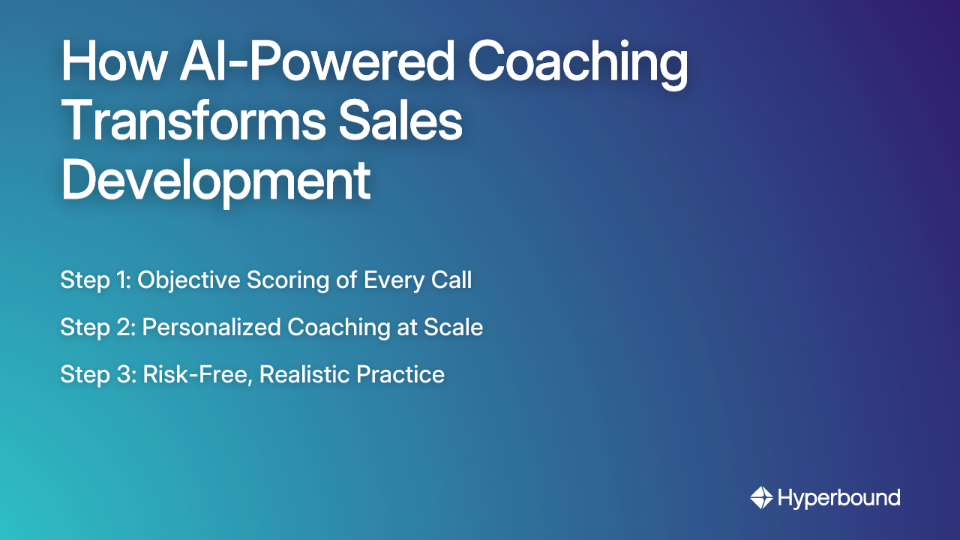
Step 1: Objective Scoring of Every Call
Instead of managers spending hours manually reviewing a tiny fraction of calls, AI can automatically score every single conversation against your specific sales methodology.
Hyperbound's AI Real Call Scoring does exactly this, generating an AI Deal Summary that highlights key moments, objections, and buying signals. This saves managers time while providing reps with immediate, unbiased feedback on all ten skills we just covered.
Step 2: Personalized Coaching at Scale
Once you know a rep struggles with "Active Listening" or "Empathy," what's next? AI Coaching provides instant, personalized feedback aligned with your playbook.
It identifies "missed opportunities" and "weak responses" and suggests specific ways to improve, turning every call into a learning opportunity without waiting for a 1:1 with a manager.
Step 3: Risk-Free, Realistic Practice
Many sales professionals express concerns that "AI simulations do not adequately prepare sellers for real-world conversations." Generic role-plays can indeed be frustrating and unrealistic.
The solution is hyper-realism. Hyperbound's AI Sales Roleplays creates practice scenarios based on your specific ICPs, products, and common objections. Reps can practice a tough negotiation or a new talk track with an AI buyer persona that responds dynamically.
This provides unlimited "at-bats" to build muscle memory before a live deal is on the line, with gamified leaderboards to motivate improvement.
The Future is a Human-AI Partnership
The goal is not to automate the salesperson but to augment their abilities. AI provides the analytical power to identify patterns and trends, freeing up sales professionals to focus on what humans do best: strategic thinking, creative problem-solving, and building genuine relationships.
Companies like Unilever have already seen the power of AI in skill assessment, reducing time-to-hire by 50% while improving candidate quality. This same technology is now transforming how we coach and develop sales talent.
Conclusion
The 10 soft skills we've explored are no longer immeasurable aspects of sales performance. Thanks to AI, sales leaders can now diagnose, coach, and develop these critical abilities with data-driven precision.
The most successful sales organizations will be those that embrace this human-AI partnership—using technology to measure and enhance the very human skills that drive connection, trust, and ultimately, closed deals.
Frequently Asked Questions
How does AI measure subjective soft skills like empathy in sales calls?
AI measures soft skills by analyzing multiple data points in a conversation. For empathy, it evaluates vocal tone for warmth and sincerity, detects empathetic phrases (e.g., "I understand that's a challenge"), and measures response timing to ensure reps are listening, not just waiting to speak. This combination of Natural Language Processing (NLP) and tonal analysis provides an objective score for skills that were once purely subjective.
What is the advantage of AI sales coaching over traditional call reviews?
The primary advantage is scalability and objectivity. AI can analyze 100% of sales calls, not just a small sample, providing consistent, unbiased feedback for every rep. This saves managers hours of manual review time and ensures that coaching is based on comprehensive data rather than a few cherry-picked examples.
Can AI help new sales reps ramp up faster?
Yes, AI significantly accelerates the onboarding process. New reps can use AI-powered roleplays to practice handling objections and mastering talk tracks in a risk-free environment. Additionally, instant feedback on their live calls helps them correct mistakes and adopt best practices much faster than waiting for a weekly 1:1 with their manager.
Will using AI to monitor calls negatively affect team morale?
When positioned correctly, AI coaching enhances morale. Frame it as a development tool, not a surveillance tool. Because the feedback is objective and data-driven, it's often perceived as fairer than subjective manager feedback. It empowers reps with personalized insights to help them improve their skills and close more deals, which directly contributes to their success and job satisfaction.
How are AI sales roleplays different from traditional role-playing?
AI sales roleplays offer hyper-realistic, scalable, and consistent practice. Unlike traditional role-plays with a manager, AI personas can be customized to your exact buyer, product, and common objections. Reps can practice anytime, as much as they want, receiving instant feedback and building muscle memory without taking up a manager's valuable time.
What are the first steps to implementing AI-powered soft skill analysis?
The first step is to identify your goals and the specific skills you want to improve. Next, you can partner with a platform like Hyperbound to integrate with your existing call systems (like your dialer or CRM). The AI is then configured to your sales methodology and playbooks, allowing it to start analyzing calls and providing actionable insights within a short period.
Ready to stop guessing and start coaching with confidence? See how Hyperbound turns your team's conversations into your biggest competitive advantage through AI-powered analysis and coaching that develops these essential soft skills at scale.
Book a demo with Hyperbound


