.png)


.png)
Summary
- Skill gaps are a growing problem, with 69% of HR professionals reporting them, and they are the root cause of most team performance issues.
- Proactively identify performance issues by spotting 7 early warning signs, such as subtle changes in communication or decreased initiative, before they escalate.
- Conduct a meaningful skills gap analysis by tying it to business goals and using a mix of self-assessments, peer feedback, and objective competency tests.
- Leverage AI-powered tools to objectively measure skills and scale coaching. Hyperbound's AI Sales Roleplays provide data-driven insights into your team’s capabilities, helping you close critical performance gaps.
A project derails. There's duplicated work, delays, and a team quietly frustrated because no one was sure what 'done' really meant. The root cause wasn't a lack of effort, but a miscommunication about ownership and expectations—a performance issue that was invisible until it was too late.
Sound familiar? You're not alone. Performance issues rarely stem from laziness or incompetence. More often, they're symptoms of something deeper: growing gaps between the skills your team has and the skills they need to succeed.
These skill gaps are becoming increasingly common. According to a 2023 Wiley survey, the percentage of HR professionals facing skills gaps surged from 55% to 69% in just one year. Even more concerning, the skills required for jobs have changed by 25% since 2015, a figure expected to double by 2027. That means even your top performers can develop skill gaps if you're not paying attention.
In this guide, you'll learn how to spot the early warning signs of performance issues and conduct a meaningful skills gap analysis to address root causes before they impact your team's success.
The Silent Saboteurs: 7 Early Warning Signs of Performance Issues
.png)
Performance problems rarely appear overnight. Instead, they begin with subtle behavioral shifts that, if noticed early, allow for proactive intervention. Here are seven key warning signs to watch for:
1. Subtle Changes in Communication Patterns
An employee who was once vocal in meetings now gives shorter responses, avoids eye contact, or participates less in discussions. This withdrawal often signals discomfort with tasks or responsibilities they're struggling with.
2. Inconsistent Quality Standards
The work technically meets minimum requirements but lacks its usual detail, polish, or creative spark. This inconsistency can indicate a team member is disengaged or overwhelmed, affecting their focus and attention to detail.
3. Decreased Initiative and Problem-Solving
Watch for a shift from proactive problem-solving to passively waiting for instructions. This often points to disengagement or feeling overwhelmed by challenges, rather than a lack of capability.
4. Changes in Peer Relationships
Noticeable friction with colleagues, a reluctance to collaborate, or withdrawal from team activities can signal underlying stress or difficulty with the interpersonal aspects of work.
5. Productivity Pattern Shifts
Small but consistent decreases in output or efficiency that might go unnoticed without a baseline. These subtle drops in performance metrics often precede larger issues.
6. Increased Absence from Normal Routines
An employee starts missing informal check-ins, is less punctual for meetings, or seems generally less present. This can indicate decreased engagement or growing anxiety about performance.
7. Resistance to Feedback or Coaching
Becoming defensive in response to constructive feedback or avoiding development discussions. As one manager on Reddit pointed out, employees often have "zero idea there was an issue in the first place," making them resistant when feedback finally arrives.
To effectively catch these warning signs, establish clear performance baselines for each team member and implement weekly performance pulse checks—brief, informal check-ins designed to stay attuned to team dynamics before small issues become major problems.
From Observation to Action: Conducting a Meaningful Skills Gap Analysis
Once you've observed potential performance issues, the next step is diagnosis. A skills gap analysis is your primary tool, but its effectiveness depends entirely on how you execute it. Many managers create what one Reddit user called a "vanity chart"—impressive-looking but ultimately useless—or get lost in excessive granularity that makes the data unactionable.
Here's how to conduct an analysis that actually leads to improvement:
Step 1: Define Your Scope & Link to Business Goals
Start by defining the scope of your analysis: are you looking at an individual, a team, or the entire organization? Whatever you choose, make sure it connects directly to business objectives.
As a manager on Reddit wisely noted, "The point of the exercise is to identify knowledge gaps that are relevant to your business."
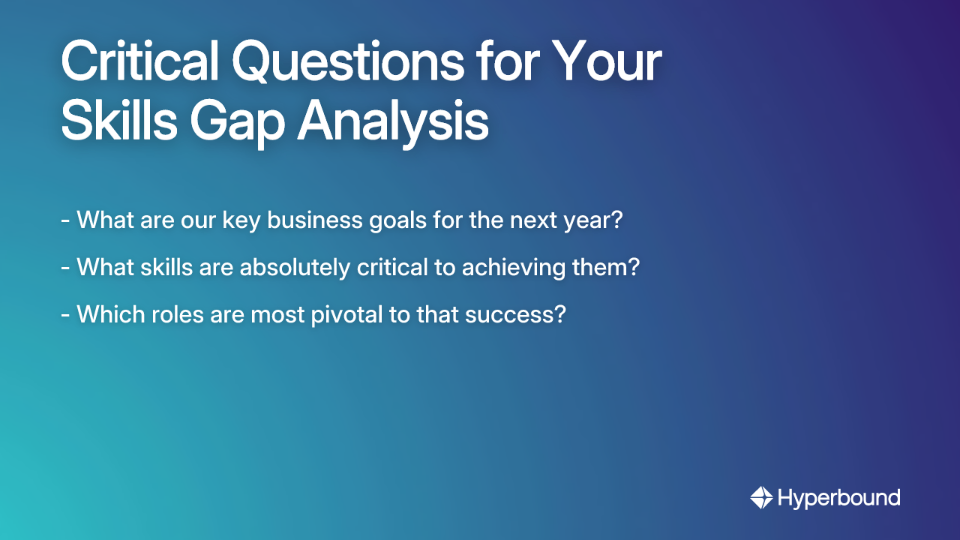
Ask these critical questions:
- What are our key business goals for the next year?
- What skills are absolutely critical to achieving them?
- Which roles are most pivotal to that success?
This focused approach ensures you're not just collecting data for data's sake, but identifying gaps that actually matter.
Step 2: Gather Your Data (The Right Way)
This is where many skills gap analyses fail. The common methods include:
- Surveys and Self-Assessments: Quick but often inaccurate
- Interviews and Focus Groups: More detailed but time-consuming
- Competency Assessments: Objective but can be complex to implement
The biggest pitfall? Relying solely on self-assessments. As one IT manager observed on Reddit: "Anyone who ranks themselves a 5 on a skill will most likely be far below that. This is because as you get better at something, you will observe how much more you don't know/can't do. The people ranking them a 3 or 4 are probably your experts."
The Solution: Triangulate Your Data
Don't rely on one method. Instead:
- Use Structured Self-Assessments: Ask employees to self-identify skills using a defined rating scale with clear descriptions for each level.
- Add Peer/Manager Input: Have managers and peers evaluate the same skills to provide a 360-degree view. This adds a crucial layer of objectivity.
- Incorporate Competency Assessments: Use practical tests, code reviews, or AI-powered simulations to measure skills objectively. Platforms like Hyperbound allow teams to practice critical conversations in realistic scenarios, providing data-driven insights into their actual capabilities—moving beyond perception to proven skill.

Step 3: Analyze the Gaps and Design Interventions
The goal isn't just a chart; it's a plan. Once data is collected, analyze the delta between current skills and required skills, then develop targeted interventions.
Focus on actionable insights that directly address the performance issues you've observed. For example, if your analysis reveals gaps in communication skills that correlate with the team friction you've been noticing, you know exactly where to target your efforts.
Remember that a skills gap analysis should be reviewed every 12-24 months, or more frequently in fast-moving industries. Skills requirements evolve rapidly, and what's relevant today may be obsolete tomorrow.
Closing the Gap: Practical Strategies for Performance Improvement
An analysis is only as good as the action it inspires. Here are proven strategies to close identified gaps:
Targeted Upskilling & Reskilling
Implement a proactive approach to continuous learning. Don't wait for skills to become obsolete.
Create reskilling programs to help employees transition into new, high-demand roles internally. Companies like Walmart and Amazon have successfully used this approach to fill gaps and foster loyalty. This also addresses the need for backup that one Reddit user mentioned: "Designate an alternate team member for each major subject or service."
Cross-training ensures business continuity and exposes employees to new skills, creating a more resilient team.
Prioritize Both Hard and Soft Skills
The most common gaps aren't always technical. They often include soft skills like:
- Critical thinking and problem-solving
- Communication and interpersonal skills
- Strategic thinking
- Flexibility and adaptability
This is crucial for addressing what one manager described as employees who meet deadlines but have poor "people skills," creating team friction. Technical competence without communication skills can severely limit an employee's effectiveness and growth potential.
Foster a Culture of Learning & Coaching
Move beyond generic training courses. Tie learning directly to company objectives and real business problems.
Emphasize coaching to help employees understand their development areas. This involves having productive performance conversations that focus on support over criticism. To scale this effort, many organizations are turning to AI coaching platforms. Tools like Hyperbound provide reps with instant, personalized feedback on practice roleplays and real customer calls, accelerating skill development and freeing up managers for more strategic coaching.
Create clear personal development plans (PDPs) that outline specific goals, resources (like a certification track), and timelines. This approach helps address the Reddit user's concern that "the employee had zero idea there was an issue in the first place."
Learn from Industry Leaders
- NASA built a talent-mapping database to match employees with necessary data skills for projects.
- Verizon created the Verizon Thrive apprenticeship program to train 500,000 individuals in tech roles by 2030.
These examples show how organizations are taking innovative approaches to address skills gaps at scale.
From Reactive Fire-Fighting to Proactive Team Building
By proactively spotting the early warning signs of performance issues and conducting meaningful skills gap analyses, you can shift from reactive performance management to proactive team development.
Remember these key takeaways:
- Watch for the 7 early warning signs of performance issues, which often appear long before major problems emerge.
- Conduct a skills gap analysis that is focused, objective (using peer/manager input), and tied to business goals.
- Avoid the common pitfalls of excessive granularity or vague "vanity charts" that provide no actionable data.
- Close gaps with a holistic strategy that includes targeted training, coaching, and cross-training.
The most important shift is in mindset. Performance management isn't about putting out fires or implementing a PIP (Performance Improvement Plan) after problems have already escalated. It's about creating clarity around ownership and expectations from the beginning, and continuously developing the skills your team needs to excel.
As one manager aptly put it, "We track effort. We track deadlines. But I don't think we have a reliable way to track alignment or even just ask, early enough, 'Do we all actually understand what we're doing here?'"
By focusing on skills development and clear expectations, you build not just a higher-performing team, but a more engaged, resilient one prepared to meet future challenges head-on.
Frequently Asked Questions
What is a skills gap?
A skills gap is the difference between the skills your team currently possesses and the skills they need to perform their jobs effectively and meet business goals. These gaps can involve both "hard" technical skills (like software proficiency) and "soft" skills (like communication or critical thinking). They often emerge due to rapid changes in technology, industry standards, or company strategy, and are a primary underlying cause of performance issues.
How can you identify performance issues early?
You can identify performance issues early by watching for subtle behavioral changes rather than waiting for major project failures. Key warning signs include shifts in communication patterns (like an employee becoming quieter), inconsistent work quality, decreased initiative, increased friction with colleagues, and resistance to constructive feedback. Establishing performance baselines and regular check-ins makes these changes easier to spot.
What is the best way to conduct a skills gap analysis?
The best way to conduct a skills gap analysis is to use a multi-faceted approach that links directly to business objectives and uses objective data. This involves three key steps: 1) Define the scope by identifying critical skills tied to business goals. 2) Triangulate your data by combining self-assessments with manager/peer feedback and objective competency tests. 3) Analyze the findings to create targeted development plans, not just a "vanity chart."
Why are soft skills important to address in a skills gap analysis?
Soft skills are crucial because they directly impact teamwork, communication, and problem-solving, which are essential for applying technical skills effectively. An employee can have excellent technical abilities but struggle to collaborate, communicate ideas, or adapt to change. Gaps in soft skills like critical thinking, communication, and adaptability often lead to team friction and project delays, making them just as critical to identify and develop as hard skills.
How often should a skills gap analysis be performed?
A skills gap analysis should typically be reviewed every 12 to 24 months to remain relevant. However, in rapidly changing industries like tech, it may be necessary to conduct them more frequently, such as annually or even project-by-project. The key is to treat it as an ongoing process, not a one-time event, to keep pace with evolving skill requirements.
What should you do after identifying a skill gap?
After identifying a skill gap, you should create a targeted action plan that includes a mix of training, coaching, and practical application. This isn't just about sending employees to a generic course. Effective strategies include personalized development plans (PDPs), upskilling and reskilling programs, cross-training to build team resilience, and leveraging coaching to reinforce new skills. Using tools like AI coaching platforms can help scale these efforts and provide continuous, personalized feedback.
What if an employee is resistant to feedback about a performance issue?
If an employee is resistant to feedback, it's often because they are unaware of the issue or feel criticized rather than supported. Frame the conversation around development and growth, not punishment. Use specific, objective examples from your skills gap analysis to illustrate the issue. Focus on collaborative problem-solving by asking questions like, "What support do you need to feel more confident in this area?" This shifts the dynamic from confrontation to a partnership focused on their success.

Those who can identify and address skill gaps early will have a competitive advantage in retaining talent and meeting business objectives. The question isn't whether your team will face skills gaps—it's whether you'll spot them before they become performance problems.
Book a demo with Hyperbound


