.png)


.png)
Summary
- New sales reps take an average of 3 to 9 months to become fully productive, representing a significant hidden cost in salary and lost revenue.
- To shorten ramp time, focus on productivity metrics (e.g., conversion rates, sales cycle length) over simple activity metrics (e.g., calls made).
- Use data from these metrics to pinpoint specific skill gaps, such as poor discovery or ineffective objection handling.
- Accelerate skill development and improve metrics with targeted, repeatable practice on an AI coaching platform.
You've set up a comprehensive onboarding program, delivered product training, and paired your new sales reps with mentors. Yet somehow, three months later, they're still struggling to hit their numbers while your veterans are closing deals left and right. Sound familiar?
The average ramp time for a new sales rep can stretch anywhere from 3 to 9 months—a period representing significant hidden costs in salary, resources, and lost revenue opportunities. As one sales professional noted, a major challenge is the "misalignment between onboarding timelines and sales cycle duration," which can set new hires up to fail from the start.
Here's the truth: tracking the right productivity metrics—not just vanity activity numbers—is the key to accelerating your new hire's path to success. In this article, we'll break down the seven most important sales productivity metrics that directly impact ramp time and explore how AI-powered coaching can help you not just track these numbers, but actively improve them.
Why 'Productivity' Metrics Are the Key to a Shorter Ramp Time
To understand a new rep's effectiveness, it helps to break down their performance metrics into three categories:
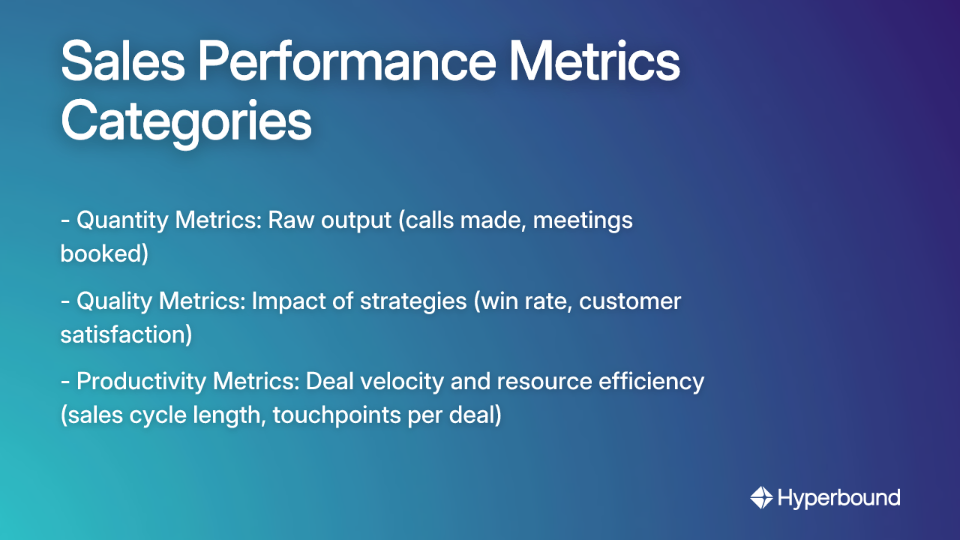
- Quantity Metrics: Raw output (e.g., Number of Calls Made, Meetings Booked)
- Quality Metrics: Impact of strategies (e.g., Win Rate, Customer Satisfaction)
- Productivity Metrics: Deal velocity and resource efficiency (e.g., Sales Cycle Length, Touchpoints Per Deal)
For new reps, productivity metrics provide the most valuable insights. They show how efficiently a rep is converting their training and effort into tangible progress. A rep making 100 calls with a 1% conversion rate is less productive than a rep making 50 calls with a 5% conversion rate.
This distinction is crucial because, as one sales leader on Reddit put it, "Sales managers ruin their teams when they mismanage using simplistic metrics." Simply focusing on activity counts without considering efficiency can lead to burnout and poor performance.
Let's dive into the seven productivity metrics that will give you a clear picture of your new hire's true progress.
The 7 Core Sales Productivity Metrics to Track for New Hires
.png)
1. Lead Response Time
What it is: The average time it takes for a new rep to make first contact with an inbound or assigned lead.
Why it matters for ramp time: This metric is a crucial leading indicator of a rep's diligence, process adherence, and initiative. Studies consistently show that faster lead response times correlate with higher conversion rates. For new reps, consistently low response times demonstrate they understand the urgency required in sales and have the confidence to engage quickly.
How to improve it: Many new reps hesitate because they fear saying the wrong thing. Providing clear initial talk tracks and opportunities to practice them builds the necessary confidence for quick engagement.
Tools like Hyperbound's AI Sales Roleplays allow new reps to practice their cold call and warm call scripts in a risk-free environment, building the muscle memory needed to act quickly when real leads come in.
2. Lead-to-Opportunity Conversion Rate
What it is: The percentage of leads a rep successfully converts into qualified sales opportunities.
Why it matters for ramp time: This metric directly measures a rep's ability to conduct effective discovery and understand your Ideal Customer Profile (ICP). A low conversion rate often points to a fundamental gap in training, addressing the common pain point that "Most onboarding is product-focused. The ICP, problems the solution solves, and practical examples are left to in the field."
How to improve it: Focus training on asking insightful questions, identifying pain points, and aligning your solution to the prospect's needs. AI coaching platforms can help by providing focused practice for discovery calls tailored to your specific ICPs, followed by analysis of live conversations to ensure reps are asking the right qualifying questions.
3. Average Sales Cycle Length
What it is: The average time it takes a rep to move an opportunity from creation to closed-won.
Why it matters for ramp time: This is a core component of sales velocity. For a new rep, you want to see this number consistently decrease as they become more adept at navigating deals, handling objections, and creating urgency. If the number stays high or increases, it often indicates the rep is getting stuck at certain stages of the sales process.
How to improve it: Coach reps on negotiation tactics, effective follow-up, and objection handling. The ability to overcome common objections (price, timing, competitors) is particularly crucial for shortening the sales cycle.
When GetAccept implemented AI-driven role play with Hyperbound, they managed to cut their SDR ramp time by 50%, demonstrating a direct link between structured practice and faster productivity.
4. Ramp Quota Attainment
What it is: The percentage of a new hire's tiered quota they achieve each month during their ramp period (e.g., 25% of full quota in month 1, 50% in month 2, etc.).
Why it matters for ramp time: This is the ultimate lagging indicator of successful ramp. It combines all other activities and efficiencies into the most important outcome: revenue generation. Tracking this shows whether your onboarding program is truly translating into results.
How to improve it: This metric improves when you enhance all the leading indicators we're discussing. Pay special attention to how your ramping quotas align with your typical sales cycle length. As one sales professional noted, "If onboarding takes 4 weeks and the company's usual sales cycle is 4-6 months and Ramp-up is just 90 days, the new hire is disadvantaged from the start."
5. Sales Touchpoints Per Deal
What it is: The average number of interactions (calls, emails, meetings) a rep needs to close a deal.
Why it matters for ramp time: This efficiency metric reveals whether a rep is making each interaction count. An ideal ramp shows a rep learning to close deals with fewer, more impactful touchpoints. A high or increasing number indicates they may be struggling to build momentum or are engaging in low-value activities.
How to improve it: Coach reps on better pre-call planning, setting clear next steps, and delivering value in every interaction. AI tools can help by providing deal summaries that extract key moments and buying signals from calls, helping reps focus their follow-up efforts more effectively.
6. Talk-to-Listen Ratio
What it is: The percentage of time the sales rep is speaking compared to the prospect during a call.
Why it matters for ramp time: This simple metric is a powerful indicator of whether a new rep is truly listening or just pitching. Top-performing reps typically maintain a talk ratio of 40-60%, allowing the prospect to share crucial information about their needs. A rep who consistently dominates the conversation is likely missing buying signals and opportunities to uncover deeper needs.
How to improve it: Train reps on the power of open-ended questions and active listening. Hyperbound's AI-Powered Scorecards automatically track talk ratios in both roleplays and real calls, providing objective feedback that would be impossible for a manager to track manually across an entire team.
7. Key Selling Behavior Adherence
What it is: A qualitative metric turned quantitative. It measures how consistently a rep executes the key behaviors defined in your sales methodology (e.g., asking about budget, confirming decision-makers, setting next steps).
Why it matters for ramp time: This shows whether the formal training is sticking. A rep can hit activity numbers all day, but if they aren't following your proven playbook, their results will be inconsistent. This metric directly addresses the need to "improve rep skill gaps not just on a deal or call."
How to improve it: Consistent reinforcement of your sales methodology is key. Hyperbound's AI Real Call Scoring allows you to build your exact sales methodology into automated scorecards that evaluate every call, flagging where reps are deviating from the playbook and providing instant, methodology-aligned coaching.
From Data to Development: How to Act on Metrics with AI Coaching
A dashboard full of metrics is useless without a plan to act. As one sales professional bluntly put it, "Most managers have a terrible understanding of how to interpret data... They're not scientific." This challenge is compounded when managing multiple new hires simultaneously.
This is where AI sales coaching creates a breakthrough. Instead of relying solely on managers to interpret data and deliver personalized coaching (which doesn't scale), AI coaching platforms can translate raw metrics into personalized development plans for each rep.
Here's how the process works with a platform like Hyperbound:
- Diagnose the Problem: AI analyzes call data to pinpoint specific skill gaps tied to poor metrics. For example, a low Lead-to-Opportunity conversion rate might be caused by a failure to ask discovery questions, which the AI will flag automatically.
- Prescribe the Solution: Once a gap is identified, targeted practice can be assigned. A rep struggling with pricing objections can practice with AI roleplays specifically designed to handle that scenario, allowing for unlimited, risk-free repetition.
- Reinforce the Learning: With continuous AI feedback on every call—both practice and real—reps get personalized coaching that doesn't rely on a manager's limited availability, dramatically accelerating skill acquisition.
Conclusion: Turn Your Metrics into Mastery
Reducing ramp time isn't about cracking the whip on activity. It's about smart measurement and targeted development. By tracking these 7 productivity metrics—Lead Response Time, Conversion Rate, Sales Cycle Length, Quota Attainment, Touchpoints Per Deal, Talk-to-Listen Ratio, and Methodology Adherence—you can get a clear, actionable picture of a new hire's progress.
But data alone isn't enough. Pairing these insights with an AI coaching and practice platform like Hyperbound allows you to close skill gaps faster, build confidence, and turn new hires into productive team members in record time.
The Salesforce State of Sales report highlights that improving training is the top growth tactic for sales leaders. By focusing on these productivity metrics and leveraging AI to act on them, you're not just tracking performance—you're actively accelerating it.

Frequently Asked Questions
What are the most important sales productivity metrics for new hires?
The seven most important sales productivity metrics to track for new hires are Lead Response Time, Lead-to-Opportunity Conversion Rate, Average Sales Cycle Length, Ramp Quota Attainment, Sales Touchpoints Per Deal, Talk-to-Listen Ratio, and Key Selling Behavior Adherence. These metrics provide a holistic view of a new rep's efficiency and effectiveness beyond simple activity numbers.
Why focus on productivity metrics over activity metrics for new sales reps?
Focusing on productivity metrics is crucial because they measure efficiency and effectiveness, not just effort. A rep making 50 highly effective calls (high productivity) is more valuable than a rep making 100 ineffective calls (high activity). Productivity metrics like conversion rates and sales cycle length reveal if a new hire is successfully applying their training to generate results, which is the key to a shorter ramp time.
How can I reduce my sales team's ramp-up time?
You can reduce sales ramp-up time by tracking the right productivity metrics and using targeted coaching to address skill gaps. Instead of just focusing on onboarding training, monitor metrics like Lead-to-Opportunity Conversion Rate and Average Sales Cycle Length. Then, use tools like AI-powered coaching and roleplays to provide reps with personalized practice on specific areas they are struggling with, such as objection handling or discovery questions.
What is a good talk-to-listen ratio in sales?
A good talk-to-listen ratio for a sales call is typically between 40% and 60% talk time for the sales representative. This balance ensures that the rep is not just pitching but actively listening to the prospect, which is essential for uncovering their needs, identifying buying signals, and building rapport. Ratios higher than this often indicate the rep is dominating the conversation and missing key information.
How does AI sales coaching help improve productivity metrics?
AI sales coaching improves productivity metrics by providing scalable, personalized, and data-driven training. AI platforms can analyze every sales call to identify specific skill gaps (like poor discovery questions), automatically assign targeted practice exercises (like AI roleplays), and provide instant feedback. This accelerates the learning process far more efficiently than relying solely on manager ride-alongs and manual call reviews.
What is a typical sales ramp time for a new representative?
The average ramp time for a new sales representative typically ranges from 3 to 9 months. This duration can vary significantly based on the complexity of the product, the length of the sales cycle, and the effectiveness of the company's onboarding and coaching program. The goal is to shorten this period by ensuring training is aligned with the sales cycle and by effectively monitoring productivity.
Book a demo with Hyperbound


