

.png)
Summary
- Effective virtual sales training yields a staggering 353% ROI, leading to 19% more deals and 10% shorter sales cycles.
- Remote training requires a new approach focused on interactive, continuous learning to combat digital fatigue and the lack of hands-on coaching.
- Build your program using a 5-step framework: assess needs, create a dynamic curriculum, master remote onboarding, use interactive practice, and implement continuous feedback.
- Leverage technology like AI Sales Roleplays to provide scalable, risk-free practice and objective feedback that closes the remote coaching gap.
You've invested in a remote sales team, but your training efforts are falling flat. Death by PowerPoint presentations, overwhelming email dumps of information, and boring virtual sessions that leave your team disengaged and unprepared to close deals. Sound familiar?
You're not alone. As sales teams have gone remote, traditional training methods have failed to make the transition effectively. The stakes couldn't be higher—companies with effective sales training see a staggering 353% return on investment according to research from Qwilr, while those with poor training watch as revenue targets slip away and turnover increases.
The good news? There's a better approach. In fact, effective virtual training can lead to 19% more deals and 10% shorter sales cycles. This guide will walk you through a step-by-step framework for designing remote sales training that boosts performance, engagement, and ultimately, your bottom line.
The New Reality: Why Remote Sales Training Demands a Different Approach
Remote sales training isn't simply in-person training conducted over Zoom. It requires a fundamentally different approach to address unique challenges:
Lack of hands-on coaching and mentorship: Without physical proximity, managers can't easily observe behavior and provide immediate feedback. This is a critical gap that AI coaching platforms like Hyperbound are designed to solve, providing scalable, objective feedback to reps without manager burnout.
Digital Fatigue: "Zoom fatigue" is real, and it's killing engagement. Hour-long lectures that might have worked in a conference room become mental endurance tests when delivered through a screen.
Maintaining Connection: Remote work can feel isolating. According to IdealTraits, combating disconnection and fostering the interpersonal relationships vital for a collaborative sales culture requires intentional effort.
Inconsistent Messaging: Digital communication channels can lead to miscommunication and inconsistent sales messaging across the team—a problem Mural identifies as particularly challenging for remote teams.
A 5-Step Framework for Building Your Remote Sales Training Program
.png)
Step 1: Conduct a Needs Assessment and Define Clear Goals
Before building anything, start with a Needs Assessment. Many organizations skip this crucial step, resulting in generic training that fails to address real skill gaps.
Use surveys, performance metrics, and one-on-one interviews to identify the specific skills your remote team lacks. According to HSI, this foundational step ensures your training targets actual needs rather than presumed ones.
Next, set clear, measurable objectives. Align training with overall business objectives by using specific KPIs:
- Time to ramp up new SDRs and AEs
- Conversion rates at different pipeline stages
- Customer engagement levels
- Average deal size
Pro Tip: Use a framework like OKRs (Objectives and Key Results) to structure your goals. Mural's OKR planning template can help streamline this process.
Step 2: Develop a Dynamic Curriculum and Select the Right Tech Stack
Create a curriculum that covers these key areas:
- Product knowledge and value proposition
- Core sales techniques (prospecting, objection handling, closing)
- CRM hygiene and process
- Mastery of online meeting and collaboration tools
When selecting a platform, prioritize those that support modern learning approaches:
- LMS (Learning Management System): A platform like Workramp (mentioned by sales professionals on Reddit) can host training resources and track progress.
- Interactive Features: Look for platforms supporting visual collaboration, asynchronous learning, and integrations with tools like Zoom and Slack.
Step 3: Master Remote Onboarding to Ramp Up New Hires Faster
One of the most common mistakes in remote sales training is overwhelming new hires with too much information. As one sales leader on Reddit advised: "Do not email overload... 1-2 subjects at a time," and "give them time to review it with a deadline." This makes learning manageable and prevents the cognitive overload that leads to disengagement.
Make onboarding interactive by:
- Using interactive playbooks and role-based learning paths
- Utilizing creative tools like Mural's onboarding road trip template
- Reinforcing learning with open discussions and quizzes instead of passive lectures
Step 4: Empower Core Selling Skills with Interactive Practice
Static training materials don't develop selling skills—practice does. Incorporate these elements:
Real-life Scenarios: Use case studies and actual customer scenarios to make training applicable to daily work. HSI notes that contextual learning significantly improves retention.
AI-Powered Role Play: AI sales coaching platforms like Hyperbound allow reps to practice in a risk-free environment with hyper-realistic AI buyer personas. This provides a safe space to master talk tracks and receive personalized, AI-driven feedback for continuous improvement.

Peer-to-Peer Role-Playing: Encourage live role-playing sessions over video calls where reps can practice building relationships through digital channels. Use a structured template like Mural's Peer-review pinboard to guide feedback.
Step 5: Implement Continuous Learning and a Robust Feedback Loop
Training is not one-and-done—it must be a continuous process. As one Reddit user advised: "If you discover something new that works, make sure you pass that info along to the others."
Track performance and gather feedback by:
- Continuously evaluating training effectiveness through completion rates and engagement
- Conducting weekly or bi-weekly retrospectives to refine the training process using templates like Mural's Learning experience canvas
- Teaching managers how to give effective, constructive feedback with resources like Mural's guide on giving constructive feedback
Pro-Level Strategies to Maximize Engagement and Retention
Gamify Everything: Tap into the Competitive Nature of Sales
As one sales leader on Reddit noted, "Sales people are very competitive, and I play on that." Leverage this natural competitiveness by:
- Using gamification techniques like leaderboards, badges, and points
- Holding monthly "Top Closer" challenges
- Creating fun, competitive quizzes with tools like Kahoot
According to Mural, when remote learning is engaging, it can increase retention rates by 25% to 60% compared to traditional methods.
Leverage Technology for Deeper Insights and Collaboration
Modern sales training should take full advantage of technology:
Conversation Intelligence and Call Scoring: Use platforms like Hyperbound to record, transcribe, and analyze sales calls against your custom methodology. This allows reps and managers to get unbiased, data-driven feedback on real conversations and identify specific areas for improvement.
Visual Collaboration: Utilize digital whiteboards like Mural for brainstorming, account planning, and collaborative exercises, making training more dynamic than a simple video call.
CRM Integration: Ensure your training platform integrates with your CRM to track activity metrics post-training, connecting learning to real-world application.
Foster a Culture of Connection and Peer-to-Peer Learning
Combat the isolation common in remote work by:
- Scheduling regular virtual team-building activities
- Establishing mentorship programs pairing new hires with senior reps
- Creating dedicated channels for peer-to-peer Q&A and knowledge sharing
- Publicly acknowledging and rewarding achievements to motivate the team
Measuring What Matters: How to Prove Your Training's ROI
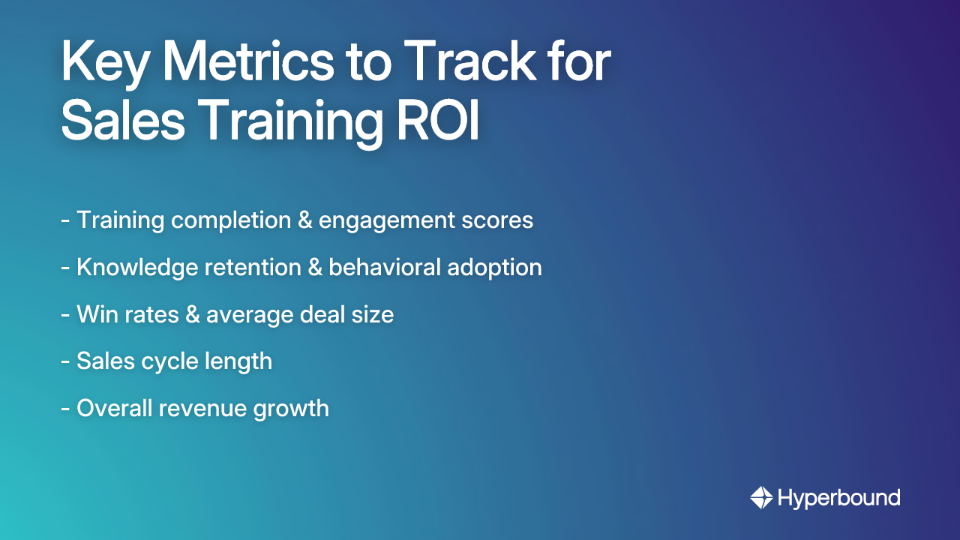
To demonstrate the value of your training investment, RAIN Sales Training recommends tracking both leading and lagging indicators:
Lead Indicators (Predictive):
- Training completion rates & engagement scores
- Knowledge retention from quizzes and assessments
- Behavioral adoption observed in role-plays
- Seller confidence surveys (pre- and post-training)
Lag Indicators (Business Outcomes):
- Win rate (lead-to-close ratio)
- Average deal size
- Sales cycle length
- Overall revenue growth
Create a sales training dashboard to track these KPIs in real-time and report the narrative of training's impact to leadership.
According to The Brooks Group, effective sales training can show impressive results, including a 41x ROI within 6-12 months, 19% more deals, and 10% shorter sales cycles.
Common Pitfalls to Avoid in Remote Sales Training
Watch out for these common mistakes, many of which are outlined by HSI:
Neglecting Follow-up: Failing to reinforce training concepts leads to rapid skill decay.
Overloading Information: Overwhelming participants reduces retention. Focus on key concepts using a spaced approach.
One-Size-Fits-All Approach: Offer a blend of live sessions, on-demand video tutorials, reading materials, and hands-on practice to accommodate different learning styles.
Aggressive "Boiler Room" Culture: An overly aggressive approach can lead to high turnover and burnout. Emphasize a supportive, coaching-focused environment.
Conclusion: Transform Training from a Cost Center to a Revenue Driver
The future of remote sales training is interactive, continuous, data-driven, and collaborative. It's about moving beyond static sales scripts and lectures towards dynamic skill development that meets your team where they are—in their home offices, coffee shops, or co-working spaces.
By implementing this structured approach, you can build a high-performing remote team that's not only equipped to meet targets but is also engaged, motivated, and aligned with your company's business objectives. The result? Training transforms from a necessary expense into a powerful revenue driver that gives your business a competitive edge in the marketplace.
Frequently Asked Questions
What is the first step to building an effective remote sales training program?
The most critical first step is to conduct a thorough needs assessment. This involves identifying the specific skill gaps and challenges your remote team faces through surveys, performance data analysis, and one-on-one interviews. Starting with a clear understanding of your team's actual needs ensures that your training program is targeted, relevant, and capable of driving real performance improvements, rather than being a generic, one-size-fits-all solution.
How can I make remote sales training more engaging?
You can make remote training more engaging by incorporating interactive and gamified elements. Move beyond passive lectures by using visual collaboration tools like digital whiteboards, AI-powered role-play simulations, peer-to-peer practice sessions, and competitive elements like leaderboards and quizzes. These methods combat digital fatigue and can increase knowledge retention by up to 60% by tapping into the naturally competitive spirit of salespeople.
What are the best ways for remote sales reps to practice their skills?
The best ways for remote reps to practice are through AI-powered role-play and structured peer-to-peer sessions. AI coaching platforms like Hyperbound provide a safe, scalable environment for reps to practice talk tracks and objection handling against realistic AI buyer personas, receiving instant, objective feedback. Supplementing this with live role-playing over video calls allows them to practice building rapport and adapting to dynamic conversations with colleagues.
How do I measure the success and ROI of my remote sales training?
To measure the ROI of your training, you should track both leading and lagging indicators. Leading indicators are predictive metrics like training completion rates, quiz scores, and seller confidence surveys. Lagging indicators are business outcomes, including win rates, average deal size, sales cycle length, and overall revenue growth. By tracking both, you can demonstrate the direct impact of your training program on the company's bottom line.
Why is continuous learning crucial for a remote sales team?
Continuous learning is crucial because market conditions, product features, and buyer behaviors are constantly changing, and remote work can lead to knowledge gaps if not actively managed. A "one-and-done" training event is quickly forgotten. Implementing a continuous learning culture with regular micro-trainings, knowledge sharing sessions, and ongoing feedback loops ensures your team stays sharp, aligned on messaging, and consistently improves their skills over time.
How can I onboard new remote hires without overwhelming them?
The key to successful remote onboarding is to structure the learning process and avoid information overload. Instead of sending a massive dump of documents, deliver content in manageable, bite-sized modules spread out over time. Use interactive playbooks, role-based learning paths, and regular check-ins to reinforce learning. This spaced approach prevents cognitive overload and helps new hires build confidence and competence more effectively.
Book a demo with Hyperbound


