
Softeners and Nurturing Statements: Making Your Sales Questions Feel Like Conversations

8
min read
.png)
You've carefully prepared your list of questions for the sales call. You're ready to extract all the information you need to move the deal forward. But as soon as you start firing off those questions, something shifts in the conversation. Your prospect's answers get shorter. They seem guarded. What was supposed to be a productive discovery call now feels like an interrogation.
Sound familiar?
As one sales professional aptly put it, "Questions are abrasive by nature". No matter how well-intentioned, direct questions can feel confrontational, putting your prospects on the defensive and shutting down the very conversations you're trying to initiate.
The problem isn't the questions themselves—it's how we deliver them.
Why Your Questions Are Falling Flat
When you launch directly into questioning, several things happen psychologically that can derail your sales conversation:

- You create a power imbalance. The questioner inherently holds power over the questioned, making your prospect feel like they're being interrogated rather than consulted.
- You trigger defensive responses. Direct questions can feel like an attack, causing prospects to retreat into safe, surface-level answers that don't reveal their true needs or concerns.
- You limit the conversation's potential. As one sales rep observed, "When you just ask yes or no questions, it shuts down conversations." Closed-ended questions rarely give you the insights you need to truly understand your prospect's situation.
- You overwhelm your prospects. Many sales reps admit to "piling the questions on top of each other", bombarding prospects with a rapid-fire approach that leaves them feeling cornered and confused.
The solution? Transform your questioning technique with softeners and nurturing statements that turn interrogations into conversations.
The Antidote: Defining Softeners and Nurturing Statements
Before diving into specific techniques, let's clearly define these conversational tools:
Softeners are verbal cushions that precede your questions, lessening their potential abrasiveness. They act as buffers that maintain a positive atmosphere while still allowing you to ask for the information you need. These verbal techniques have been shown to significantly reduce resistance in sales conversations.
Nurturing statements are acknowledgments you make after a prospect has shared information. They validate their contribution, demonstrate active listening, and create a natural bridge to your next question. They're essential for "peeling back the layers of the onion" in a way that feels supportive rather than intrusive.
The goal of both techniques is simple: lower your prospect's defenses and transform your interaction from a transactional information exchange into a genuine dialogue between potential partners.
Your Practical Toolkit: Actionable Phrases to Use Today
Let's explore specific softeners and nurturing statements you can immediately incorporate into your sales conversations:
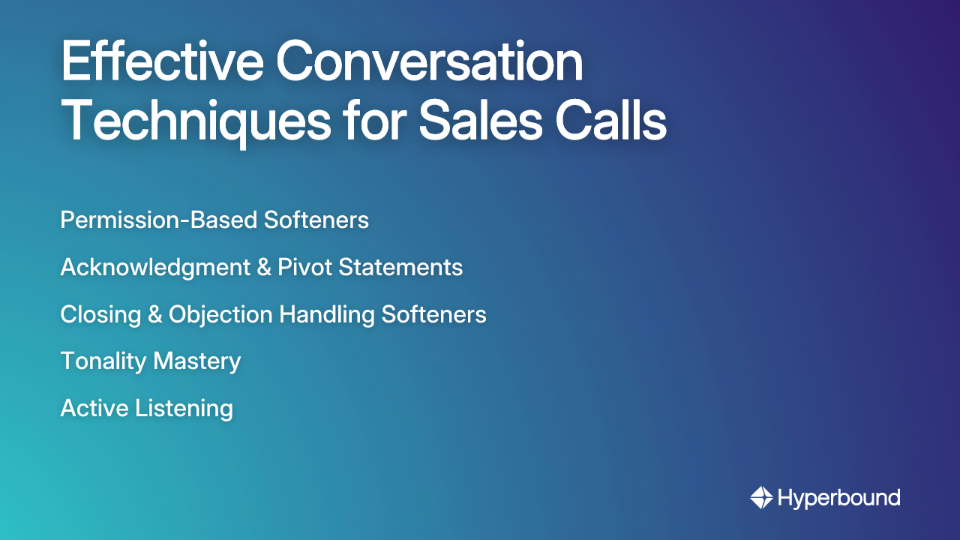
Permission-Based Softeners (For Opening a Line of Inquiry)
These phrases ask for permission before diving into potentially sensitive topics, giving your prospect a sense of control:
- "If you don't mind me asking, can you tell me what you paid for that previously?"
- "Would it be alright if I asked about your current vendor relationship?"
- "Do you mind if I take just 2 minutes to see if this is something you'd like to learn more about?"
These softeners create a psychological "opt-in" that makes prospects more likely to engage openly.
Acknowledgment & Pivot Nurturing Statements
These validate what your prospect has shared before guiding the conversation in a productive direction:
- "Aha, thank you for saying that...but can you tell me about...?"
- "I appreciate your point, though I'm curious about..."
- "That's really helpful to understand. Building on that, could you share..."
Notice how these phrases create what Sandler thinking refers to as "springboard questions"—they acknowledge the previous response while launching into deeper exploration.
Closing & Objection Handling Softeners
These help you navigate trickier moments in the conversation without creating tension:
- "I totally understand, believe me I do. What else might be standing in the way of you saying yes?"
- "Hey, I get it – you have options. But from our conversation, are we in the ballpark for earning your business?"
- "Before we proceed, do you mind if I ask: what specifically are you hoping to achieve?"
This approach creates space for the quiet assumptive close, where you can gently guide prospects toward a decision without applying pressure.
It's Not What You Say, It's How You Say It: Mastering Tonality
While the right words matter, your delivery can make or break your questioning technique. Research shows that tonality constitutes a remarkable 38% of communication in a conversation.
When asking questions—even with perfect softeners—pay close attention to your:
- Pitch: Avoid ending statements as questions (upward inflection) which can sound uncertain
- Articulation: Speak clearly but conversationally, as you would in a pub conversation with friends
- Volume: Match your prospect's energy level; don't overpower them
- Pace: Slow down for important questions, allowing space for reflection
When employing softeners and nurturing statements, aim for these specific tonal patterns:
- The "Reasonable" Tone: This sounds collaborative and thoughtful, perfect for open-ended questions that invite exploration.
- The "I Care" Tone: This demonstrates genuine interest in the prospect's situation, essential when using nurturing statements.
- The "I Really Want to Know" Tone: This showcases curiosity without judgment, ideal for goal-oriented questioning that peels back layers without seeming intrusive.
Pro-Tip: Record your calls (with permission) and listen specifically to your questioning tone. Platforms like Hyperbound can automatically analyze your call recordings, using AI to score your tonality, pace, and adherence to your sales methodology. This provides objective feedback to help you identify areas for improvement far faster than manual review.

The Art of Conversational Sales: Reading the Room and Active Listening
The most skilled sales professionals don't just master what questions to ask—they excel at reading the room and adjusting their approach in real-time. This requires a fundamental shift from focusing on your next question to truly listening to what your prospect is saying.
Active Listening Techniques that Strengthen Your Questioning
Effective questioning isn't just about extracting information—it's about creating space for meaningful dialogue. Here's how to ensure your prospect feels heard:
- Paraphrase and Summarize: "So, if I'm understanding correctly, your main concern is implementation timeline rather than budget?" This confirms you're hearing them accurately and allows them to clarify if needed.
- Ask Clarifying Questions: When a prospect mentions something intriguing, use TED questioning (Tell, Explain, Describe) to dive deeper: "That's interesting. Could you tell me more about how that affected your team?"
- Show Empathy: Acknowledge emotions without judgment: "That sounds incredibly frustrating. How have you been handling that challenge so far?"
These active listening techniques do more than just gather information—they demonstrate respect and build the rapport necessary for successful relationships.
Reading the Room: Adjusting Your Approach
Pay close attention to your prospect's:
- Energy level: Match their pace and intensity
- Language patterns: Adopt their terminology and phrasing
- Non-verbal cues: Notice shifts in tone or hesitations that signal discomfort
- Engagement signals: Watch for signs they want to elaborate or move on
The finesse in conversational sales comes from sensing these subtle cues and adjusting your questioning style accordingly. Sometimes, this means knowing when to abandon your planned questions entirely and follow where the conversation naturally leads.
As one sales professional advises, "Let them do the talking." Your role is to guide the conversation with thoughtful questions, not dominate it with your agenda.
Become a Conversationalist, Not an Interrogator
.png)
The big general rules for transforming your sales questions into conversations are:
- Cushion direct questions with softeners that ask permission and acknowledge the potential sensitivity of what you're asking.
- Validate responses with nurturing statements that show you're actively listening and value what your prospect is sharing.
- Pay attention to tonality, adjusting your pitch, pace, volume, and articulation to create a comfortable environment.
- Practice active listening that goes beyond waiting for your turn to speak, focusing instead on understanding and responding to your prospect's true needs.
- Read the room and be willing to adjust or even abandon your questioning strategy based on your prospect's responses.
Frequently Asked Questions
What are softeners and nurturing statements in sales?
Softeners are phrases used before a question to reduce its abrasiveness, while nurturing statements are used after a prospect's response to validate their input. Both are tools to make sales conversations feel more like a collaborative dialogue than an interrogation. For example, a softener like "If you don't mind me asking..." prefaces a potentially sensitive question to ask for permission. A nurturing statement like "That's really helpful to understand. Building on that..." acknowledges the prospect's answer before pivoting to a deeper question. The goal is to lower defenses and encourage open communication.
Why do direct questions often fail in sales conversations?
Direct questions often fail because they can create a power imbalance, trigger defensive responses, and limit the potential for a natural conversation. This approach can make prospects feel interrogated, causing them to provide short, guarded answers. Psychologically, being on the receiving end of rapid-fire questions can feel confrontational. This puts the prospect on the defensive, shutting down the rapport you're trying to build. Instead of revealing their true needs and concerns, they may only offer surface-level information.
How can I ask about a prospect's budget without being too direct?
You can ask about a prospect's budget by using a permission-based softener to frame the question collaboratively. This gives the prospect a sense of control and reduces the transactional feel of the question. Instead of asking, "What's your budget?", try a softer approach like, "If you don't mind me asking, what have you previously paid for a solution like this?" or "To make sure we're on the right track, are we in the ballpark for what you were planning to invest?" These phrases cushion the directness of the inquiry and make it part of a broader conversation about value.
What role does tonality play when asking sales questions?
Tonality is crucial because it accounts for a significant portion of communication and determines how your questions are received, regardless of the words you use. The right tone can make a question feel curious and collaborative, while the wrong tone can make it sound demanding or aggressive. Your pitch, pace, and volume all contribute to the overall tone. For example, using a thoughtful, reasonable tone for open-ended questions invites exploration. Mastering tonality helps build trust and ensures that your softeners and nurturing statements land with genuine interest rather than as a scripted technique.
How can I practice using softeners without sounding unnatural?
The best way to practice using softeners naturally is through consistent, low-stakes repetition, such as role-playing. This allows you to internalize the phrases and techniques so they become a natural part of your conversational style. Start by incorporating one or two softener phrases into your calls this week. Focus on making them your own. AI-powered role-playing tools offer a safe environment to practice these skills, get instant feedback on your tonality, and build muscle memory without risking live deals. Recording and reviewing your own calls is another excellent way to self-assess your delivery.
What is the difference between active listening and just asking questions?
The key difference is intent. Asking questions is often focused on extracting information for your own agenda, while active listening is focused on genuinely understanding the prospect's perspective. Active listening uses questions to clarify and deepen understanding, not just to move to the next item on a checklist. Active listening involves techniques like paraphrasing what the prospect said ("So, if I'm hearing you correctly..."), showing empathy ("That sounds incredibly frustrating."), and asking clarifying questions to explore their points further. This approach demonstrates that you value their input and are engaged in a two-way conversation, which builds the rapport necessary for a strong business relationship.
Remember that your ultimate goal isn't just to extract information—it's to build trust and establish yourself as a valuable partner. When you approach sales conversations with genuine curiosity and respect, your questions become invitations for collaboration rather than demands for information.
The most successful sales conversations don't feel like sales conversations at all—they feel like the natural, engaging discussions you might have with a trusted colleague or friend. By mastering softeners and nurturing statements, you'll transform your sales interactions from interrogations into the kind of authentic conversations that build lasting relationships and, ultimately, drive more successful outcomes for both you and your prospects.
Book a demo with Hyperbound


