.png)


.png)
Summary
- To maximize ROI, sales practice tools must be used strategically for hyper-personalized practice, not just generic script repetition.
- Effective sales practice focuses on mastering real-world scenarios, such as handling common objections tailored to your specific Ideal Customer Profile (ICP).
- AI provides a safe, repeatable environment for reps to build confidence and master their pitch through realistic, judgment-free role-play and instant feedback.
- Platforms like Hyperbound's AI Sales Roleplays transform practice by providing reps with a tool to master skills and managers with the data to coach strategically.
You're on an island. Every time you pick up that phone and hear "Hello?" everything you've rehearsed seems to vanish into thin air. Sound familiar?
If you're like many sales professionals—especially those at smaller companies with limited resources—you know the isolation of being solely responsible for your sales success. You've thought to yourself, "I really need to spend more time perfecting my pitch and learning," but finding effective practice methods remains challenging.
Enter sales pitch practice tools, especially AI-powered ones, which have emerged as game-changers for sales teams looking to sharpen their skills. But simply purchasing a subscription isn't enough. The difference between good and great sales teams lies in how they strategically leverage this technology to drive results.
This article outlines seven proven strategies to transform your sales pitch practice tool from a simple software subscription into a cornerstone of sales excellence that builds elite sellers and drives revenue.
1. Go Beyond the Script: Master Hyper-Personalized Practice
The most effective sales pitches aren't one-size-fits-all—they're tailored specifically to the buyer. Your practice should reflect this reality.
Actionable Steps:
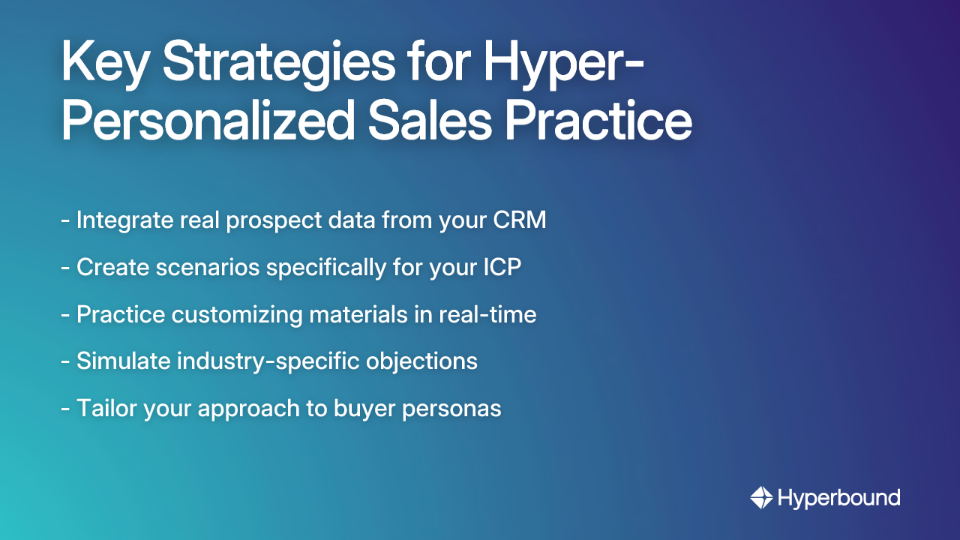
- Integrate CRM Data for Realism: Don't practice in a vacuum. Pull real prospect data from your CRM to create practice scenarios based on actual industries, roles, and challenges. This creates an end-to-end view of customer interactions that makes practice sessions more relevant and effective.
- Practice for Your ICP: Create specific scenarios tailored to your Ideal Customer Profile. This ensures your team isn't just practicing any pitch, but the right pitch for your most valuable potential customers.
- Customize Collateral in Real-Time: Develop skills in presenting personalized sales materials during your pitch. Practice seamlessly incorporating custom data points, case studies, and ROI calculations relevant to specific prospect types.
2. Use AI for Realistic, Judgment-Free Role Play
One of the biggest hurdles to effective practice is the fear of judgment. AI provides a safe, repeatable environment for role play that addresses the common wish for "an online forum where you could just do random online presentations just for critique."
Actionable Steps:
- Embrace AI Avatars: Advanced platforms like Hyperbound's AI Sales Roleplays can simulate realistic buyer personalities and reactions, preparing you for the unpredictable nature of live calls without the anxiety of practicing with colleagues.
- Leverage Real-Time Feedback: Good AI tools provide instant feedback on language, tone, pace, and even emotional delivery—allowing for micro-adjustments with each repetition.
- Practice Adapting to Different Buyer Types: Some advanced tools allow you to tailor your approach based on personality models like DISC, ensuring versatility in your communication style.
- Explore Advanced Role-Play Tools: Based on feedback from sales professionals, tools like Hyperbound, PitchMonster, and Second Nature offer customizable role-play scenarios with scoring models and persona creation features that closely mimic real-world interactions.

3. Focus on Simulating and Overcoming Real-World Objections
A great pitch isn't just about delivery—it's about confidently navigating tough conversations and handling objections with grace. Your practice tool is the perfect environment to master this critical skill.
Actionable Steps:
- Build an Objection Library: Work with your team to document the most common objections you face. Use a tool like Hyperbound to create specific AI role-play scenarios for each one, allowing reps to practice until their responses become second nature.
- Practice Anticipating Questions: Preparing for common buyer concerns is critical. Use your tool to rehearse responses until they become instinctive, helping you overcome that feeling of being "uncomfortable with my opens and controlling the frame."
- Refine Your Objection Handling Framework: Implement a structured approach (like Acknowledge, Isolate, Redirect, Confirm) and practice applying it within AI simulations until it feels natural.
4. Turn Practice into Strategic Coaching with AI-Powered Feedback
Modern tools do more than facilitate practice—they provide deep conversational intelligence that identifies patterns across multiple sessions. This addresses the need to "improve rep skill gaps not just on a deal or call" and find "common threads so you can coach more strategically."
Actionable Steps:
- Analyze Patterns Across Sessions: Use your tool's analytics to identify recurring weaknesses in your pitch delivery. Are you consistently stumbling on pricing questions? Is your value proposition unclear? These insights enable targeted, high-impact coaching.
- Leverage AI for Transcript Analysis: While some sales professionals feed practice call transcripts into generic AI tools for feedback, advanced platforms like Hyperbound automate this process with its AI Real Call Scoring and coaching engine, providing structured, consistent analysis.
- Implement Custom Scorecards: Align practice with your specific sales methodology by creating custom scorecards. Measure performance on key competencies like uncovering pain points, articulating value propositions, or establishing clear next steps.
5. Integrate Storytelling and Data to Create Memorable Pitches
.png)
Facts tell, but stories sell. The most effective pitches weave compelling narratives backed by hard data. Use your practice tool to perfect this powerful combination.
Actionable Steps:
- Master the Core Components: Practice the essential elements of an effective pitch:
- Hook: Start strong with an attention-grabbing statistic or question
- Problem: Clearly articulate the prospect's pain points
- Value Proposition: State the outcome your product delivers
- Solutions: Detail how your offering solves their specific challenges
- Social Proof: Weave in relevant testimonials and case studies
- Call-to-Action: End with a clear, confident next step
- Refine Your Storytelling: Use your tool's feedback on tone and engagement to ensure your customer stories land with impact. A well-told transformation story should feel compelling, not rehearsed.
- Practice Introducing ROI Data: Rehearse introducing relevant statistics and ROI calculations at strategic moments to reinforce your value proposition without overwhelming the prospect.
6. Track Metrics and Gamify Progress to Stay Motivated
What gets measured gets improved. Tracking progress is essential for continuous growth and helps address the need for "methods for staying aware and motivated towards that goal of being at the top."
Actionable Steps:
- Monitor Key Performance Indicators: Use your tool's dashboard to track improvements in pitch effectiveness, objection handling success rates, talk-to-listen ratios, and confidence scores over time.
- Implement Gamified Training: Create friendly competition through leaderboards, badges, or point systems to encourage consistent practice. This transforms what could feel like a chore into an engaging challenge.
- Celebrate Meaningful Wins: Acknowledge team members who show significant improvement or consistently practice. This positive reinforcement helps build a culture where deliberate practice is valued and rewarded.
7. Build a Culture of Continuous Learning Around Your Tool
A pitch practice tool delivers maximum value when it's integrated into a broader commitment to sales enablement and continuous improvement—approaching it as a "learning experience" rather than just a "key to success."
Actionable Steps:
- Schedule Regular Practice Sessions: Block dedicated time on the calendar for tool usage, treating it with the same importance as any other critical sales activity.
- Implement Spaced Learning: Combine tool practice with virtual workshops and customized e-learning modules. This spaced learning approach dramatically improves knowledge retention and skill development, according to research.
- Facilitate Peer Learning: Use recordings from practice sessions in team meetings. Have reps share their best pitches and provide constructive feedback to one another, fostering collaboration and shared growth.
The Bottom Line: From Tool to Transformation
Maximizing your investment in a sales pitch practice tool means moving beyond simple repetition to strategic skill development. Focus on personalization, leveraging AI for realistic role-play, mastering objection handling, incorporating storytelling, tracking progress, and embedding the tool within a culture of continuous learning.
As one sales professional noted, "The more you do this, the more confident you are...and the better you feel about setbacks." In today's competitive market, this confidence and preparation are what separate top performers from the rest.
By strategically leveraging your practice tool, you're not just buying software—you're investing in the skills and resilience your team needs to win more deals and drive sustainable growth.
Frequently Asked Questions
What is a sales pitch practice tool?
A sales pitch practice tool is a software platform designed to help sales professionals rehearse and refine their sales presentations in a simulated environment. These tools, especially modern AI-powered versions, offer features like realistic role-playing with AI avatars, real-time feedback on delivery and tone, and analytics to track improvement. They provide a safe, repeatable space to master scripts, handle objections, and build confidence without the pressure of a live call.
Why use an AI sales practice tool instead of just practicing with my team?
AI sales practice tools offer a judgment-free, consistent, and scalable environment for practice that is difficult to replicate with team role-playing. While practicing with peers is valuable, it can be time-consuming to schedule and may suffer from inconsistent feedback. AI tools provide a safe space for unlimited repetitions, deliver objective data-driven feedback on every session, and can simulate a wide variety of buyer personas and scenarios on-demand.
How can AI tools help me handle sales objections?
AI tools help you master objection handling by allowing you to practice responses to common and industry-specific objections in a realistic, simulated environment until your answers become second nature. You can build a library of the toughest objections your team faces and create specific AI role-play scenarios for each. The tool provides instant feedback on your approach, helping you refine your framework and build the confidence to navigate these critical conversations effectively on live calls.
What are the key features to look for in a sales pitch practice tool?
The most important features to look for are realistic AI-powered role-plays, CRM integration for personalized scenarios, real-time performance feedback, and analytics for strategic coaching. The best tools allow you to practice with AI avatars that mimic different buyer personas and should integrate with your CRM to make practice more relevant. Look for platforms that offer instant feedback on language and tone, as well as analytics dashboards that track progress and identify skill gaps.
How does using a sales practice tool improve overall sales performance?
Sales practice tools improve performance by building confidence, increasing message consistency, and developing the critical skills needed to navigate real-world sales conversations effectively. Consistent, deliberate practice leads to greater confidence on live calls. Reps become more adept at handling objections, articulating value propositions, and telling compelling stories. By analyzing performance data, sales leaders can provide targeted coaching to address specific weaknesses, leading to a more successful sales team that wins more deals.
How do I integrate a practice tool into my team's workflow?
Integrate a practice tool by making it a core part of your sales culture, scheduling dedicated practice time, and using its insights to facilitate peer learning and coaching. Treat practice time with the same importance as other sales activities by blocking it on the calendar. Use the tool's recordings in team meetings to share best practices and use the analytics to inform your one-on-one coaching sessions, creating a culture of continuous improvement.
Book a demo with Hyperbound


