

.png)
Summary
- The Sales Performance Management (SPM) market is projected to reach $4.4 billion by 2028 as companies move away from gut-feel decisions to data-driven strategies.
- Unlike a CRM that tracks customer deals, SPM software provides a holistic framework to plan, track, and improve team performance with analytics, incentive management, and forecasting.
- When evaluating SPM solutions, prioritize key features like predictive analytics, seamless CRM integration, and robust coaching and learning support.
- Enhance the coaching capabilities of your SPM strategy with tools like Hyperbound's AI Sales Roleplays, which allow reps to practice and master skills identified by performance data.
You've set up your CRM, trained your team on the basics of Salesforce, and invested in a handful of sales tools. But when you check your pipeline, you're still seeing the same problems: missed opportunities, inaccurate forecasts, and a team that's more frustrated than motivated.
"Honestly, it's just too many tools," as one sales leader put it on Reddit. "I want to get better and perform at the top of the game – but researching the latest tools to get an edge is overwhelming."
If you're struggling with disorganization (especially those with ADHD), losing track of opportunities that "could use a bit of TLC," or finding that "Salesforce tasks just don't do it," you're not alone. The chaos of managing sales performance has many leaders confused about what software they actually need.
This guide cuts through the noise to define Sales Performance Management (SPM) software, explain why it's becoming non-negotiable for 2026, and provide a clear framework for choosing the right solution to boost revenue and team motivation.
What Is Sales Performance Management (SPM)? A Clear Definition
Sales Performance Management is the practice of planning, tracking, and improving sales team performance. Its goal is to create realistic plans, motivate teams, and increase revenue through systematic oversight of the entire sales organization.
Many professionals confuse SPM with other sales technologies:
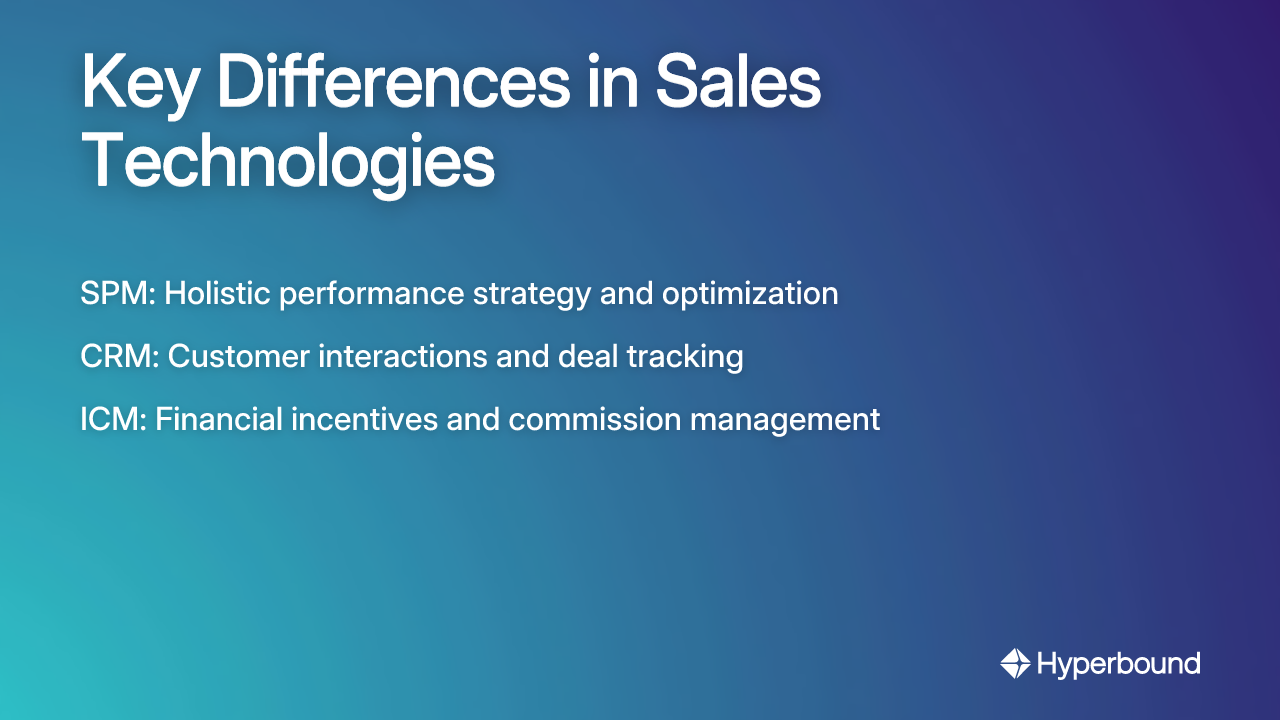
SPM vs. CRM: While a CRM like Salesforce tracks customer interactions and deals, SPM focuses on optimizing the performance and strategy of the sales team itself. One Reddit user's confusion is common: "What exactly are you trying to track? Are you looking for a CRM?" SPM goes far beyond basic CRM capabilities.
SPM vs. Incentive Compensation Management (ICM): ICM is actually a component of SPM, focused specifically on financial incentives. True SPM is the holistic approach encompassing planning, insights, coaching, and incentives.
Why SPM Software Is a Non-Negotiable for 2026
The global SPM market is projected to grow from $2.3 billion in 2023 to $4.4 billion by 2028, at a CAGR of 13.6%, according to MarketsandMarkets. This explosive growth indicates massive adoption and competitive pressure.
Three key drivers are making SPM essential:
1. The Move from Gut-Feel to Data-Driven Decisions
Only a quarter of sales organizations achieve 75% forecast accuracy because most rely on instinct rather than data. As the old adage goes, "you can't improve what you don't measure." SPM provides the historical data and analytics needed for precision.
2. Automation and Efficiency
Manual commission calculations are error-prone and administrative tasks drain selling time. SPM automates these processes, reducing errors and freeing up reps to focus on revenue-generating activities.
3. Remote Work & Distributed Teams
With sales teams increasingly working remotely, leaders need tools to manage, monitor, and motivate effectively across distances.
The tangible benefits of implementing SPM software include:
- Increased Productivity & Accurate Forecasts: Automation leads to faster performance and data-driven predictions that actually reflect reality
- Aligned Incentives & Motivation: Link rewards directly to business goals, creating structured, fair incentive plans that reduce bias
- Improved Decision-Making: Real-time data informs strategic adjustments to territories, quotas, and coaching
- Optimized Territory Management: Use performance analytics to adjust territories based on market conditions and rep capabilities
The Buyer's Checklist: 7 Must-Have Features in an SPM Platform
When evaluating SPM software for 2026, ensure your chosen platform includes these critical features:
.png)
1. Advanced Analytics and Reporting
Look for real-time dashboards that track KPIs like conversion rates and sales cycle length. Different personas (reps, managers, executives) should have tailored views that show relevant metrics at a glance.
2. Incentive Compensation Management (ICM)
The platform must automate complex commission and bonus calculations with complete transparency. This core function aligns sales behavior with company goals and eliminates the "black box" feeling many reps experience with their compensation.
3. Quota and Territory Management
Data-driven tools for creating fair goals, segmenting accounts, and allocating territories ensure maximum market coverage and prevent the common complaint that "my territory is worse than everyone else's."
4. Predictive Analytics (AI/ML)
Machine learning capabilities should deliver accurate sales forecasting, identify at-risk deals, and provide data-driven recommendations. This is where the biggest competitive advantages will emerge by 2026.
5. Robust Integration Capabilities
Seamless connection with your existing tech stack, especially your CRM (like Salesforce) and Human Capital Management systems, is essential to avoid data silos. According to G2 user reviews, buyers consistently prioritize ease of integration.
6. Coaching and Learning Support
The software should help identify skill gaps and provide insights for effective, targeted coaching. This is where AI-powered tools can supercharge performance. Platforms like Hyperbound integrate with your workflow to analyze sales calls, identify winning behaviors, and allow reps to practice in hyper-realistic AI roleplays. This is particularly important for getting new hires ramped quickly and ensuring new managers have the data they need to be effective coaches.

7. Scalability and Security
The platform must grow with your team and protect sensitive sales and compensation data with strong compliance features.
Top SPM Software Providers for 2026: A Curated Review
Based on market analysis and user reviews, these providers stand out as leaders for 2026:
Xactly: Known for robust analytics, reporting, and a positive user experience. According to G2 user reviews, one tech company improved sales efficiency by 30% after implementation.
SAP Commissions: A major player with strong integration capabilities, especially for large enterprises already using SAP systems. Gartner reviews highlight its comprehensive approach to performance management.
Oracle Sales Performance Management: Praised for advanced forecasting and high customizability to fit specific business needs according to user reviews.
Anaplan: Strong in planning, modeling, and collaborative features that allow for cross-departmental cooperation in sales strategy. Users report significant improvements in forecasting accuracy.
SalesLoft: Focuses heavily on sales engagement and tracking performance metrics, with seamless integration with multiple CRM platforms. This addresses the Reddit user's pain point: "I often lose track of others that could probably use a bit of TLC."
Pro Tip for Buyers: Utilize trial periods to evaluate fit and pay close attention to recent user reviews and case studies. Consider scalability and customization to accommodate future growth.
Implementation Roadmap: Avoiding Common Pitfalls
Challenge 1: Integration Difficulties
Integrating SPM with existing systems can be complex and lead to data quality issues.
Best Practice: Choose a vendor with proven integration capabilities with your CRM. Plan the integration process meticulously before purchase, with clear data governance protocols.
Challenge 2: User Adoption Resistance
Employees may resist due to fears of micromanagement or privacy invasion. This is especially true for new managers transitioning from sales roles.
Best Practice: Implement robust change management. Communicate the benefits clearly—it's a tool for fairness, transparency, and coaching, not just surveillance. As one Reddit user advised new managers: "Seek to understand before being understood."
Challenge 3: Poor Data Quality
The adage "garbage in, garbage out" applies particularly to SPM systems.
Best Practice: Establish data governance policies to ensure the data fed into the SPM from the CRM and other sources is accurate and reliable.
The Future Is Intelligent: Emerging Trends in SPM
By 2026, we'll see these innovations becoming standard:
- Deeper AI and Machine Learning: Moving beyond basic analytics to predictive insights, including AI-driven recommendations for reps and automated goal adjustments based on real-time market conditions
- Hyper-Personalization: Using AI to tailor coaching, incentives, and sales strategies to individual reps' strengths and weaknesses
- Enhanced NLP: Natural Language Processing will analyze sales calls and communications to provide deeper insights into performance and customer sentiment. Companies like Hyperbound are leading this charge, using AI to score calls against a company's playbook and provide reps with instant, personalized feedback.
Making Your SPM Decision with Confidence
The days of managing sales teams with spreadsheets, post-it notes, and gut feelings are over. As one Reddit user put it, "my weakness is my ADHD and how disorganized I am." The right SPM software addresses this challenge head-on, creating structure and clarity for even the most chaotic sales environments.
With the buyer's checklist and curated software list from this guide, you can move from a state of overwhelm to one of confident decision-making. The SPM market's explosive growth is a clear indicator: this isn't just another sales tool—it's the command center for your entire sales organization's success in 2026 and beyond.
Frequently Asked Questions
What is the main difference between SPM and CRM software?
The main difference is that CRM software manages customer relationships and sales pipelines, while SPM software focuses on optimizing the performance, strategy, and motivation of the sales team itself. Think of it this way: a CRM like Salesforce is your system of record for customer data and deal tracking. An SPM platform uses that data to answer strategic questions like, "Are our sales plans effective?" or "Are our commission plans driving the right behaviors?"
Is Sales Performance Management software only for large enterprises?
No, Sales Performance Management software offers significant benefits for businesses of all sizes, including small and medium-sized businesses (SMBs). While large enterprises have complex needs, SMBs can gain a competitive edge by using SPM to automate commission calculations, gain clear visibility into sales performance, and make data-driven decisions. Many modern SPM providers offer scalable solutions that can grow with your business.
How can SPM software improve sales team motivation?
SPM software improves sales team motivation by creating transparent, fair, and achievable incentive compensation plans that directly link performance to rewards. When sales reps can see in real-time how their efforts translate into commissions, it eliminates confusion and builds trust. SPM tools also help managers identify coaching opportunities, allowing them to provide targeted support that helps reps succeed and feel valued.
What is the first step to implementing an SPM solution?
The first step to implementing an SPM solution is to clearly define your sales performance goals and identify the specific problems you need to solve. Before evaluating vendors, assess your current processes. Are you struggling with inaccurate forecasting, manual commission errors, or ineffective coaching? Pinpointing your primary pain points will help you choose a platform with the features that matter most to your organization.
How does AI enhance Sales Performance Management?
AI enhances Sales Performance Management by moving beyond historical reporting to provide predictive analytics, personalized coaching recommendations, and automated insights. Artificial intelligence can analyze vast amounts of sales data to forecast revenue with greater accuracy, identify at-risk deals, and even suggest the next best action for a sales rep.
How long does it typically take to see a return on investment (ROI) from SPM software?
While implementation times vary, many organizations begin to see a positive return on investment (ROI) from SPM software within 6 to 12 months. Initial returns often come from automating time-consuming tasks like commission calculations and reporting. Longer-term ROI is driven by improved sales productivity, more accurate forecasting, and reduced rep turnover due to fairer compensation.
Book a demo with Hyperbound


