.png)



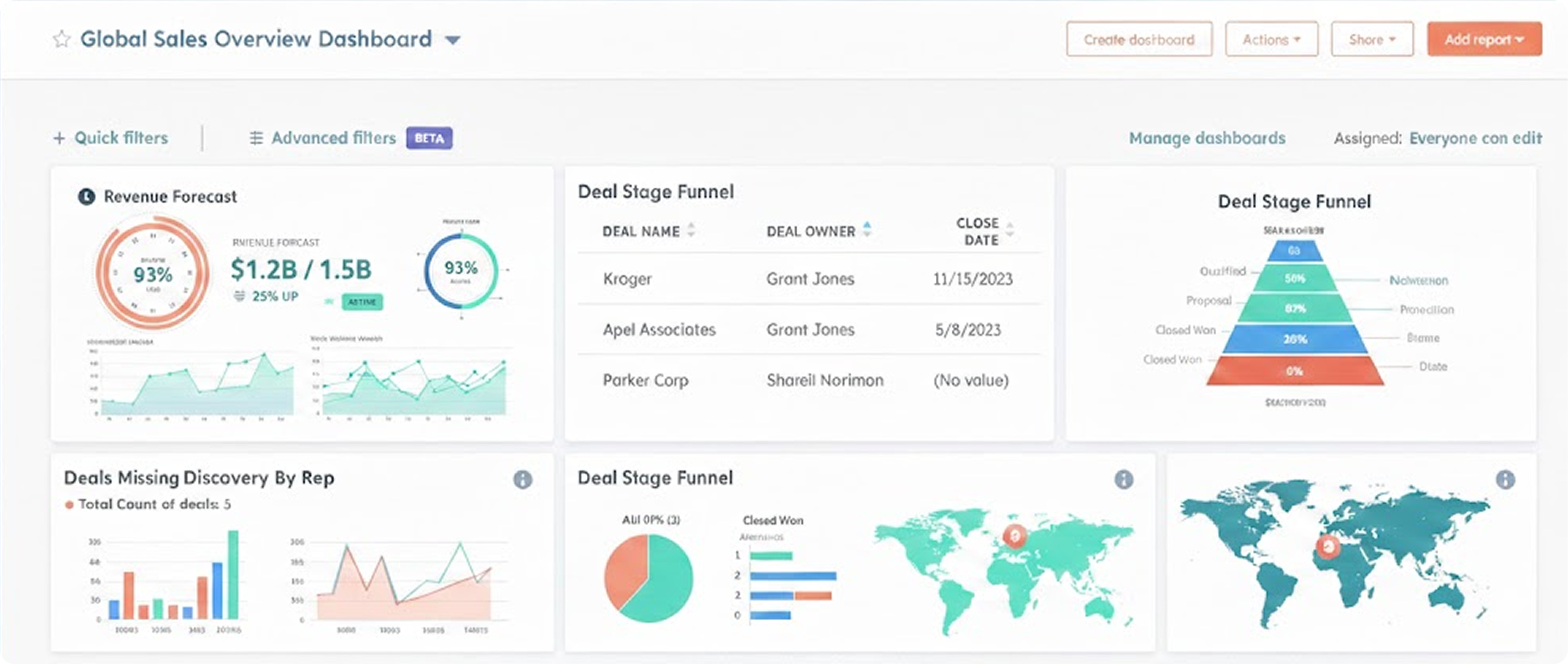
RevOps has built the most sophisticated visibility layer revenue teams have ever had.
Pipeline dashboards update in real time. Forecast models are tightly managed. CRM fields are enforced. Stage definitions are documented. Close dates are scrutinized. Hygiene is monitored.
If the problem were visibility, RevOps would have solved it by now.
The modern revenue stack is not lacking data. It’s saturated with it. Every deal has a number attached to it. Every stage has reporting behind it. Every rep’s activity is measurable.
And yet, numbers still slip.
Forecasts still surprise.
Late-stage deals still fall apart.
The issue isn’t whether RevOps can see what’s happening in the pipeline.
It’s whether the system can influence what happens next.
The Illusion of Control
When a dashboard shows a deal marked red, it feels actionable.
When close dates move, when risk flags are updated, when forecast categories shift from Commit to Best Case — it creates a sense of control. The system appears responsive. The data appears dynamic.
But most of those signals are downstream of behavior.
They’re reflections of what already happened inside buyer conversations — not levers that shape what happens next.
A deal marked “at risk” doesn’t fix the pricing objection that went unaddressed two calls ago. A pushed close date doesn’t recover lost urgency. A stage change doesn’t rebuild stakeholder alignment.
The dashboard shows the outcome of execution.
It doesn’t influence the execution itself.
That’s the illusion.
Visibility can highlight risk. But if the system can’t intervene at the behavioral level, RevOps is left reacting to lagging indicators instead of shaping leading ones.
CRM-Field Guesswork
Most pipeline health signals depend on fields that reps update manually.
Next step. Close date. Deal risk. Amount. Stage.
These fields are important. They create structure. They allow reporting. They power forecasts.
But they’re ultimately interpretations — not behavior.
A rep updates a close date based on how the last call felt. A risk flag is added after a difficult conversation. A stage change reflects how confident someone is about stakeholder alignment.
RevOps then builds reporting on top of those interpretations.
By the time a deal looks unhealthy in the CRM, the behavioral signals that caused the risk have already played out inside buyer conversations. And the only thing left in the system is a summary of what happened.
This creates a subtle but powerful problem: pipeline health becomes narrative-driven instead of behavior-driven.
RevOps is forced to interpret lagging indicators — not observe execution quality directly.
And that makes true control almost impossible.

The Gap Between Call Insights and Pipeline Health
At the same time, most revenue teams have invested heavily in conversational intelligence.
Calls are recorded. Transcripts are searchable. Objections are tagged. Sentiment is analyzed.
There is no shortage of insight into what buyers are saying.
But that insight often lives in a separate system.
CRM reporting exists in one place. Call analysis lives in another. Forecast reviews happen in a third. And the signals from real buyer conversations rarely roll up into how pipeline health is calculated.
So RevOps can see activity.They can see stage progression.They can see forecast movement.
What they can’t easily see is execution quality inside active opportunities.
Did pricing pressure increase across the last three calls?Has executive engagement dropped off?Is urgency weakening over time?
Those signals exist — but they aren’t embedded into the logic of pipeline health.
And without that connection, visibility remains incomplete.
Control Requires Influence
True control doesn’t come from seeing a problem.
It comes from having the ability to change it.
If RevOps wants more predictable outcomes, the system can’t just surface lagging indicators. It has to influence the behaviors that create those indicators in the first place.
That means surfacing risk earlier — before it shows up as a slipped close date. It means connecting execution patterns across calls, not just tracking stage progression. And it means creating clear intervention pathways so managers and reps know what to adjust before momentum is lost.
Control isn’t about adding another dashboard.
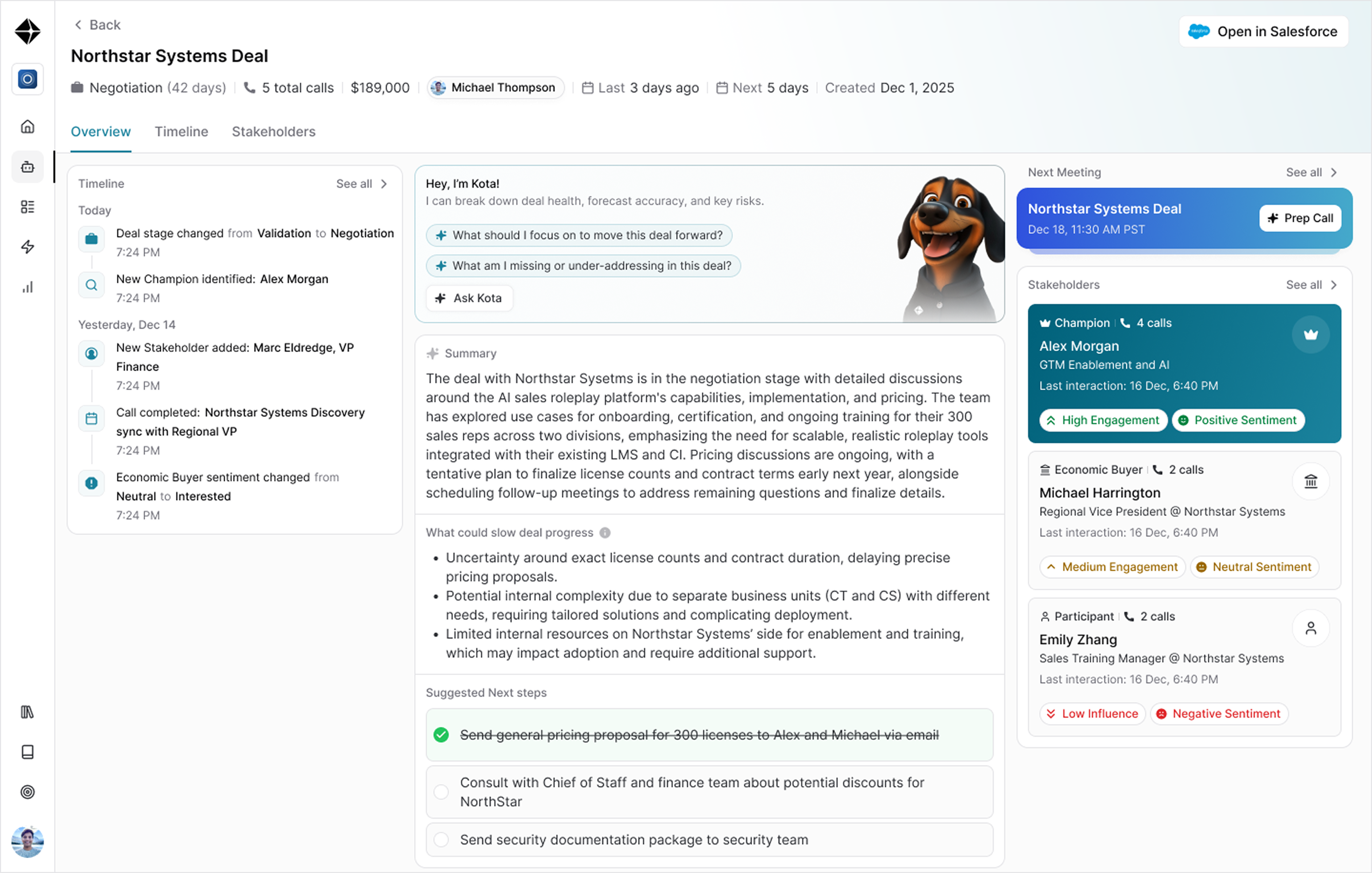
It’s about embedding execution signals directly into the way pipeline health is understood and acted on.
When behavior becomes part of the pipeline logic, RevOps moves from observing performance to shaping it.
What True Pipeline Control Looks Like
True pipeline control doesn’t mean perfect forecasts.
It means earlier signals.
Signals grounded in real buyer behavior — not just CRM updates. Signals that surface execution drift before it becomes a missed quarter. Signals that connect what’s happening inside conversations to how an opportunity is progressing.
In a system built for influence, pipeline health isn’t inferred from stage changes alone. It reflects patterns across calls. It captures emerging risk while there’s still time to intervene. And it points teams toward the specific behaviors that need reinforcement.
That’s when RevOps moves from reporting on performance to shaping it.
Visibility was step one.
Control, the ability to influence what happens next inside live deals, is the next frontier.
.png)
Visibility Was Just Step One
RevOps has already solved reporting.
Pipeline visibility is stronger than it has ever been. Forecast hygiene is tighter. Data integrity is higher. The dashboards are built.
If visibility were the answer, the problem would be gone.
But the next level of performance won’t come from adding more reporting layers. It will come from embedding execution signals into how pipeline health is understood — and creating systems that influence behavior before deals slip.
Visibility tells you what happened.
Control gives you a way to change what happens next.
And for RevOps, that shift — from reporting to influence — is where the real leverage lives.
Book a demo with Hyperbound


