.png)


.png)
Summary
- Feeling 'salesy' is a common fear, but data shows 82% of buyers accept meetings with proactive sellers, and 71% want to hear from them early in the buying process.
- Shift from pitching products to a consultative approach by focusing on your Ideal Customer Profile (ICP) and translating features into tangible customer benefits.
- Implement the WAVE method: adopt a Winner's Mindset, create multi-channel Attraction Campaigns, provide genuine value in every touchpoint, and execute with discipline.
- Refine your value-driven messaging and practice consultative techniques in a risk-free environment with AI Sales Roleplays to build confidence before engaging live prospects.
You're staring at your CRM dashboard, feeling that familiar knot in your stomach. One or two website inquiries trickle in each month. Your carefully crafted LinkedIn messages go unanswered. The phone feels heavier each time you pick it up for another cold call. And that monthly quota? It looms larger by the day.
"It takes time to build a network," you remind yourself, "and it's always most daunting when you are in the early stages." But that knowledge doesn't make the pipeline any fuller or the pressure any lighter.
If this sounds familiar, you're not alone. The conflict between needing to fill your sales pipeline and wanting to avoid feeling like a pushy salesperson is one that plagues professionals across industries. The good news? There's a better way to build a robust pipeline - one that doesn't require you to sacrifice your authenticity or dignity on the altar of quota attainment.
The Mindset Shift: Ditch the Pitch, Become a Partner
The most effective remedy for feeling "salesy" is to stop selling and start consulting. This approach, known as consultative selling, positions you as a trusted advisor rather than just another vendor pushing a product.
In today's market, where 96% of buyers research products before engaging with sales, the old-school aggressive pitch falls flat. Modern buyers don't need you to tell them what your product does - they need you to help them understand how it solves their specific problems.
This shift begins with adopting what sales experts call a "Winner's Mindset." Rather than viewing prospecting as a dreaded chore, successful sellers see it as an energizing opportunity to connect and provide value. And this isn't just positive thinking - it's backed by data. According to RAIN Sales Training research, 82% of buyers accept meetings from sellers who proactively reach out, and 71% want to hear from sellers early in their buying process.
The fear of rejection that makes prospecting feel uncomfortable? It's largely unfounded when you approach with value rather than a pitch.
Laying the Foundation: Know Your Audience, Know Your Value
Before sending a single email or making a single call, you need to establish two critical elements: a clear understanding of who you're targeting and what value you bring them.
Define Your Ideal Customer Profile (ICP)
As one experienced sales professional on Reddit advised, the first step is "identifying your ICP, potential industry verticals, company size, use cases (based on current clients), intent signals, buyer teams, etc."
Your ICP should answer:
- Which industries benefit most from your solution?
- What company size represents the sweet spot for your offering?
- What roles typically make or influence purchasing decisions?
- What business challenges does your product or service address?
This focused approach prevents you from wasting time on prospects unlikely to convert and allows you to craft much more relevant outreach.
Translate Features into Benefits
Once you know who you're targeting, you need to articulate how your offering helps them specifically. This means translating what your product is or does (features) into what it means for the customer (benefits).
For example:
- Feature: "Our software integrates with your existing CRM."
- Benefit: "This means your team saves 5 hours weekly on manual data entry, reducing errors by 32% and freeing them for high-value tasks."
This translation is essential because 68% of buyers won't engage with outreach they deem irrelevant. They don't care about your features; they care about their problems.
The WAVE Method: A Framework for Authentic Outreach
Now that you've laid the groundwork, how do you actually start filling your pipeline without that uncomfortable, pushy feeling? The WAVE method, developed by RAIN Sales Training, offers a structured approach:
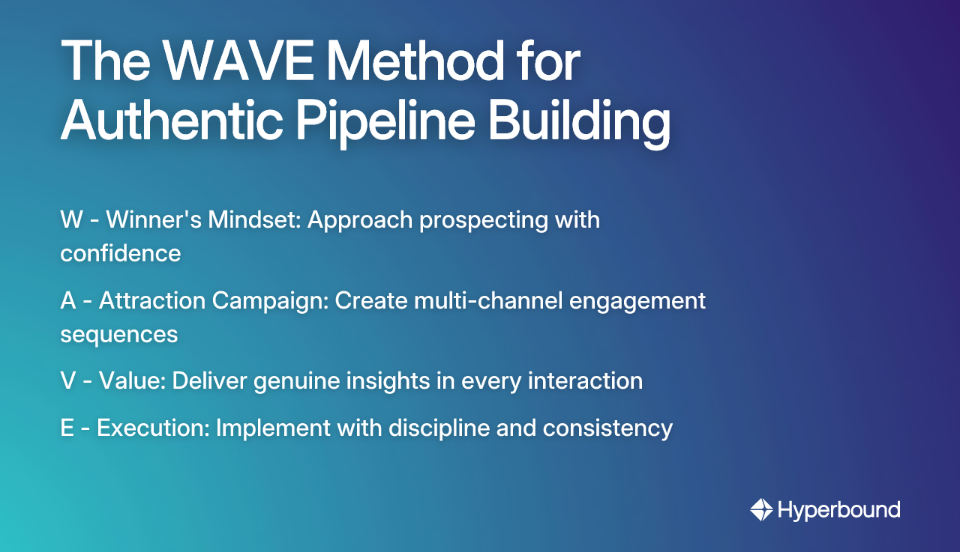
W - Winner's Mindset
We've discussed this already, but it bears repeating: your psychological approach to prospecting dramatically impacts your results. Approach each outreach with confidence that you're offering genuine value, not interrupting someone's day.
A - Attraction Campaign
This isn't random cold outreach. An attraction campaign is a thoughtful, multi-channel sequence designed to engage prospects with valuable insights at each touchpoint. Here's what a non-salesy attraction campaign might look like:
- Touch 1 (Email): Share a relevant industry report or article with one key insight highlighted specifically for them.
- Touch 2 (LinkedIn): Send a connection request with a personalized note referencing the email.
- Touch 3 (Email): Follow up with a specific observation or idea relevant to their business.
- Touch 4 (Phone): Make a brief call referencing the value you've already shared and asking for input.
This approach feels less like cold calling and more like a natural relationship-building process.
V - Value
This is the heart of non-salesy pipeline building. Every interaction should provide something beneficial to the prospect, whether it's:
- Industry insights they haven't considered
- Research relevant to their specific challenges
- A useful framework for thinking about their problem
- An introduction to someone in your network
Remember, 58% of sales meetings aren't considered valuable by buyers. Your goal is to be in the other 42% by consistently delivering genuine value before asking for anything in return.
E - Execution
The best strategy means nothing without disciplined implementation. Set aside dedicated time blocks for prospecting activities, track your efforts, and hold yourself accountable. Consider finding an accountability partner to share weekly goals and progress.
As one Reddit user noted, "It takes maybe a couple of weeks up to a month to get the messaging on point," so be prepared to refine your approach as you gather feedback. This is where modern tools can dramatically accelerate the learning curve. For instance, platforms like Hyperbound allow sales reps to practice their messaging in hyper-realistic AI roleplays, receive instant feedback, and master new talk tracks in days, not weeks. This provides a safe, effective environment to hone your approach before engaging with live prospects.

Practical, Non-Salesy Pipeline Filling Strategies
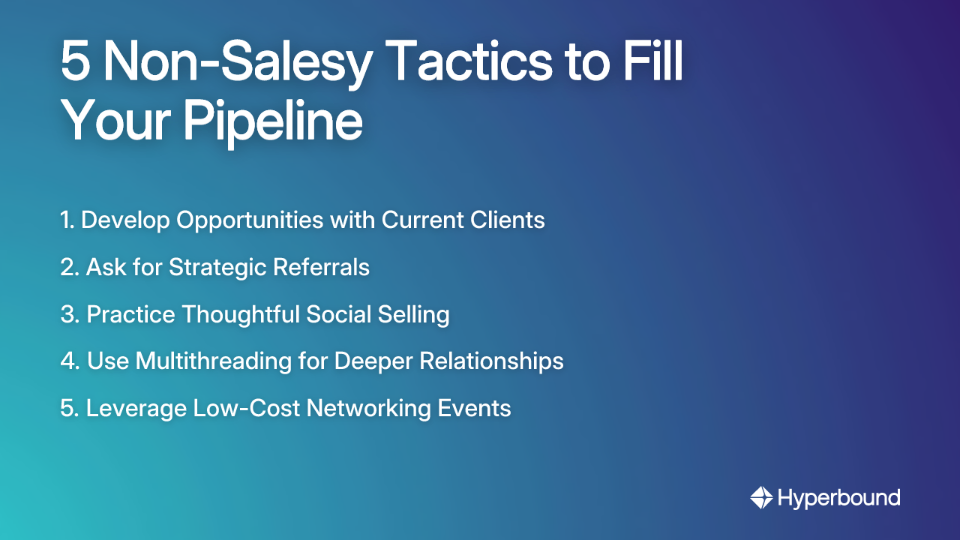
Beyond the WAVE framework, here are specific tactics that help fill your pipeline without triggering that "I feel like a used car salesman" sensation:
1. Develop Opportunities with Current Clients
Your existing customers are gold mines for pipeline development. Regularly check in to understand their evolving needs, explore new use cases, and discuss how additional offerings might address emerging challenges. This approach feels natural because you're building on an established relationship where you've already delivered value.
2. Ask for Referrals
Happy clients are often willing to introduce you to peers who might benefit from your solution. Instead of the awkward "Do you know anyone who needs what I sell?" try a more consultative approach:
"Based on the success we've had addressing [specific problem], I'm looking to help similar organizations facing these challenges. Who in your network might be dealing with similar issues?"
3. Practice Strategic Social Selling
Effective social selling isn't just sending connection requests. It's about participating thoughtfully in online conversations where your prospects are active. Share insightful content, comment meaningfully on industry discussions, and establish yourself as a knowledgeable resource before making any direct pitches.
4. Use "Multithreading" to Build Deeper Relationships
Relying on a single contact within a target account is risky. LinkedIn research shows that 86% of sellers report losing or delaying a deal due to a change in buyer roles. Multithreading—building relationships with multiple contacts within a target organization—provides insurance against this common pitfall.
Identify various stakeholders who might be affected by your solution, including decision-makers and influencers, and develop relationships with each. This approach feels less pushy because you're creating a broader network rather than pressuring a single contact.
5. Leverage Low-Cost Networking (for those with budget constraints)
If you're working with limited financial resources, take heart in this practical advice from a Reddit user: "Try local entrepreneur and other business networking meetups. Good thing about dashboards and analytics are they are very much in focus for management, which you can find a good amount at these groups."
Economic development forums, industry-specific meetups, and educational webinars can all be fertile ground for relationship building without requiring significant investment.
Maintaining a Healthy Pipeline Without the Grind
Building a pipeline is one challenge; maintaining it is another. Here's how to keep your pipeline healthy without constant hustle:
Use a CRM to Stay Organized
A Customer Relationship Management (CRM) system is essential for tracking prospects through the sales stages and automating follow-ups. It provides a visual representation of your sales pipeline, helping you identify gaps and prioritize opportunities.
Even a simple spreadsheet can work if you're just starting out. The key is having a system that prevents opportunities from falling through the cracks.
Track Key Metrics
What gets measured gets managed. Monitor metrics like:
- Conversion rates between pipeline stages
- Sales cycle length
- Pipeline value
- Win rate
- Engagement rates for different outreach methods
These metrics help you identify what's working and where you need to refine your approach.
Avoid "Mirage Pipelines"
A "mirage pipeline" looks full but contains mostly stale, inactive, or unqualified opportunities. To prevent this common trap, regularly review your pipeline with honesty. Update the status of leads, advance them to the next stage with clear exit criteria, or remove them if they're no longer a fit.
This practice might temporarily deflate your pipeline, but it ensures you're focusing on genuine opportunities rather than comforting yourself with inflated numbers.
The Sustainable Path Forward
Building a sales pipeline without feeling salesy isn't about tricks or techniques—it's about a fundamental shift in approach. When you genuinely position yourself as a problem-solver rather than a product-pusher, prospecting becomes less about awkward interruptions and more about creating valuable connections.
Is this approach easy? No. As one sales professional candidly shared, "You're going to have to kiss a lot of frogs to get a real meeting." Building a robust pipeline takes time, persistence, and resilience.
But by embracing a consultative mindset, focusing on delivering value at every touchpoint, and systematically implementing the strategies outlined here, you can fill your pipeline without sacrificing your authenticity or dignity.
The result? Not just a healthier pipeline, but a more sustainable and fulfilling career in sales—one where your prospects actually look forward to hearing from you because they know you bring value, not just another pitch.
Frequently Asked Questions
What is the best way to fill a sales pipeline without being pushy?
The best way to fill a sales pipeline without being pushy is to adopt a consultative selling mindset, where you focus on providing value and solving problems rather than pitching products. This approach positions you as a trusted advisor, not just a vendor. Instead of leading with what your product does, you lead with insights, relevant research, and a genuine interest in the prospect's challenges, which builds trust and makes them more receptive to your outreach.
How can I overcome the fear of rejection in sales prospecting?
Overcoming the fear of rejection starts with shifting to a "Winner's Mindset," which reframes prospecting as an opportunity to provide value. Data shows that 82% of buyers are open to meetings with sellers who proactively reach out. When you approach outreach with the confidence that you are offering genuine insights and solutions, the fear diminishes because your focus moves from "Will they say no?" to "How can I help them?".
How long does it take to build a healthy sales pipeline?
Building a healthy sales pipeline doesn't happen overnight; it typically takes consistent effort over several weeks to a month to refine your messaging and start seeing a steady flow of meetings. The key is disciplined execution and persistence. It involves dedicating specific time blocks to prospecting, tracking your efforts, and continuously refining your approach based on feedback.
What is the difference between a product feature and a benefit?
A feature is what your product is or does, while a benefit is what the feature means for the customer in terms of solving their problems or achieving their goals. For example, a feature might be "Our software integrates with your CRM." The corresponding benefit is "This integration saves your team 5 hours weekly on manual data entry." Buyers are motivated by benefits that address their specific pain points.
Why does my sales pipeline look full but not convert to sales?
This common issue is often due to a "mirage pipeline"—a pipeline that appears full but is clogged with stale, unqualified, or inactive leads. To avoid this, you must regularly review your pipeline with honesty, advance leads only when they meet clear exit criteria, and remove those that are no longer a fit. This ensures you focus your energy on genuine opportunities that are likely to close.
How can I practice my sales messaging without risking real prospects?
You can effectively practice your sales messaging in a risk-free environment by using AI-powered sales roleplay platforms. Tools like Hyperbound allow sales representatives to practice new talk tracks and consultative selling techniques in hyper-realistic AI simulations. This provides a safe space to receive instant feedback, refine your approach, and build confidence before engaging with actual buyers.
Book a demo with Hyperbound


