

.png)
Summary
- A staggering 72% of sales training initiatives fail, primarily due to low user adoption of platforms that are not integrated into daily workflows.
- Successful onboarding tools prioritize seamless CRM integration, engaging bite-sized content, and realistic practice to keep reps engaged long-term.
- To boost effectiveness, look for platforms that offer realistic, AI-powered practice; Hyperbound’s AI Sales Roleplays provide a safe environment for reps to build confidence and master new playbooks.
You've just spent thousands on that highly-recommended sales training platform. Six months later, you check the analytics and discover only 15% of your reps are actually logging in. Sound familiar?
"Most of the 'all-in-one' training platforms looked great in a demo but then just became another tab my reps ignored," admits one sales leader in a recent Reddit discussion. This frustrating reality is why 72% of sales training initiatives fail according to research by The Sales Collective.
The stakes couldn't be higher. Effective onboarding is critical to avoiding the high costs of a bad hire and improving retention. With the sales training software market projected to grow from $5.57 billion in 2025 to $12.38 billion by 2034, companies are investing heavily in solutions that promise to transform new hires into revenue-generating machines.
But which platforms actually deliver? This article cuts through the marketing noise to compare seven platforms that sales leaders say their teams actually use beyond the two-week honeymoon period.
What Is Sales Onboarding Software, Really?
At its core, sales onboarding software is a digital system designed to streamline and standardize the training process for new sales representatives. Effective platforms typically include:
- Delivery of training content (videos, documents, quizzes)
- Progress tracking and performance assessment
- Interactive elements like role-plays and simulations
- Centralized access to sales enablement materials and training playbooks
But having features is one thing—having features your team will use is another story entirely.
Why Most Onboarding Tools Fail (And What to Look for Instead)
"The tools that last are the ones that plug right into daily workflows," notes one experienced sales trainer. Feature lists become meaningless if your team abandons the platform after initial training.
When evaluating sales onboarding software for 2026, focus on these five critical factors:
.png)
1. Seamless Workflow Integration
The best tools live where your reps already work—in your CRM, email, or messaging platforms. Look for solutions that enable "in-the-flow learning" so reps can access training without switching contexts.
2. Engaging, Bite-Sized Content
One sales leader shared their breakthrough: "Instead of dumping frameworks into a 90-minute video, we gave reps micro-scenarios they could practice in 5–10 minutes."
Modern attention spans demand microlearning approaches. Prioritize platforms that support video coaching, mobile access, and quick practice sessions that reps can complete between calls.
3. Realistic Practice & AI-Powered Coaching
Sales reps consistently engage with platforms that "feel like practicing with a tough prospect." This is where AI-powered tools shine. Platforms like Hyperbound create hyper-realistic roleplay simulations where reps can practice handling objections and mastering talk tracks against a dynamic AI buyer.
Look for features like:
- AI Sales Roleplays: For safe, repeatable practice.
- Real Call Scoring: To analyze actual performance against your methodology.
- Personalized AI Coaching: To give reps instant, scalable feedback.
Several managers reported that analyzing "best moments from call recordings" and using real call data to create practice scenarios proved more effective than theoretical training.
4. A Centralized Knowledge Hub
New reps waste precious time "hunting through different logins" to find critical information. Successful onboarding platforms provide one centralized place for all scripts, processes, and SOPs.
This centralization is why some teams see new hires "actually contribute by day 3 instead of sitting through weeks of scattered training sessions."
5. Analytics That Tie to Performance
Basic completion rates tell you nothing about effectiveness. Look for platforms with a Rep View dashboard that links training activities to actual sales performance metrics like conversion rates and deal size.
The most advanced tools include "sales readiness indices" that measure competency and identify coaching opportunities based on real performance data.
The Top 5 Sales Onboarding Platforms for 2026: An In-Depth Comparison
1. Hyperbound
Best For: Scaling sales coaching and practice with AI-powered roleplays.
Key Features:
- AI Sales Roleplays: Allows reps to practice any sales scenario against a hyper-realistic AI buyer.
- AI Real Call Scoring: Analyzes and scores real customer calls against your team's playbook.
- Personalized AI Coaching: Delivers instant, objective feedback to accelerate skill development.
- Playbook Intelligence: Analyzes your top reps' calls to identify winning behaviors and build targeted practice scenarios.
How it Solves Real Problems: Directly addresses the need for realistic practice and scalable coaching. It helps reduce new hire ramp time and ensures the entire team can master new messaging or playbooks consistently.
Pricing: Custom
Pros & Cons:
- Pros: Provides a safe, repeatable environment for skill development without risking live deals. Delivers objective, data-driven feedback to reps and managers.
- Cons: Primarily focused on conversation intelligence and practice; less emphasis on general content management (LMS) features.
2. Mindtickle
Best For: Data-driven sales readiness and tracking rep competencies.
Key Features:
- Sales Readiness Index: A proprietary score to measure rep competency
- Leadership Dashboards: Provides visibility into team progress and skill gaps
- Gamification Tools: Engages reps with quizzes, contests, and leaderboards
- Built-in coaching and skills assessments
How it Solves Real Problems: Directly addresses the need for a Rep View dashboard to spot coaching opportunities and track impact in real time. Its gamification helps combat low user engagement.
Pricing: Custom (Mid-tier)
Pros & Cons:
- Pros: Excellent visibility into rep progress and strong gamification, according to user reviews.
- Cons: Mobile experience can have occasional lag issues
3. Allego
Best For: Video-based coaching and peer learning.
Key Features:
- Video Recording & Tagging: Reps can practice pitches and get feedback
- Peer Collaboration: Facilitates knowledge sharing among team members
- Customizable Scorecards: For standardized assessments and feedback
- Microlearning Approach: Supports short, digestible video content
How it Solves Real Problems: Perfect for teams that want to leverage "best moments from call recordings" and enable reps to learn from each other asynchronously.
Pricing: Custom (Mid-tier)
Pros & Cons:
- Pros: Strong video-based learning, user-friendly interface, and responsive support, according to user reviews.
- Cons: Can have an initial learning curve for advanced features
4. Trainual
Best For: Process-driven onboarding and centralizing company knowledge.
Key Features:
- SOP & Playbook Documentation: A system for creating and organizing all training materials
- AI-Powered Search: Helps reps quickly find the information they need
- Customizable Learning Paths: Assign specific training based on role
How it Solves Real Problems: As one user noted, "What actually worked for us was stepping back and getting our SOPs documented properly first." Trainual creates a single centralized place for everything new reps need.
Pricing: Starts at $249/month for small teams
Pros & Cons:
- Pros: Highly effective for documenting processes, very easy to use
- Cons: Initial setup and content migration can require planning and effort
5. Spekit
Best For: In-the-flow learning and tool adoption.
Key Features:
- Just-in-Time Training: Surfaces training content directly within the tools reps use daily
- Browser Extension: Delivers answers and process guides without switching tabs
- Easy Content Creation: Simple to create and search for bite-sized knowledge pieces
How it Solves Real Problems: This is the ultimate solution for the pain of training platforms becoming "another tab my reps ignored." By integrating directly into the CRM workflow, Spekit ensures training is always accessible.
Pricing: Custom (Mid-tier)
Pros & Cons:
- Pros: Excellent for integrated learning and driving adoption of other tools
- Cons: Pop-ups can be disruptive if not configured correctly
How to Choose the Right Platform for Your Team
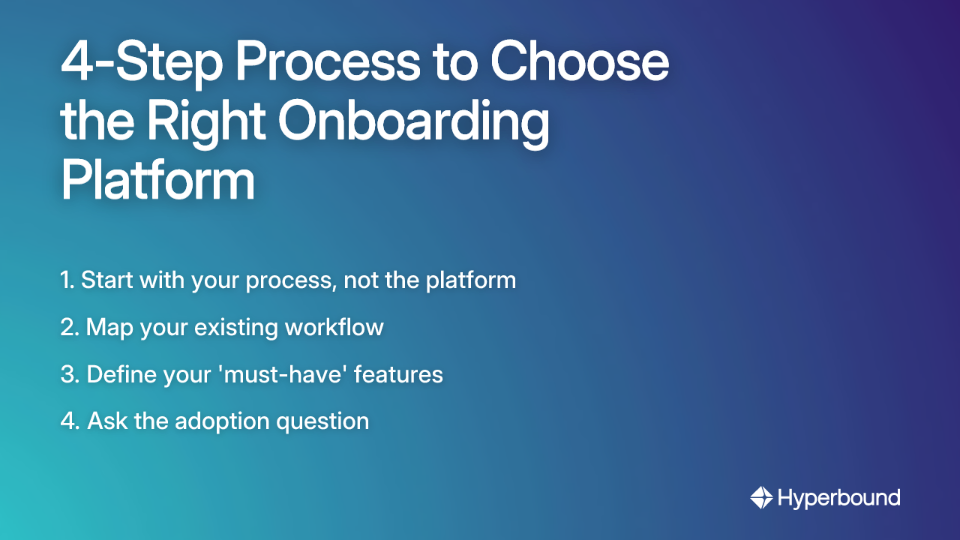
Before you demo anything, follow these four steps:
1. Start with Your Process, Not the Platform
Document your SOPs and 30-60-90 day onboarding plan first. Determine what knowledge is essential before selecting software to deliver it.
2. Map Your Existing Workflow
Where do your reps spend their time? In the CRM? Slack? Email? The best tool will meet them there, not force them to adopt yet another system.
3. Define Your "Must-Have" Features
Based on your team's specific needs, prioritize what's non-negotiable. Do you need video coaching, centralized SOPs, or data-driven readiness scores?
4. Ask the Adoption Question
Use this critical filter from sales leaders: "Will my team want to use this after the first two weeks?" Involve a rep in the demo process to gauge their reaction.
The Bottom Line
The best sales onboarding software in 2026 isn't about having the longest feature list. It's about deep integration, high engagement through relevant, bite-sized content, and providing analytics that actually connect to performance.
The right platform moves new hires from learning to doing, so they can "actually contribute by day 3 instead of sitting through weeks of scattered training sessions."
Before committing to a full rollout, use the framework above to assess your needs, shortlist 2-3 platforms from this list, and run a pilot program with a small team. The platform your reps actually use is the one that will transform your sales onboarding—no matter how many bells and whistles the alternatives promise.
Frequently Asked Questions
What is sales onboarding software?
Sales onboarding software is a digital platform designed to streamline and standardize the training process for new sales representatives. These tools go beyond traditional training by offering features like interactive role-plays, progress tracking against sales metrics, and centralized access to sales playbooks, all aimed at reducing ramp time and improving new hire performance.
Why do most sales training initiatives fail?
Most sales training initiatives fail due to low user adoption. This often happens when platforms are not integrated into a rep's daily workflow, forcing them to switch contexts, or when the content is delivered in long, unengaging formats. Successful platforms prioritize "in-the-flow" learning with bite-sized content that reps can access directly within their CRM or other primary tools.
What are the most important features of a sales onboarding tool?
The most critical features are those that drive engagement and performance. Look for seamless workflow integration with your CRM, support for engaging microlearning content, realistic practice environments like AI-powered role-plays, a centralized knowledge hub for all materials, and analytics that directly connect training activities to sales performance.
How does AI improve sales onboarding?
AI improves sales onboarding by providing scalable and personalized practice. AI-powered tools like Hyperbound can simulate realistic sales conversations, allowing reps to practice handling objections and mastering talk tracks in a safe, repeatable environment. This provides instant, objective feedback that accelerates skill development far more efficiently than traditional coaching alone.
How can I ensure my team will actually use new onboarding software?
To ensure high adoption, choose software that meets your reps where they already work—inside their CRM, email, or messaging apps. Involve your team in the evaluation process to get their buy-in. Prioritize platforms that offer tangible, immediate value to their daily tasks, such as quick access to information or effective practice tools that help them close more deals.
What is the difference between sales onboarding software and a traditional LMS?
The key difference is specialization. A traditional Learning Management System (LMS) is a general-purpose platform for company-wide training content. Sales onboarding software is purpose-built for the unique needs of a sales team, focusing on skills like objection handling, conversation intelligence, call coaching, and integration with sales-specific tools like CRMs.
How do you measure the ROI of a sales onboarding platform?
The ROI of a sales onboarding platform is measured by tracking key business metrics. These include a reduction in new hire ramp time (time to first deal or full quota), an increase in quota attainment across the team, improved conversion rates, and higher sales rep retention. The right platform will provide dashboards that link training progress to these performance outcomes.
Book a demo with Hyperbound


