.png)


.png)
Summary
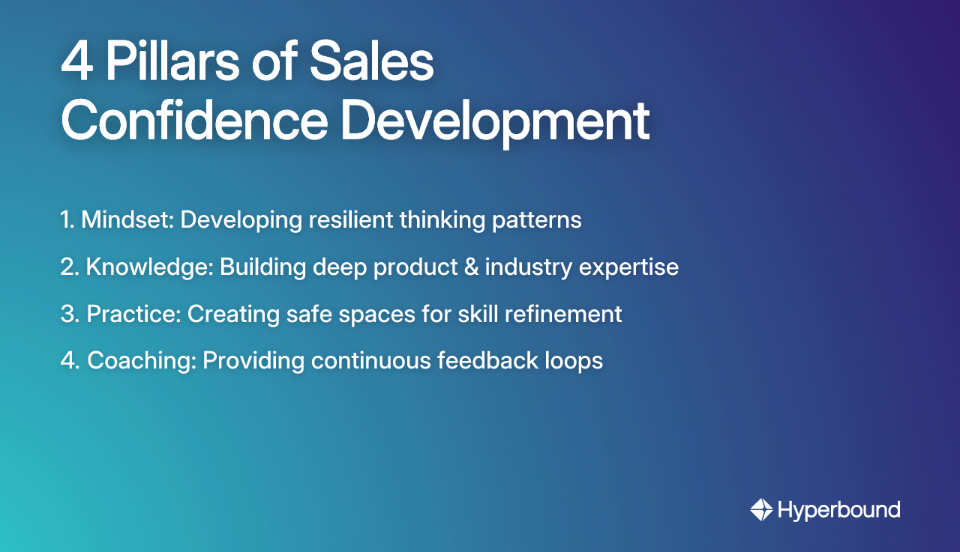
- Sales confidence isn't innate; it's systematically built upon four pillars: a growth mindset, deep knowledge, deliberate practice, and continuous coaching.
- Performance is 80% mindset and 20% skill, making the cultivation of a resilient mental foundation the most critical first step for new reps.
- Inexperienced reps build competence through deliberate practice, but traditional role-play is often inefficient and lacks realism.
- AI-powered tools like Hyperbound's AI Sales Roleplays provide a scalable, risk-free environment for reps to build muscle memory and confidence through repetition.
You've got a new sales rep on the team. They look great on paper—smart, personable, eager to learn. But when it's time to pick up the phone or join that first discovery call, you see it: the hesitation, the nervous fidgeting, the script-reading that sounds anything but natural. Despite all their potential, they lack the one thing that separates good salespeople from great ones: confidence.
For inexperienced sales reps, the emotional toll of facing rejection in high-pressure situations can be overwhelming. Many enter the profession lacking direction or purpose, only to have their personal insecurities and vulnerabilities highlighted with every challenging call.
But here's the good news: sales confidence isn't innate—it's built systematically.
What Is True Sales Confidence?
True sales confidence goes beyond bravado or aggressive pitching. It's "the ability to sell effectively and persuasively, making the customer feel at ease through conviction and sincerity," according to sales expert Tony Robbins.
The most successful sales leaders understand that performance is 80% mindset and 20% skill. Without the right mindset foundation, even the most polished techniques will fall flat.
In this guide, I'll walk you through a systematic approach to building unshakeable confidence in your inexperienced sales reps, focusing on four essential pillars: mindset, knowledge, practice, and coaching.
The Foundation: Cultivating a Confident Mindset
Before your reps can act confidently, they must think confidently. Here's how to help them develop the right mental foundation:
Foster a Growth Mindset
The long-lasting effects of past rejections can haunt new reps, creating a fear-based approach to sales. Combat this by framing failures not as personal deficits but as valuable learning opportunities.
Create a team culture where:
- Mistakes are analyzed for lessons, not punished
- "No's" are seen as steps toward eventual "yes's"
- Improvement is celebrated as much as achievement
When reps understand that abilities can be developed through dedication and hard work, they're more likely to persist through challenges.
Teach Reps to Transform Their State
High-performing salespeople know how to manage their emotional state before important calls or meetings. Teach your reps these proven techniques:
Visualization: Have them mentally rehearse successful sales conversations before they happen. This creates a mental blueprint for success and reduces anxiety.
Body Language: Research shows that physical posture affects mindset. Encourage "power poses"—standing tall with shoulders back—before calls. Even on the phone, this projects confidence that customers can hear.
Reframing: Help reps reframe rejection from "I'm not good enough" to "My approach needs refinement" or "This prospect wasn't the right fit."
Distinguish Confidence from Arrogance
Many new reps struggle with conflicting feelings about confidence, worrying that assertiveness might come across as pushiness. Help them understand that:
- Confidence is believing in your ability to provide value.
- Arrogance is an exaggerated sense of self-importance.
A confident rep can admit when they don't know something, while an arrogant one pretends to know everything. The former builds trust; the latter destroys it.
Building Competence: Confidence Through Knowledge
True confidence is rooted in competence. When reps know what to say and do, they naturally project self-assurance.
Develop Deep Subject-Matter Expertise
Go beyond basic product training. Equip your reps with knowledge about:
- Industry challenges your solution addresses
- Market trends affecting your customers
- Competitor weaknesses and how to address them
- Customer success stories that demonstrate real-world impact
This depth of knowledge positions reps as trusted advisors rather than mere vendors, fundamentally changing the dynamic of sales conversations.
Implement a Consistent Sales Process
A well-defined sales process serves as a safety net for new reps. It tells them:
- What stage they're in
- What to do next
- What the goal of each interaction is
This structure reduces uncertainty and allows them to focus on the customer, not on figuring out their next move. Following a consistent sales process builds familiarity and comfort, which are essential components of confidence.
Learn from Reality: The Power of Call Recordings
One of the most effective onboarding techniques is having new reps listen to actual sales calls. Top sales trainers recommend having new hires listen to 20-30 real sales calls during onboarding.
This approach:
- Demystifies what "good" sounds like
- Normalizes objections and tough questions
- Reduces fear of the unknown
- Provides concrete examples to model
Have them listen to both successful and unsuccessful calls, analyzing the differences in approach, tone, and questioning techniques. This real-world exposure is invaluable for building realistic expectations and practical strategies.
Forging Skills: The Critical Role of Deliberate Practice
Knowledge without application remains theoretical. To build true confidence, inexperienced reps need a safe space to practice, fail, and refine their skills before facing live prospects.
The Problem with Traditional Role-Play
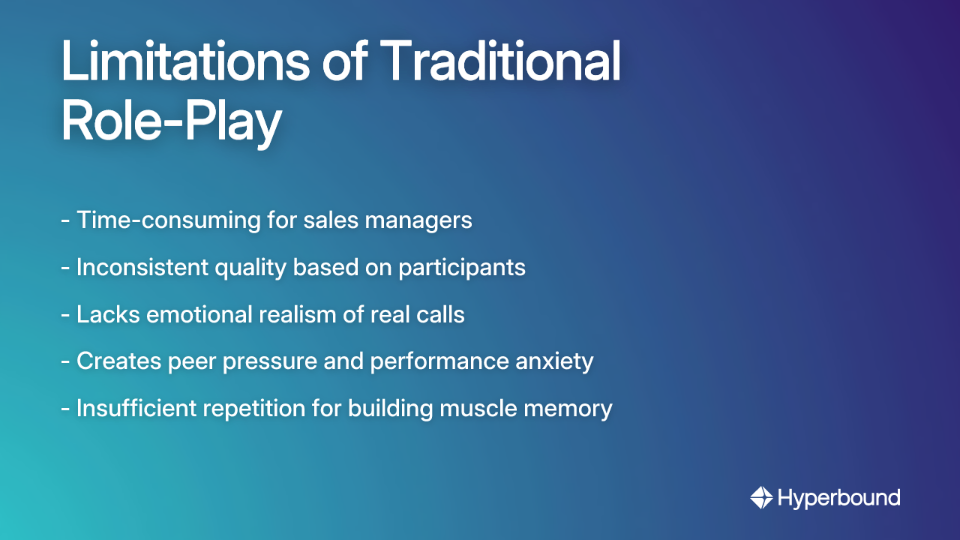
Traditional role-play has been the go-to practice method for decades, but it comes with significant limitations:
- It's time-consuming for managers
- The quality varies based on who's playing the customer
- It lacks the realism needed to prepare reps for the emotional aspects of real calls
- Reps often feel self-conscious practicing in front of peers
These limitations mean reps don't get enough practice to build the muscle memory needed for confident sales conversations.

AI-Powered Practice: A Game-Changer for Skill Development
This is where modern technology is transforming sales training. AI-powered practice platforms like Hyperbound provide a solution to the traditional role-play problem.
With AI Sales Roleplays, reps can:
- Practice unlimited scenarios in a risk-free environment, from cold calls to discovery, demos, objection handling, and even renewal conversations
- Get instant, objective feedback through AI-powered scorecards that track key metrics like talk ratios, question quality, and objection handling effectiveness
- Build skills through gamification with leaderboards and scoring that make the "continuous pressure to improve" feel more like a game and less overwhelming
The ability to practice difficult conversations repeatedly without fear of judgment addresses the core confidence barrier most new reps face: fear of making mistakes in front of real customers or colleagues.
Scaling Success: Coaching and Feedback Loops
Confidence isn't built in a day. It requires continuous, personalized coaching that reinforces positive behaviors while constructively addressing growth areas.
Create a Feedback-Rich Environment
Effective coaching starts with trust. Build authentic relationships with reps where feedback is seen as a gift, not a judgment.
Practice active listening in 1-on-1s by:
- Asking open-ended questions about their challenges
- Encouraging self-evaluation before offering your perspective
- Focusing on specific behaviors rather than general impressions
When reps feel safe receiving feedback, they're more likely to implement it and grow.
Focus on One Skill at a Time
Don't overwhelm new reps with a laundry list of improvements. Identify the single biggest lever for growth and focus coaching efforts there until it's mastered. This creates a sense of progress that builds confidence incrementally.
Leverage AI to Scale World-Class Coaching
Managers can't review every call or provide immediate feedback on every interaction. This is where AI coaching tools become a force multiplier for your development efforts.
Solutions like Hyperbound's AI Call Scoring can:
- Automatically analyze 100% of real sales conversations
- Score calls against your custom methodology
- Identify coaching opportunities without requiring manager time
Meanwhile, AI Coaching can provide reps with immediate, personalized feedback after calls, highlighting missed opportunities and suggesting improvements. This empowers reps to take control of their own development, building confidence through autonomy.

Building Your High-Confidence Sales Team
Building sales confidence in inexperienced reps isn't mysterious or left to chance. It's a systematic process built on four pillars:
- Mindset: Cultivating a growth-oriented, resilient mental foundation
- Knowledge: Developing deep expertise in your product, industry, and sales process
- Practice: Creating opportunities for deliberate, realistic skill development
- Coaching: Providing continuous feedback and support for improvement
By implementing this framework, you can transform anxious, inexperienced reps into composed, effective, and confident performers. And with modern tools like Hyperbound's AI Sales Roleplay and Coaching platform, you can scale this transformation across your entire team, reducing ramp time and improving performance metrics.
Remember, as many in the sales community report, sales can be "a transformative experience for personal growth and confidence building." By providing the right foundation, you're not just building better salespeople—you're helping team members develop skills that will benefit them throughout their careers and lives.
Frequently Asked Questions
What is true sales confidence?
True sales confidence is the ability to sell effectively and persuasively by making the customer feel at ease through genuine conviction and sincerity. It goes beyond mere bravado and is built on a foundation of a strong mindset, deep knowledge, consistent practice, and supportive coaching.
How can I help a new sales rep overcome the fear of rejection?
You can help reps overcome the fear of rejection by fostering a growth mindset where "no's" are treated as learning opportunities, not personal failures. Teach them to reframe negative outcomes, use visualization techniques to mentally rehearse success, and focus on developing skills that build their competence and reduce uncertainty.
What's the difference between being confident and being arrogant in sales?
The key difference is that confidence is rooted in the belief that you can provide value, while arrogance is an exaggerated sense of self-importance. A confident rep is a trusted advisor who can admit they don't have all the answers, which builds trust. An arrogant rep pretends to know everything, which ultimately erodes it.
Why is traditional role-play often ineffective for building confidence?
Traditional role-play is often ineffective because it can be time-consuming, inconsistent in quality, and lacks the emotional realism of actual sales calls. Furthermore, reps may feel self-conscious practicing in front of peers, which creates performance anxiety and prevents them from getting the repetition needed to build true muscle memory.
How can AI tools help build a sales rep's confidence?
AI tools can significantly accelerate confidence-building by providing a safe and scalable environment for practice and feedback. AI-powered role-play platforms allow reps to practice unlimited scenarios without fear of judgment, while AI call scoring and coaching tools offer immediate, objective feedback on real conversations, empowering reps to take control of their own development.
What is the most important pillar for building sales confidence?
All four pillars—mindset, knowledge, practice, and coaching—are essential and interconnected for building lasting sales confidence. However, mindset is the foundation upon which everything else is built. Without a resilient, growth-oriented mindset, even the best training and coaching will have limited impact.
How do I create a consistent sales process for new reps?
To create a consistent sales process, clearly define each stage of the sales cycle, from prospecting to closing. For each stage, outline the key objectives, required actions, and specific criteria for moving a deal forward. This provides a clear roadmap that reduces uncertainty and allows reps to focus on the customer instead of worrying about what to do next.
Book a demo with Hyperbound


