.png)


.png)
Summary
- The Coaching Gap: Startups struggle with sales coaching due to high costs and limited manager time, yet coached reps outperform their peers by up to 20%.
- A Hybrid Solution: The most effective approach for startups combines foundational manual strategies, like peer coaching and structured frameworks, with scalable technology.
- The Power of AI: AI coaching provides a cost-effective solution that helps new hires ramp 23% faster and saves managers 5-7 hours weekly by automating call reviews.
- Accessible Enterprise-Grade Tools: Platforms like Hyperbound's AI Coaching make advanced coaching accessible, allowing reps to practice complex sales scenarios and receive instant, data-driven feedback to improve performance.
Are you a sales leader at a startup, feeling the pressure to close transformational deals but worried your team is "missing some tricks" when it comes to complex skills like executive alignment and account mapping? You're not alone. Many reps struggle with building a compelling narrative, navigating complex stakeholder dynamics, and structuring effective executive meetings.
The challenge? While coaching is critical for success (the industry is projected to hit $20 billion by 2024, with 99% of companies reporting satisfaction), traditional enterprise coaching platforms remain prohibitively expensive for startups. The good news is that 2025 brings new possibilities for building powerful, scalable coaching systems without the enterprise-level budget.
The Enterprise Coaching Conundrum: High Cost vs. High Stakes
Building a coaching platform from scratch is simply out of reach for most startups. Costs can quickly escalate:
- Platform Development: $30,000 to $100,000+
- Marketing & Promotion: $10,000 to $50,000
- Legal & Compliance: $5,000 to $15,000
Even more challenging is what I call the "Coaching Productivity Paradox" – while reps who receive effective coaching outperform peers by 17-20%, managers typically spend only 5% of their time coaching due to competing priorities. This creates a dangerous gap between the proven impact of coaching and the limited bandwidth to deliver it.
For startups, this paradox is even more acute. Your sales leaders are often wearing multiple hats, leaving precious little time for structured coaching, despite its outsized impact on performance and revenue.
The Foundational Layer: Low-Cost, High-Impact Manual Strategies
Before diving into technology solutions, startups should establish these foundational coaching elements:
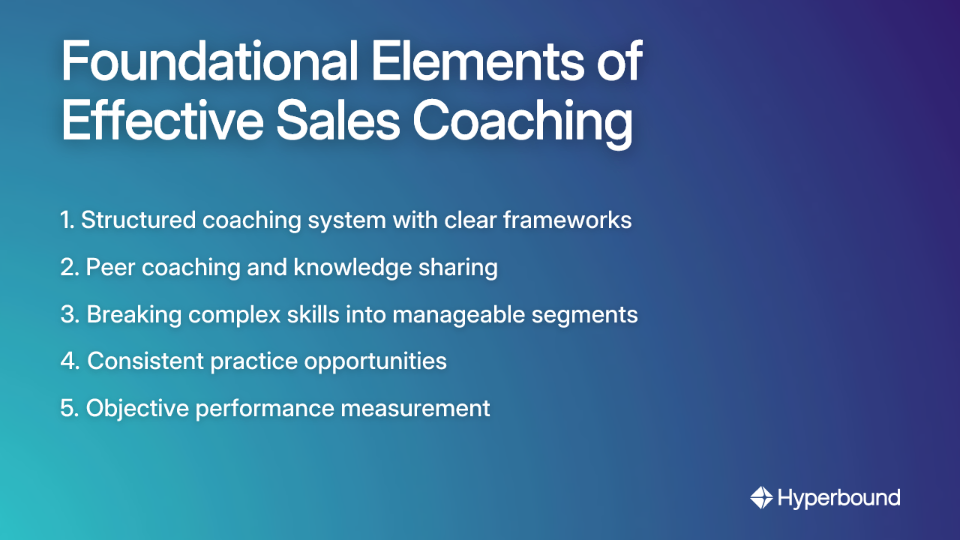
1. Implement a Structured Coaching System
Don't leave coaching to random ad-hoc conversations. Define a clear framework that breaks coaching into distinct types:
- Deal Strategy Coaching: Reviewing active deals in the pipeline
- Skills Development: Focusing on specific competencies like objection handling
- Pipeline Management: High-level review of pipeline health and forecasting
Even a simple structure of weekly 30-minute sessions focused on one of these areas can dramatically improve coaching consistency and effectiveness.
2. Foster Peer Coaching
Your top performers are walking repositories of winning behaviors. Create a systematic way for them to mentor newer or struggling team members:
- Schedule weekly "win shares" where top performers demonstrate successful approaches
- Implement a "ride-along" program where newer reps can join calls with experienced sellers
- Build a library of recorded "best practice" calls that new hires can study
This approach distributes the coaching load and creates a culture of continuous learning.
3. Break Down Complex Skills
Enterprise selling is complex, but coaching doesn't have to be. Instead of trying to teach "enterprise selling" holistically, break it into manageable learning segments:
- Focus one week solely on how to open a cold call to an executive
- Dedicate another session to handling the "we don't have budget" objection
- Practice account mapping in small, focused exercises
This micro-learning approach makes coaching more digestible and practical.
While these manual strategies provide a strong foundation, they still face an inevitable ceiling. They're difficult to scale, hard to measure objectively, and ultimately rely on the limited time of your best people. This is where technology comes in.
The Scalability Solution: Leveraging AI for Cost-Effective Coaching
This is where AI sales coaching enters as the game-changer for startups in 2025. AI sales coaching uses artificial intelligence to provide real-time, personalized training and feedback, available 24/7. These platforms analyze calls, simulate sales scenarios, and offer data-driven insights to help reps improve.
The benefits for startups are particularly compelling:
- Faster Onboarding: New hires can ramp up 23% faster by practicing in simulated environments. For fast-growing startups, this acceleration can be the difference between hitting growth targets and falling short.
- Increased Productivity & Quota Attainment: AI tools save managers 5-7 hours per week by automating call reviews. Companies using AI coaching see 16% higher quota achievement. This means your limited management team can focus on strategic work while still ensuring coaching happens consistently.
- Consistent, Unbiased Training: AI ensures every rep is coached to the same standard, based on your playbook, eliminating the variability of individual manager styles. This creates a consistent sales experience that builds your brand in the market.
- Data-Driven Decision Making: AI provides objective metrics on performance, moving beyond gut-feel coaching to data-backed strategy. According to Salesforce's State of Sales Report, improving training is the top growth tactic for sales leaders.
Putting AI into Practice: A Look at an AI-Powered Coaching System
Platforms like Hyperbound are making enterprise-grade AI coaching accessible to startups. Let's examine how these tools address specific sales challenges:
For the rep "missing some tricks" in complex deals:
AI Sales Roleplays allow reps to practice account mapping strategies and executive alignment conversations against realistic AI buyer personas. They can simulate a transformational deal scenario, practice building a narrative that mitigates risk aversion, and refine their pitch in a safe-to-fail environment.
A rep struggling with executive meetings can practice dozens of simulated C-level conversations before ever stepping into a real one, receiving instant feedback on their approach, questioning strategy, and value articulation.
For the manager with no time for call reviews:
AI Real Call Scoring automates the QA process. It listens to actual sales calls, scores them against the company's methodology, and provides an AI Deal Summary that highlights key moments and objections.
For example, a sales manager at a startup can have the AI analyze all discovery calls from the previous week, identifying patterns of strength and weakness across the team without spending hours listening to recordings.
For the rep needing immediate, actionable feedback:
AI Coaching provides instant, personalized feedback after every roleplay and real call. It identifies missed opportunities or weak responses, providing the structured guidance reps crave to self-correct and improve continuously.
A rep who just finished a difficult call with a skeptical prospect can immediately receive an AI coaching report highlighting where they could have addressed objections more effectively or asked stronger discovery questions.
The technology extends beyond just core selling scenarios to other critical functions like post-sales conversations (renewals, upsells) and even hiring (assessing candidate skills objectively).
Your 5-Step Implementation Plan for a Tech-Enabled Coaching System
Ready to implement an AI-powered coaching system for your startup? Here's a practical plan to get started:

1. Identify 2-3 Core Skills to Target
Don't try to boil the ocean. Start by identifying the biggest skill gaps holding your team back:
- Is it discovery questioning?
- Handling a specific competitor?
- Articulating value for a new product?
Focus your initial coaching efforts on these high-impact areas. For example, if your team struggles with executive engagement, make this your first AI coaching focus area.
2. Run a Pilot Program
Select a small, motivated group of reps to test the AI coaching tool. This helps work out kinks and build internal champions before a full rollout.
The ideal pilot group includes both veterans and newer team members to see how the system benefits different experience levels. Set clear success metrics for the pilot, such as improvement in targeted skills or reduction in onboarding time.
3. Customize the AI to Your Playbook
The magic of modern AI coaching is its customizability. Upload your sales methodology, talk tracks, and key discovery questions so the AI coaches reps according to your winning behaviors.
For instance, Hyperbound's AI Coaching can be trained on your specific sales playbook, ensuring feedback is aligned with your unique methodology and market approach.
4. Communicate Clearly and Build Excitement
Frame the tool not as "Big Brother" but as a personal performance coach available 24/7. Use gamification features like leaderboards to drive adoption and friendly competition.
Emphasize how the system helps reps perfect their craft through practice, not just evaluation. Share early success stories from the pilot to build momentum.
5. Measure Success and ROI
Track key metrics before and after implementation:
- User engagement (how often reps are practicing)
- Skill progression scores
- Impact on business outcomes (conversion rates, ramp time, quota attainment)
Document these improvements to justify the investment and guide future expansions of your coaching system.
Conclusion: The Future of Startup Coaching is Here
Building an enterprise-grade coaching system is no longer a privilege reserved for large corporations with deep pockets. The "Coaching Productivity Paradox" is real, but in 2025, it's solvable even for resource-constrained startups.
The path forward is a smart, hybrid model: create a strong internal coaching culture with foundational strategies, then supercharge it with scalable, affordable, and highly effective AI tools.
In today's competitive landscape, the startups that win will be the ones that learn the fastest. By embracing AI coaching, you give your team the tools to practice, get feedback, and master their craft—turning potential into performance and deals into revenue.
The best part? You don't need a Fortune 500 budget to do it. Technologies like Hyperbound are democratizing access to enterprise-grade coaching, giving startups the power to build high-performing sales teams that can compete with anyone.
Frequently Asked Questions
What is AI sales coaching?
AI sales coaching is a technology that uses artificial intelligence to provide sales representatives with personalized, data-driven feedback and training. It analyzes sales calls, simulates realistic selling scenarios for practice, and offers insights to help reps improve skills like objection handling and value articulation, all available 24/7.
Why is traditional sales coaching challenging for startups?
Traditional sales coaching is challenging for startups primarily due to high costs and the limited time of sales managers. Building a custom coaching platform can be prohibitively expensive, while sales leaders in startups often wear multiple hats, leaving little time for dedicated coaching. This creates a gap between the need for skilled reps and the capacity to train them effectively.
How does AI coaching improve sales performance?
AI coaching improves sales performance by providing consistent, scalable, and personalized training that leads to faster onboarding, higher quota attainment, and increased productivity. For example, new hires can ramp up 23% faster by practicing in simulated environments, and AI can save managers 5-7 hours per week by automating call reviews, allowing them to focus on high-level strategy.
What are the first steps to creating a sales coaching program on a budget?
The first steps to creating a budget-friendly sales coaching program involve implementing structured manual strategies before investing in technology. Start by defining a clear coaching framework (e.g., weekly sessions for deal strategy), fostering a peer coaching culture where top performers mentor others, and breaking down complex skills into smaller, manageable learning segments.
Will AI replace sales managers?
No, AI coaching is designed to augment, not replace, sales managers. The technology acts as a force multiplier, handling time-consuming tasks like reviewing every call and providing initial feedback. This frees up managers to focus on more strategic coaching, such as complex deal strategy, career development, and personalized mentoring.
How can I customize an AI coaching tool for my business?
You can customize modern AI coaching tools by uploading your company's specific sales playbook, methodologies, and key talk tracks. This allows you to train the AI on your unique winning behaviors, customer profiles, and objection-handling techniques, ensuring that the feedback provided is perfectly aligned with your market strategy.
Are you ready to transform how your startup approaches sales coaching in 2025?
Book a demo with Hyperbound


