

.png)
You've found a VoIP provider advertising an attractive monthly rate of just $20 per user. The sales rep has assured you this all-inclusive price will dramatically cut your business phone costs. But then your first bill arrives, and suddenly you're facing charges that were never discussed - digital line fees, regulatory recovery charges, and provisioning costs that have inflated your "affordable" solution by nearly 30%.
As one frustrated business owner put it, "At no point during our conversations did they tell me that it was an additional fee for having desk phones." Another discovered they were paying "an additional cost to have the privilege of USING the phone on their system instead of only using their softphone solution."
The truth is, the VoIP industry has become notorious for advertising low base rates while obscuring the actual costs in a maze of technical jargon and hidden fees. One user didn't mince words, declaring: "Paying $300/year per phone plus another $25/month per phone is an absolute ripoff, no way to call that otherwise."
This comprehensive guide will arm you with the knowledge to identify and question these hidden fees before signing a contract. We'll break down the most common charges, provide real examples from major providers like RingCentral, 8x8, and Nextiva, and equip you with a checklist of questions to ask sales representatives.
Deconstructing the Bill: Common Hidden VoIP Fees
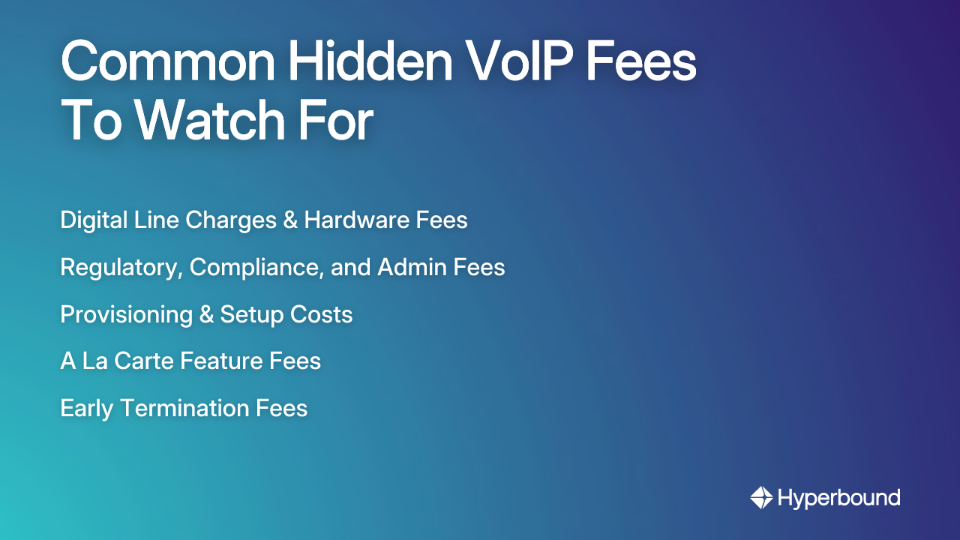
Digital Line Charges & Hardware Fees
What it is: A "Digital Line" is a term many VoIP providers use to describe the connection that allows a physical desk phone (or "hard phone") to make and receive calls. While this might seem like an essential part of any VoIP service, it's often separated from the basic user license.
The trap: Many plans, like RingCentral's, are sold "by the user," with each user including only one Digital Line. If you want to use both a desk phone and a softphone (app on your computer or mobile device) for the same employee, you may need to purchase an additional Digital Line - essentially paying twice for the same user.
According to users on Reddit, sales representatives rarely clarify that using a physical desk phone—even one you already own—may incur this extra fee. This leads to the painful realization that you're paying "for the privilege of USING the phone on their system."
Hardware rental fees: Some providers like Nextiva charge ongoing monthly fees for renting equipment like handsets and routers. These rental costs can add up significantly over a multi-year contract term, often exceeding the actual purchase price of the equipment.
Regulatory, Compliance, and "Admin" Fees
What they are: These are often proprietary surcharges that providers add to your bill, sometimes disguised as government-mandated taxes. They can inflate your base price by 20-30%.
Key examples to watch for:
- Regulatory Recovery Fee: A common charge providers use to cover their compliance costs with FCC regulations. Nextiva charges approximately $3.25 per line for this fee.
- Compliance and Administrative Cost Recovery Fee: RingCentral charges around $3.00 per seat for this mysterious fee that supposedly covers administrative expenses.
- Emergency 911 Fee: While E911 services are necessary, the fees vary widely between providers. Vonage charges $1.99 per line, while Nextiva charges around $1.00 per line.
- Federal Universal Service Fund (USF): This is a legitimate federal charge, but the percentage can vary dramatically between providers. Nextiva's is cited at 17.4%, while Vonage's "Federal Program Fee" is 12.3% of the total charge.
Provisioning & Setup Costs
What they are: These one-time fees cover the configuration of your VoIP system, phones, and users. They're often overlooked in initial quotes but can add hundreds to your startup costs.
The trap: Some providers may push you to buy new hardware by claiming your existing phones can't be provisioned, leading to unnecessary expenses. As one Reddit user suspected: "Sounds like they want to sell you brand new instead of reprovisioning existing."
"A La Carte" Feature Fees
What they are: The basic package might be affordable, but essential business features often cost extra:
- Software Add-ons: Web conferencing can cost an additional $10 per user per month.
- Integrations: Connecting your VoIP system to your CRM could add $10-$20 per user per month.
- Customer Support: Basic support might be included, but premium, responsive support often comes with an additional fee.
Other "Gotcha" Fees
- Number Porting: Transferring your existing phone numbers to the new service isn't always free. Ooma, for example, charges $39.99 for this service.
- Early Termination Fees (ETFs): If you're unhappy and want to leave before your contract ends, you could face penalties of thousands of dollars. This is a major risk for small businesses locked into multi-year agreements.
Real-World Examples from Major Providers
Let's look at how these fees impact real invoices from some of the biggest names in VoIP:
RingCentral
RingCentral has been specifically called out by users for a lack of billing transparency. In one actual invoice analysis, a service charge of $452.83 ballooned with an additional $178.06 in taxes and fees—an increase of nearly 28.2%.
Their "Compliance and Administrative Cost Recovery Fee" of approximately $3.00 per seat is particularly notable because it's not a government-mandated charge but rather RingCentral's own internal fee.
8x8
In a similar analysis, an 8x8 invoice with a service charge of $270.86 had an additional $104.28 in taxes and fees, increasing the total by 27.7%. Customers should be particularly aware of their provisioning costs and automatic contract renewals that come with substantial termination fees.
Nextiva
Nextiva is known for hardware rental fees and specific surcharges including:
- Regulatory Recovery Fee: ~$3.25/line
- Enhanced 911 Fee: ~$1.00/line
- Universal Service Fund: a whopping 17.4% of your bill
Vonage
A Vonage invoice with a service charge of $1,781.00 was hit with $523.69 in taxes and fees (11.6% in taxes, 10.7% in proprietary fees). Their key fees include:
- RCIP Fee: $3.99/line for compliance costs
- Emergency 911 Fee: $1.99/line
- Federal Program Fee: 12.3% of the charge
Your Pre-Contract Due Diligence: Questions to Ask VoIP Sales Reps
Before signing any contract, get answers to these questions in writing:
.png)
Questions About Overall Cost
- "Can you provide a full, itemized, per-user cost breakdown, including all taxes, fees, and surcharges?"
- "Which of these fees are government-mandated, and which are your company's internal surcharges (like 'Regulatory Recovery' or 'Admin' fees)?"
- "Is this quote specific to my business location, as taxes and fees can vary by state and city?"
Questions About Hardware & Setup
- "What are the charges for using a physical desk phone versus a softphone? Is there a 'Digital Line' fee per device?"
- "Are there any one-time setup, activation, or provisioning costs? Are these per user or a flat fee?"
- "Can I use my existing phone hardware with your cloud-hosted PBX? If so, is there a fee to provision it?"
- "What are the terms for equipment rental? Is it cheaper to buy my own compatible hard phones instead of renting from you?"
Questions About Features & Contract Terms
- "Which specific features (like web conferencing, call recording, CRM integration) are included in this plan, and which are paid add-ons?"
- "Is there a fee for porting my existing DID numbers?"
- "What is the contract length? What are the exact penalties and fees for early termination?"
- "Are there different tiers of customer support? What level is included, and what do upgrades cost?"
- "Do you offer a free trial period without penalty to test if your SIP provider service meets our needs?"
From Victim to Victor: How to Secure a Fair VoIP Deal
The attractive monthly price for VoIP is rarely what you'll actually pay. Hidden fees for digital lines, regulatory surcharges, maintenance costs, and basic features can quickly inflate your bill. Understanding these potential costs is crucial for any small business planning to implement or switch VoIP providers.
Never sign a contract based on a verbal promise. Use the checklist in this article to demand a fully itemized quote. As one Reddit user warned after being misled: "if they are this willing to lie this early on, what else are they lying about?"
When evaluating extensions and simultaneous call capacity for your business, be sure to clarify exactly what you're paying for and what hidden costs might be lurking in the fine print. The VoIP industry's lack of transparency has unfortunately made terms like "scam" and "ripoff" common in customer discussions.
By asking the right questions and demanding clarity from your carrier, you can navigate the confusing world of VoIP pricing and find a provider that offers true value, not just a low sticker price with costly surprises. Remember, transparency in business relationships is not just about honesty—it's about building the foundation for a long-term partnership that benefits both parties.
Frequently Asked Questions
What is the most common hidden fee in VoIP billing?
The most common hidden fee is the "Digital Line Charge." This is an extra fee providers often charge for connecting a physical desk phone to their service, even after you've already paid for a "user" license. Many businesses are surprised to learn that their per-user rate doesn't automatically include the ability to use a hard phone, leading to situations where you essentially pay twice for a single employee who needs both a desk phone and a softphone app.
Why do VoIP providers charge so many extra fees?
VoIP providers charge extra fees to cover their operational costs, regulatory compliance, and to increase their profit margins while advertising a low base price. Fees like the "Regulatory Recovery Fee" or "Administrative Fee" are not government-mandated taxes but are proprietary charges created by the provider. This pricing strategy allows them to attract customers with an appealing low monthly rate, with the actual, higher cost only becoming clear once the first bill arrives.
How much do taxes and fees typically add to a VoIP bill?
Taxes and fees can typically add 20% to 30% on top of your base service charge. As shown in real-world examples from providers like RingCentral and 8x8, these additional charges consist of a mix of legitimate government taxes (like the Federal Universal Service Fund) and proprietary provider fees. It's crucial to ask for a full, itemized quote that includes an estimate of these charges to understand the true total cost.
What is the difference between a "user" and a "digital line"?
A "user" typically refers to the individual employee's account or license, which grants them access to the VoIP service and its features like a phone number and voicemail. A "digital line," however, is a term used by many providers to describe the specific connection that enables a physical device, like a desk phone, to make calls. The confusion arises because many plans sell a "user" license that may not automatically include a "digital line," requiring you to pay extra to use a desk phone.
Can I avoid paying early termination fees (ETFs)?
Avoiding early termination fees is very difficult once you have signed a contract, as they are legally binding. These fees can amount to thousands of dollars, often requiring you to pay out the remainder of your contract term. The best way to avoid ETFs is to negotiate for a shorter contract term (e.g., one year instead of three), request a 30- or 60-day trial period without penalty, or choose a provider that offers month-to-month contracts.
How can I accurately compare quotes from different VoIP providers?
To accurately compare VoIP quotes, you must look beyond the advertised monthly per-user rate. Request a detailed, itemized quote from each provider that lists every single potential charge. Use the checklist from this guide to ask specific questions about digital line fees, one-time setup costs, hardware rental vs. purchase options, costs for add-on features, and the exact percentage of all regulatory and administrative surcharges. This is the only way to compare the true, all-in cost of each service.

Book a demo with Hyperbound


