.png)


.png)
Summary
- Low Efficiency, High Potential: Cold calling remains challenging, with only 28% of calls being answered, yet 82% of buyers still accept meetings from cold outreach, proving its continued relevance.
- AI Boosts Performance: Modern AI tools transform sales by solving key pain points, such as identifying the best times to call, automating manual CRM entries, and providing objective performance analysis.
- Mastering Objections is Key: Ineffective objection handling is a major hurdle; AI-powered coaching provides a risk-free environment for reps to practice and build the muscle memory needed for live calls.
- Practice and Improve with AI: Sales teams can improve cold calling success by using platforms like Hyperbound's AI Sales Roleplays to master responses to tough objections before they happen.
You've set up your sales team with a list of promising prospects, carefully crafted your pitch, and started making calls. But after an hour of dialing, you've only reached two people, and both immediately hung up. The other 28 calls went straight to voicemail or were never answered. Sound familiar?
This frustrating scenario plays out daily for sales teams worldwide, with research showing that only 28% of cold calls are answered, and it takes an average of eight attempts just to reach a prospect. As one sales manager put it, "Our main challenge is to increase the chance that people answer our calls."
Despite these challenges, cold calling isn't dead—it's evolving. In fact, 82% of buyers still accept meetings with salespeople who reach out via cold calls, and 75% of prospects have attended an event or scheduled a meeting based on a cold call or email.
The narrative isn't about the death of cold calling but rather its radical transformation through technology. From rotary phones and paper lists to sophisticated AI-powered platforms that automate, analyze, and optimize every aspect of the process, cold calling has come a long way.
Let's trace this fascinating journey and discover how modern tools are solving the age-old challenges of sales outreach.
The Dawn of Cold Calling: A Manual Endeavor
From Face-to-Face to the First Phone Call
The concept of cold calling has roots that predate the telephone itself. In 1873, John H. Patterson of the National Cash Register Company pioneered modern, scripted selling techniques, though his salespeople went door-to-door rather than calling from an office.
When Alexander Graham Bell invented the telephone in 1876, its potential for sales wasn't immediately recognized. It wasn't until the publication of the first Yellow Pages in 1886 that businesses gained access to a mass list of potential customers to contact.
The Golden Age and the Rise of the Script
By the late 1950s, 75% of U.S. households had a telephone, ushering in what many consider the "golden age of cold calling." The primary tools of the era were remarkably simple: a rotary phone, a list of numbers (often from the phone book), and a well-rehearsed script.
Companies invested heavily in training programs focused on scripting, objection handling, and closing techniques. As one veteran salesperson noted, "not knowing how to handle objections efficiently can turn a potential lead away."
By the 1980s, cold calling via telephone had surpassed postal mail as the primary outreach method, driven by a growing economy and the ubiquity of telephones in both homes and businesses.
Growing Pains and the First Wave of Technology
The Need for Regulation: TCPA and the Do Not Call Registry
The sheer volume and often aggressive nature of telemarketing eventually led to a public backlash, resulting in consumer protection laws:
- The Telephone Consumer Protection Act (TCPA) was enacted in 1991
- The National Do Not Call Registry was established in 2003
These regulations restricted call times to between 8 a.m. and 9 p.m. and mandated that salespeople disclose their identity and purpose upfront, fundamentally changing how cold calling could be conducted.
The Introduction of the CRM and Early Dialers
With new rules and larger prospect lists, spreadsheets became inefficient for managing leads and calls. This need for better organization led to the first Customer Relationship Management (CRM) systems, which revolutionized how sales teams tracked interactions and managed prospects.
To combat low answer rates and increase efficiency, autodialing technology emerged. These early systems could automatically dial numbers from a list, a game-changer for teams making "30-50 calls per day" or handling fluctuating call volumes where "sometimes it's over 100 calls, and other times it's less than 10."
The shift to Voice over Internet Protocol (VoIP systems) offered more flexibility and lower costs than traditional phone lines. However, early versions often suffered from quality issues, with many users reporting experiences like, "I tried Skype before, but the call quality wasn't very good."
The AI Revolution: Transforming Cold Calling from the Ground Up
What is AI-Powered Cold Calling?
AI cold calling uses artificial intelligence to automate and enhance every aspect of sales outreach. It goes far beyond simple dialing to include lead analysis, script optimization, and performance tracking, all designed to free up sales reps from repetitive tasks so they can focus on building relationships and closing deals.
How AI Solves the Most Common Cold Calling Pains
Pain Point: Low Answer Rates
AI analyzes historical data to identify the optimal times to call specific prospects. Research shows Wednesdays and Thursdays between 10 am–11 am and 4 pm–5 pm are generally ideal for cold calls. Modern systems can also automatically call from a local number, which many sales teams believe "will significantly boost our answer rate" compared to calls from unfamiliar area codes.
Pain Point: Ineffective Objection Handling
AI-powered coaching is key to overcoming ineffective objection handling. Platforms like Hyperbound allow reps to practice conversations against realistic AI buyer personas, providing a safe environment to master their responses and get instant feedback. This proactive training builds the muscle memory needed to handle tough objections on live calls.
Pain Point: Bias in Self-Evaluation & Need for Coaching
When asked about reviewing their own calls, one sales rep admitted, "I thought about that, but I'm biased!" AI provides objective call analysis through AI transcription and sentiment analysis. Platforms like Hyperbound, Gong, and Momentum analyze conversations to provide actionable insights for coaching without the personal bias that comes with self-evaluation.
Pain Point: Manual Data Entry and Follow-up
Modern AI tools auto-log calls into a CRM, provide an AI call summary, and can even automate follow-ups based on the call's outcome. This addresses a common frustration with traditional methods where "all details were recorded in spreadsheets," a time-consuming process that took reps away from actual selling.
Key Capabilities of Modern AI Sales Tools
Today's AI-powered cold calling platforms offer a comprehensive suite of capabilities:
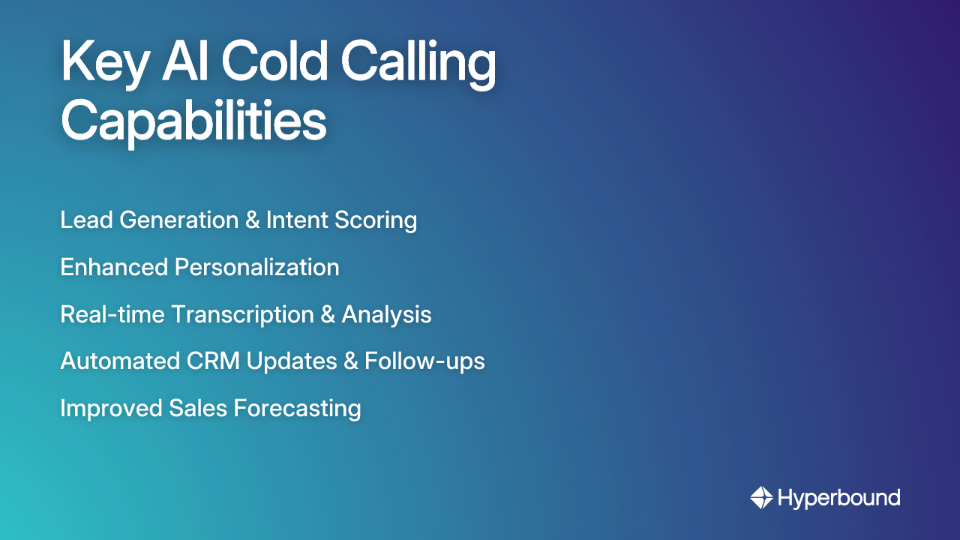
- Lead Generation & Intent Scoring: AI identifies and prioritizes high-potential leads by analyzing data for conversion likelihood.
- Enhanced Personalization: AI recommends personalized messaging based on prospect data and past interactions.
- Real-time Transcription & Analysis: Calls are transcribed live with insights on talk-to-listen ratios, keyword mentions, and sentiment.
- Automated CRM Updates & Follow-ups: Eliminates manual data entry by automatically logging call details and outcomes.
- Improved Sales Forecasting: AI examines historical data to predict sales trends with greater accuracy.
A Practical Guide: Implementing AI into Your Cold Calling Workflow
Step-by-Step: How to Automate Your Cold Calls
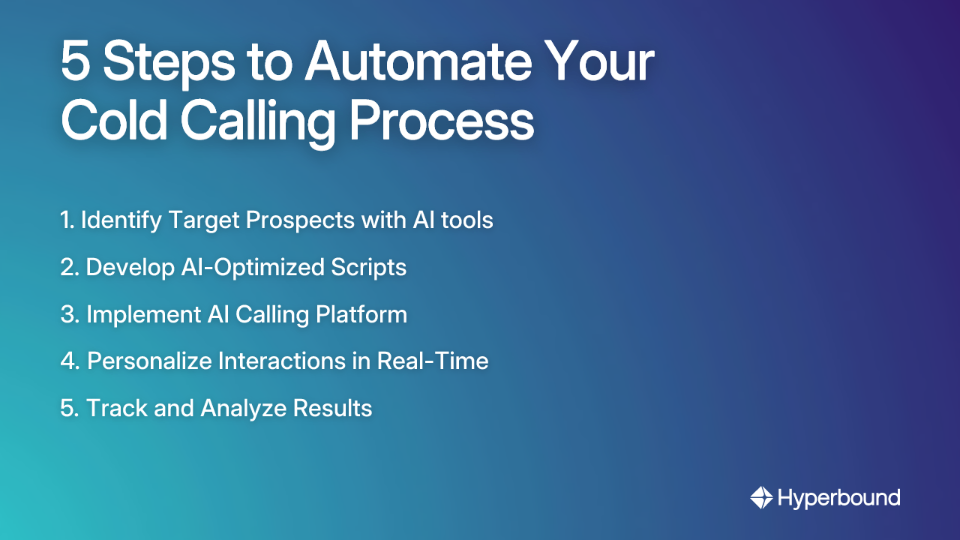
- Identify Target Prospects: Use AI-powered platforms like UpLead or Cognism to build highly targeted lead lists based on ideal customer profiles.
- Develop an AI-Optimized Script: Use AI tools like Hyperbound to analyze your most successful calls and identify winning talk tracks. This data can then be used to generate and A/B test scripts, incorporating elements that have proven effective like social proof ("we're helping big law firms in Adelaide").
- Use an AI Calling Platform: Implement a system that automates dialing, logs calls, and provides in-call assistance. This addresses the need for solutions that are both effective and user-friendly.
- Personalize Interactions in Real-Time: Leverage AI insights during the call to tailor the conversation to the prospect's specific needs and pain points, balancing automation with the human touch.
- Track and Analyze Results: Use AI analytics to monitor performance, identify patterns, and continuously refine your strategy, since 80% of sales happen after the fifth contact.
Choosing the Right AI Tool for Your Needs
For Simplicity and Affordability (Small Teams):
- Lindy: Offers custom AI agents for outreach and admin tasks, with a free plan available. Starts at $49.99/month.
- Callyzer: A SIM-based Telecalling System recommended for being "affordable and simple to use, making it a great fit for small teams that don't use a CRM."
For High-Volume Calling:
- Trellus: An AI-powered dialing tool focused on maximizing call volume. Starts at $59.99/month.
- VanillaSoft: Praised by users for being "fast, flexible, easy setup and built for phone prospecting," ideal for teams handling fluctuating call volumes.
For Multichannel Outreach:
- Reply: Automates outreach across email, LinkedIn, SMS, WhatsApp, and phone calls. Starts at $99/user/month.
For AI Sales Coaching and Practice:
- Hyperbound: An advanced AI coaching platform that creates realistic roleplays from your own sales calls, allowing reps to practice and master winning behaviors.
- Gong: Analyzes sales conversations to provide insights for improving team performance.
The Future Is Calling: Balancing AI with the Human Touch
The evolution from manual dialing to AI isn't about replacing salespeople but empowering them. AI handles the repetitive, data-heavy tasks, freeing humans to do what they do best: build rapport, show empathy, and solve complex problems.
As one sales professional wisely noted, cold calling can feel like "a fight where I'd rather bring a bazooka, but I need to balance that with empathy." This insight captures the essence of modern cold calling: leveraging powerful AI tools while maintaining the human connection that ultimately closes deals.
The most successful sales teams of the future will be those that master the synergy between artificial intelligence and genuine human interaction, turning the once-dreaded cold call into a precise, personalized, and powerful tool for growth.
Frequently Asked Questions
Why is cold calling still effective in today's digital age?
Cold calling is still effective because a significant majority of buyers (82%) remain open to scheduling meetings from a cold call. While challenges like low answer rates exist, technology has evolved the practice, making it a powerful tool for connecting with prospects directly and generating leads when done correctly.
What is AI-powered cold calling?
AI-powered cold calling is the use of artificial intelligence to automate, analyze, and optimize the entire sales outreach process. It goes beyond simple autodialing to include features like lead scoring, predicting the best times to call, providing real-time script assistance, and automatically logging call data into a CRM.
How does AI help increase the chances of a prospect answering a call?
AI increases answer rates by using data to solve common outreach problems. It can predict the optimal day and time to call a specific prospect (e.g., Wednesdays and Thursdays from 4 pm to 5 pm) and can automatically use a local phone number, which makes the call seem more familiar and trustworthy to the recipient.
Can AI help sales reps get better at handling objections?
Yes, AI is an excellent tool for improving objection handling. AI coaching platforms like Hyperbound create realistic practice scenarios where reps can roleplay conversations with an AI buyer persona. This allows them to master their responses and build confidence in a safe environment before engaging with actual prospects.
Will AI replace human salespeople in cold calling?
No, the goal of AI in cold calling is not to replace salespeople but to empower them. AI automates repetitive and time-consuming tasks like dialing, data entry, and call logging. This frees up sales reps to focus on the human elements of selling, such as building rapport, showing empathy, and solving complex customer problems.
What is the first step to implementing AI into a cold calling workflow?
The first step is to identify and target the right prospects using an AI-powered platform. Tools like UpLead or Cognism can help you build highly targeted lead lists based on your ideal customer profile, ensuring your outreach efforts are focused on the highest-potential leads from the very beginning.
Keywords & Jargon Glossary
- CRM (Customer Relationship Management): Software that helps businesses manage interactions and relationships with current and potential customers.
- VoIP (Voice over Internet Protocol): Technology that allows you to make voice calls using a broadband Internet connection instead of a regular phone line.
- AI Transcription: The process of using artificial intelligence to automatically convert spoken language from a call into written text.
- Intent Scoring: An AI-driven process that analyzes a lead's behavior and data to determine their likelihood of making a purchase.
- Local Number: A phone number with an area code matching the region being called, increasing the likelihood of the prospect answering.
- SIM-based Telecalling System: A calling system that uses SIM cards to make calls, often providing better call quality than internet-based solutions.
As cold calling continues to evolve with technology, the fundamental goal remains the same: connecting with prospects in meaningful ways that drive business growth. The tools may change, but the importance of the human element in sales will always remain.
Book a demo with Hyperbound


