.png)


.png)
Summary
- Traditional sales coaching is often too expensive and unscalable; building a systematic "sales engine" is a more effective approach for growing teams.
- Establish a strong foundation by creating a "Sales Constitution" or playbook that standardizes your sales process and defines best practices.
- Foster a self-sustaining learning culture through peer-to-peer call reviews and a centralized library of best-practice examples.
- Accelerate performance and reduce ramp time by using AI tools like Hyperbound's AI Sales Roleplays for unlimited, risk-free practice and instant coaching.
You know you need to scale your sales team, but the thought of shelling out for expensive coaches or six-figure conversation intelligence tools makes your budget ache. It's the classic startup dilemma—you need better sales performance, but traditional coaching is often inconsistent, unscalable, and prohibitively expensive, especially when your managers are already stretched thin.
Here's the good news: You don't need expensive coaches to build a world-class sales team. What you need is a sales engine—a system of standardized processes, a culture of continuous improvement, and modern tools to automate and scale coaching effectively.
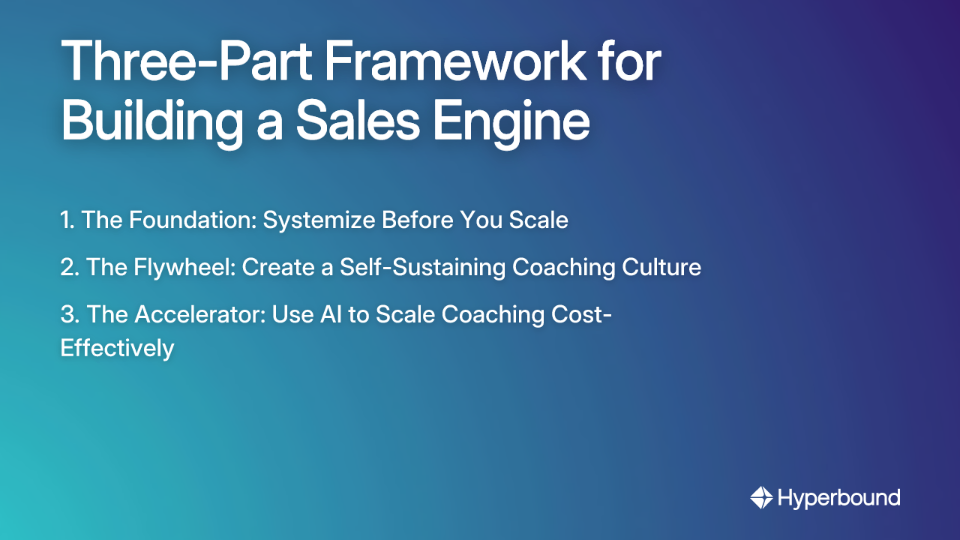
This article provides a blueprint for building that engine without draining your capital reserves. We'll cover a three-part framework that has helped companies reduce ramp time by up to 50% while maintaining high-quality customer conversations.
Part 1: The Foundation - Systemize Before You Scale
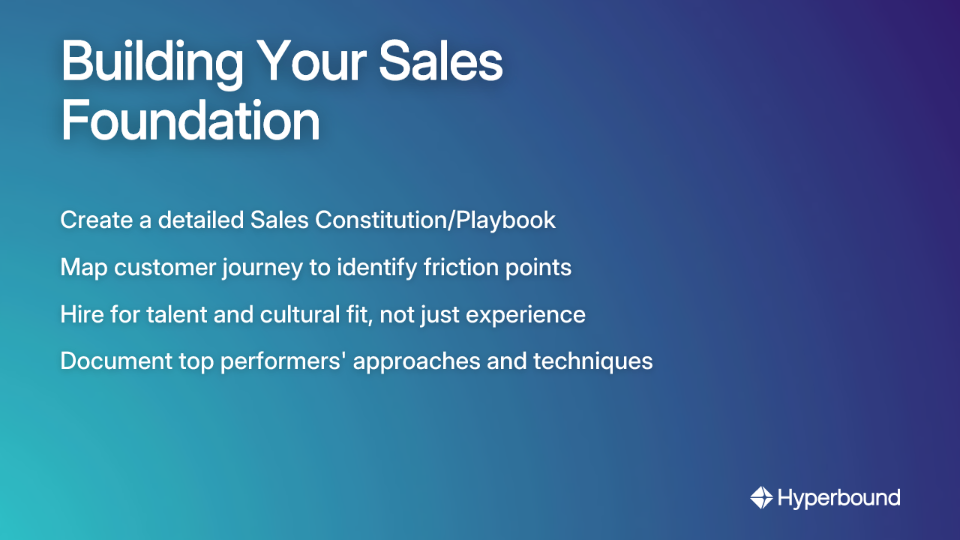
Before investing in fancy tools or expensive coaches, you need to nail the fundamentals. Consistency is the bedrock of a scalable sales engine.
1.1. Create Your "Sales Constitution" (The Playbook)
A "Sales Constitution" is your set of operating principles and standardized expectations for the entire sales process. This is the cornerstone of scalable coaching.
Your constitution must clearly answer key questions:
- What constitutes a great discovery call?
- What behaviors should reps model during demos?
- How should objections be handled?
- How should managers conduct coaching sessions?
McKinsey research confirms that a "unified solution-based sales approach" with a detailed playbook leads to "markedly improved closing ratios." Without this foundation, any coaching efforts—human or AI—will fail.
Quick Win: Start by documenting your top performers' approach to just one part of the sales process, like discovery calls. Create a simple template that others can follow.
1.2. Plot the Customer Journey and Find the Friction
A deep analysis of how customers find, engage with, and buy from you will reveal where your sales process needs the most support.
Follow this three-step process:
- Understand Customer Entry: Identify your main lead sources (product trials, direct inquiries, referrals)
- Identify Friction Points: Where do leads drop out of the funnel? Are they ghosting after demos?
- Activate a Sales Motion: Develop proactive strategies to address these friction points
An example from OpenPhone's blog shows how the company Quo engaged trial users with personalized outreach, leading to a 20% increase in customer conversion rates and a 140% increase in annual contract value (ACV).
1.3. Hire for Talent, Not Just Experience
According to McKinsey, "top salespeople can generate revenue comparable to several others combined." This makes hiring decisions crucial.
Focus on:
- Continuously Recruiting: Don't wait until you have an open role
- Assessing Core Skills: Use interviews and role-play scenarios to evaluate empathy and ability to connect
- Values Alignment: Ensure candidates align with your company culture and sales approach
The right talent forms the core of your sales engine, making every other optimization more effective.
Part 2: The Flywheel - Creating a Self-Sustaining Coaching Culture
With your foundation in place, it's time to build a culture that perpetuates coaching without depending solely on managers or expensive external consultants.
2.1. Shift to Data-Driven Performance Management
Move beyond lagging indicators (like revenue) to focus on the input activities that drive results. As recommended in OpenPhone's blog, "Track KPIs that Measure Inputs, not Outputs."
Examples include:
- Number of discovery calls completed
- Demo-to-proposal conversion rate
- Follow-up response time
- Objection handling success rate
This approach allows you to "diagnose business health early" and provide targeted coaching before quotas are missed. Use dashboards to create transparency and accountability, which McKinsey notes is crucial for maintaining performance.
2.2. Implement Peer-to-Peer Coaching
A structured system where reps review each other's calls and provide feedback is one of the most underutilized yet powerful tools for scaling coaching.
This approach:
- Scales coaching beyond manager bandwidth
- Fosters collaboration and team learning
- Surfaces best practices organically
- Strengthens team relationships
The Revenue Enabler highlights this strategy as a way to "promote collaborative feedback" without manager burnout.
Quick Win: Set up a weekly "film review" session where the team listens to one rep's call (with their permission) and provides constructive feedback based on your Sales Constitution.
2.3. Build a Centralized "Coaching Library"
Create a repository of your best call recordings, talk tracks, and frameworks that reps can access on-demand. This creates a scalable, self-serve learning environment.
Your library should include:
- The perfect discovery call
- A flawless demo
- Examples of masterful objection handling
- Templates for follow-up emails
- Best practice talk tracks for each sales stage
This concept of a "coaching library" is a key recommendation from The Revenue Enabler that costs nothing but time to implement and pays dividends in consistent performance.
Part 3: The Accelerator - Using AI to Scale Coaching (Without the Enterprise Price Tag)
Now for the secret weapon: AI-powered tools that can provide the benefits of a full-time coaching staff at a fraction of the cost. Many sales leaders struggle to get actionable feedback from call transcripts; they need solutions that can analyze patterns across multiple calls to surface what really works.
3.1. Provide Unlimited, Risk-Free Practice with AI Sales Roleplays
New hires need practice, but traditionally the only place to get it is on live calls, where mistakes can cost deals. Tenured reps need to practice new messaging, but don't have a safe space to do so.
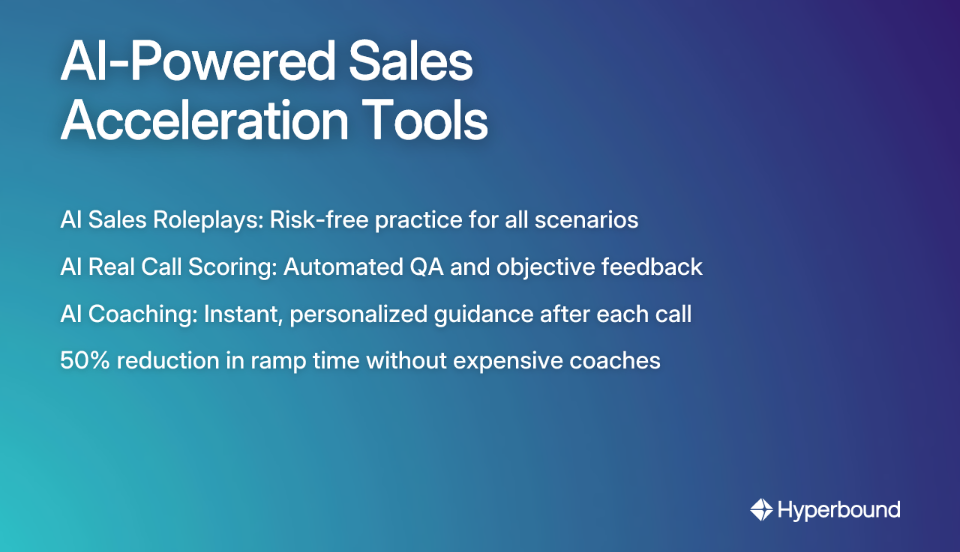
AI-powered roleplays solve this problem by simulating real-world scenarios. Platforms like Hyperbound's AI Sales Roleplays allow reps to practice everything from cold calls to handling pricing objections with dynamic AI buyer personas.
The benefits are substantial:
- Unlimited practice opportunities without risking live deals
- Immediate feedback on performance
- Consistent scenarios for objective skill assessment
- Ability to practice specific scenarios (like handling a new competitor)
Hyperbound's data shows this approach can reduce ramp time by up to 50%, getting new reps productive faster without expensive one-on-one coaching.
3.2. Automate Call Reviews with AI Real Call Scoring
Managers simply don't have time to review every call, so coaching becomes sporadic and often based on gut feel rather than data. This is where AI call scoring creates massive leverage.
Tools like Hyperbound's AI Real Call Scoring integrate with your existing call recording system (or provide their own) to automatically assess calls against your defined methodology. The platform tracks key behaviors and talk tracks, providing objective, data-driven insights without manual effort.
For example, it can identify when reps:
- Skip critical discovery questions
- Talk too much (high talk-to-listen ratio)
- Miss buying signals
- Fail to address objections effectively
This automated QA process frees up managers to focus on strategic coaching rather than spending hours reviewing calls.
3.3. Deliver Instant, Personalized AI Coaching
Traditional feedback often comes days after a call, when the context is lost. Reps need immediate guidance to correct mistakes and reinforce good habits.
Hyperbound's AI Coaching delivers instant, personalized feedback after each interaction, aligned with your specific sales playbook. This empowers reps to self-correct and improve continuously without relying solely on manager availability.
This approach is supported by research from Training Industry, which recommends "AI and digital coaching options" for cost-effective, scalable feedback.
Bringing It All Together: Your Blueprint for Success
Building a sales engine fast isn't about a single magic bullet. It's about a three-step process:
- Build the Foundation: Standardize your process with a Sales Constitution, map the customer journey, and hire the right talent.
- Create the Flywheel: Foster a culture of peer coaching, data-driven management, and self-improvement.
- Hit the Accelerator: Leverage AI tools to scale what works, providing practice and feedback for everyone, instantly.
You don't need to burn capital on expensive coaches to build a world-class sales organization. By investing in systems and smart technology, you build a scalable engine that gets more efficient over time.
Start small—perhaps by creating your Sales Constitution or implementing peer review sessions. Then gradually add technology to accelerate what's working. Before you know it, you'll have built a sales engine that consistently delivers results without breaking the bank.
Frequently Asked Questions
What is a sales engine?
A sales engine is a comprehensive system of standardized processes, a supportive coaching culture, and modern tools designed to make your sales performance scalable and predictable. Unlike relying on individual "hero" sellers, a sales engine ensures consistency by systemizing everything from discovery calls to objection handling, allowing you to grow without a proportional increase in costs.
Why is a sales playbook so important?
A sales playbook, or "Sales Constitution," is the foundational document for a scalable sales engine because it creates consistency across the team. It clearly defines what "good" looks like for every stage of the sales process, ensuring that all reps—new and tenured—are aligned on best practices. This standardization is crucial for effective coaching, performance measurement, and reducing new hire ramp time.
How can I scale sales coaching on a tight budget?
You can scale sales coaching cost-effectively by shifting focus from one-on-one manager sessions to more leveraged activities. Implement peer-to-peer coaching through "film review" sessions and build a centralized coaching library of best-practice call recordings. These strategies create a self-sustaining learning culture that doesn't rely entirely on expensive managers or external consultants.
What's the best way to start building a sales engine?
The best way to start is by focusing on the foundation: systemizing your sales process. Begin by documenting the best practices of your top performers for a single, critical part of your sales motion, like discovery calls. This creates your first playbook component and provides a clear standard you can use for training and peer coaching, delivering an immediate impact with minimal investment.
How does AI help in sales coaching?
AI acts as a force multiplier for your coaching efforts, providing scalable and objective feedback without burning out managers. AI tools can offer risk-free practice through simulated roleplays, automatically score real calls against your playbook to identify skill gaps, and deliver instant, personalized feedback to reps. This allows for continuous improvement at a scale that is impossible to achieve with manual coaching alone.
Can a sales engine work for a very small sales team?
Absolutely. In fact, building a sales engine is often most impactful for small teams. Establishing standardized processes and a coaching culture early on sets the foundation for healthy, scalable growth. Early adoption of peer coaching and a shared playbook ensures that as you hire more reps, they are onboarded into an efficient and consistent system from day one.
Ready to accelerate your sales engine with AI-powered coaching? Learn more about Hyperbound and how it can help you scale your sales coaching without burning capital on expensive consultants.
Book a demo with Hyperbound


