.png)


You've built rapport, demonstrated value, and your prospect seems interested. Now comes that moment—the one that makes even seasoned sales professionals break into a cold sweat. It's time to ask for the sale.
That awkward silence. The fear of rejection. The worry that you'll suddenly transform from trusted advisor to pushy salesperson with just one question.
If you've ever felt your "commission breathe" kick in—that desperate energy prospects can sense from a mile away—you're not alone. As one sales professional puts it, "so many people are scared to ask the question like the customer doesn't realize you're trying to sell him something."
This hesitation isn't just uncomfortable—it's costly. When you wait too long to ask for the sale, you create awkwardness and uncertainty that transfers directly to your prospect. As another sales expert notes, many salespeople "wait too long making it awkward and potentially losing the sale from their lack of certainty, transferring that lack to the prospect."
The truth is, asking for the sale doesn't have to feel like pulling teeth. With the right mindset, timing, and techniques, closing can become the natural conclusion to a value-driven conversation.
The Mindset Shift: From Desperate Seller to Trusted Advisor
The foundation of asking for the sale without desperation starts with a fundamental mindset shift. You're not extracting money from unwilling victims—you're guiding prospects toward a solution that solves their problems.
Embrace Consultative Selling
Consultative selling means positioning yourself as an expert advisor rather than a product pusher. When you genuinely believe your solution helps, asking for the sale becomes an act of service rather than self-interest.
"If you ask the right questions, the prospect will tell you how to sell them," explains one successful sales professional. By focusing on understanding needs first, the close becomes the logical next step in your conversation.
The 70/30 Listening Rule
The most effective salespeople listen more than they talk. Aim to spend 70% of your time listening and 30% talking. This prevents the common mistake of "trying to fill awkward silences," which signals desperation and prevents you from gathering valuable information.
Instead of rushing to fill every pause, embrace "the pregnant pause"—the strategic use of silence after asking a closing question. Let the prospect be the first to speak, giving them space to process and respond honestly.
Set Clear Expectations Early
Eliminate awkwardness by setting expectations from the beginning of your sales conversation:
"Today, I'd like to understand your challenges, show you how we might help, and if it makes sense for both of us, discuss next steps. Does that sound reasonable?"
This prequalifier signals your intent upfront, making the eventual ask feel like a natural progression rather than a surprise attack.
Timing is Everything: Reading the Green Lights
Nothing screams desperation like asking for the sale before the prospect is ready. The key is recognizing buying signals—those verbal and non-verbal cues that indicate readiness to move forward.
Recognizing Buying Signals
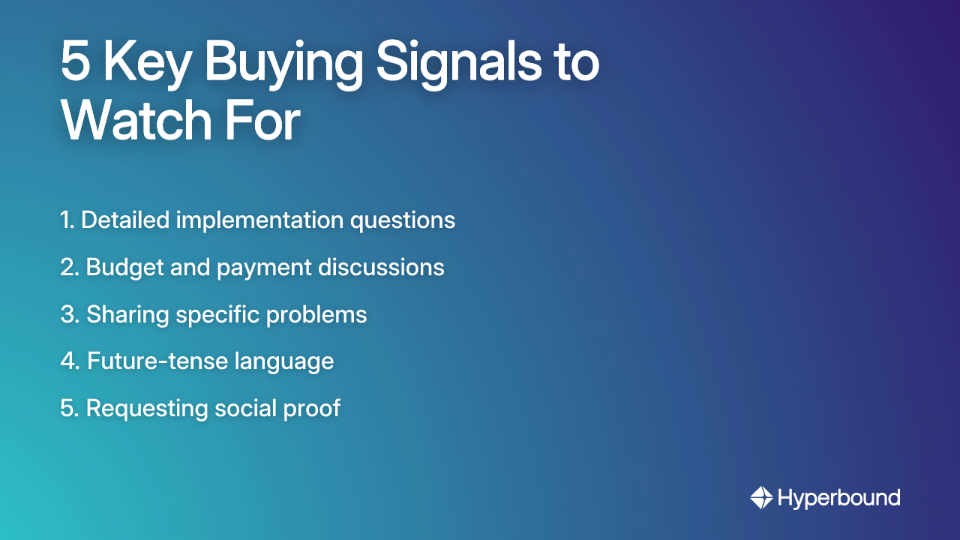
When prospects are ready to buy, they often:
- Ask detailed questions about implementation: "How soon could we get started?"
- Discuss budgeting or payment terms: "What payment options do you offer?"
- Share specific problems they need to solve: "Our current solution is costing us X hours per week."
- Use future-tense language: "How would my team use this feature?"
- Request social proof: "Do you have case studies from similar companies?"
Recognizing these signals helps you time your ask perfectly, reducing the risk of falling into "demo purgatory"—that endless cycle of meetings with no decision in sight.
Avoiding the Too-Early Ask
Just as damaging as waiting too long is asking too soon. If you haven't established value or understood their needs, your request will feel premature and self-serving.
As one sales professional notes, "Not acting desperate for a sale. Prospects are like women, they sense if you are desperate and run a mile." This desperation often manifests when salespeople try to close before doing the proper groundwork.
The Art of the Ask: Practical Techniques & Scripts
Now for the practical part: exactly how to phrase your ask in ways that feel natural and non-threatening. Here are several proven approaches:
.png)
The Permission-Based Close
This technique respects the prospect's autonomy while moving the conversation forward:
"Based on what we've discussed, it seems like our solution could [solve specific problem]. Would you be comfortable talking about next steps?"
The permission-based close feels collaborative rather than pushy because you're asking for permission to proceed, not demanding a decision.
The Summary Close
This technique recaps the value you've established before asking for the sale:
"So we've established that our platform can help you [specific benefit 1], which would solve [problem 1], and also provide [specific benefit 2], addressing [problem 2]. Given these benefits, does it make sense to move forward?"
This approach reminds prospects of the value they'll receive, making your ask feel justified and logical.
The "What Would It Take" Close
This direct but non-desperate question opens a dialogue about any remaining barriers:
"What would it take to get this deal done today?"
This question signals confidence while giving the prospect space to voice any lingering concerns or requirements.
The Assumptive Close
When buying signals are strong, the assumptive close can be powerful:
"So, would you prefer to start with the standard package or the premium option?"
This technique works because it assumes the decision to buy has already been made, and you're simply working out the details. As one salesperson puts it, "I just assume they are going to buy and ask who will be signing the contract."
The FOMO (Fear of Missing Out) Close
This approach leverages scarcity or time-limited opportunities:
"We're offering this special pricing until the end of the month. I wouldn't want you to miss out on those savings."
Use this technique sparingly and honestly—manufactured urgency damages trust, but genuine limited opportunities can motivate action.
Handling Objections: The Moment of Truth
When you ask for the sale, you'll often encounter objections. How you handle these moments determines whether you come across as desperate or confident.
Anticipate and Address Objections Before Presenting Numbers
As one sales professional wisely notes, "Asking for objections before numbers. The numbers make sense or I wouldn't be here."
Before discussing price or asking for the sale, proactively address potential concerns:
"Before we talk about investment, I want to make sure I've addressed any concerns you might have. Is there anything we haven't covered that's important to you?"
Embrace Objections as Opportunities
When objections arise, don't panic or become defensive—these are opportunities to provide clarity and strengthen your position. The mirror technique can be particularly effective here: reflect back the objection to ensure understanding before responding.
"So what I'm hearing is that you're concerned about implementation time. Is that correct?"
This technique demonstrates active listening and prevents you from addressing the wrong concern.
Master the Pregnant Pause
After addressing an objection or asking a closing question, employ what sales professionals call "the pregnant pause"—simply stay silent and wait for the prospect to respond.
"The good ol pregnant pause. In closing, presenting the price and letting them say their objections and rebuttals then staying silent."
This powerful technique prevents you from undermining yourself by talking too much. It also gives prospects space to work through their thoughts and often leads them to talk themselves into the sale.

Building Confidence Through Practice
The most effective way to eliminate that desperate energy when asking for the sale is to build your confidence through deliberate practice.
Script Development and Role Play
Develop several closing scripts that feel authentic to your personality and sales style. While traditional role-play with colleagues is valuable, modern sales teams are turning to AI-powered platforms like Hyperbound to practice repeatedly and receive instant, objective feedback. This allows reps to hone their skills in a safe environment until their closes feel natural.
When you've rehearsed your closes until they become second nature, you eliminate the hesitation and uncertainty that can make you appear desperate.
Prepare for All Outcomes
Confidence comes from being prepared for every possible response. Have clear next steps ready whether the prospect says yes, no, or maybe.
For a "yes," be ready with onboarding details and implementation timelines.
For a "maybe," have a specific follow-up plan: "I understand you need time to think. Would it be helpful if I sent over [specific resource] and followed up next Tuesday?"
For a "no," be prepared with questions to understand their decision better and potentially keep the door open: "I appreciate your candor. Would you mind sharing what factors led to your decision?"
The Walking Away Tactic
Sometimes, the most powerful close is knowing when not to close. As one sales expert explains, "Knowing the right time to walk away from them and let them convince themselves" can be incredibly effective.
This "absent-minded beggar" approach—showing you're willing to walk away—demonstrates confidence in your offering and often creates the space for prospects to pursue you rather than the other way around.
Final Thoughts: The Value Statement Close
When all is said and done, asking for the sale is simply about connecting your solution to the prospect's needs in a clear, confident value statement:
"Based on everything we've discussed about [their specific challenge], I believe our [your solution] will help you [achieve specific outcome] just like it has for [reference similar client]. Are you ready to move forward?"
This approach works because it:
- Reminds them of their pain point
- Connects your solution directly to their needs
- Provides social proof
- Asks clearly for a decision
Remember that asking for the sale isn't an imposition—it's the natural conclusion to a helpful conversation. When you truly believe in the value you provide and have done the work to understand your prospect's needs, asking for the sale becomes an act of service rather than desperation.
By shifting your mindset, recognizing the right moment, using natural-sounding techniques, handling objections confidently, and practicing until you're comfortable, you'll transform the most feared moment in sales into one of your strongest skills.
The key to high-ticket sales success isn't avoiding the ask—it's embracing it with the confidence that comes from knowing you're offering real value that solves real problems.
Frequently Asked Questions
How can I ask for the sale without sounding desperate?
You can ask for the sale without sounding desperate by adopting a consultative mindset, focusing on the prospect's needs, and seeing the close as a helpful next step rather than a high-pressure tactic. This involves listening more than you talk (the 70/30 rule), setting clear expectations at the start of the conversation, and recognizing buying signals before you make your ask. Confidence, built through practice and preparation, is key to eliminating the "commission breathe" that prospects can sense.
When is the best time to ask for the sale?
The best time to ask for the sale is after you have clearly established the value of your solution and the prospect has started showing buying signals. These signals include asking detailed questions about implementation, discussing budget, using future-tense language (e.g., "How would my team use this?"), or requesting case studies. Asking too early will feel pushy, while waiting too long can create awkwardness and kill the deal's momentum.
What are some effective closing techniques?
Some effective closing techniques include the Permission-Based Close, the Summary Close, and the Assumptive Close. The Permission-Based Close asks for consent to discuss next steps (e.g., "Would you be comfortable talking about next steps?"). The Summary Close recaps the agreed-upon value before asking to move forward. The Assumptive Close assumes the sale is happening and moves to logistical questions (e.g., "Which package would you like to start with?"), best used when buying signals are strong.
How should I handle objections during the close?
Handle objections by embracing them as opportunities to provide clarity, not as personal rejections. Use techniques like the "mirror technique" to confirm you understand the concern before addressing it. A powerful tool is the "pregnant pause"—after you've addressed their concern, remain silent and let the prospect be the next to speak. This gives them space to process and often helps them overcome their own hesitation.
What is "commission breathe" and how can I avoid it?
"Commission breathe" is the desperate energy a salesperson gives off when they are too focused on making a sale, which prospects can easily sense and are repelled by. You can avoid it by shifting your focus from your own goals to genuinely solving the prospect's problems. A consultative selling approach, where you act as a trusted advisor, is the best antidote.
Why is the "pregnant pause" so effective in sales?
The "pregnant pause," or the strategic use of silence, is effective because it prevents you from talking too much and gives the prospect the space to think, process information, and respond honestly. After asking a closing question or handling an objection, salespeople often feel an urge to fill the silence, which signals nervousness. By staying quiet, you transfer the pressure to the prospect and often allow them to voice their true thoughts.

Book a demo with Hyperbound


