.png)

How AI Telemarketing Adapts in Real-Time (And Why It's a Game-Changer, Not a Job-Stealer)

9
min read
.png)
Summary
- Modern sales AI has moved beyond rigid robocalls, using advanced NLP and generative AI to hold adaptive, human-like conversations.
- The fear of AI replacing reps is a common misconception; the most effective approach is a human-AI partnership where AI handles repetitive tasks, freeing up salespeople for high-value relationship building.
- The solution to robotic-sounding calls isn't better AI callers, but better-trained humans. AI is best used to analyze winning behaviors and create realistic practice scenarios.
- AI sales coaching platforms like Hyperbound help teams scale best practices through AI roleplays and automated feedback, reducing ramp time and improving overall sales performance.
You've just answered a call, and something feels off. The voice is pleasant enough, but there's an almost imperceptible delay in responses. A creeping suspicion forms: "Am I talking to a robot right now?"
For many sales professionals, this scenario represents their deepest fears about AI in telemarketing. The thought of cold, mechanical interactions replacing genuine human connection sends shivers down the spine of relationship-focused salespeople.
"AI phone agents is among the most insincere way of doing business," wrote one frustrated sales professional on Reddit. This sentiment echoes across sales teams worldwide, where concerns about customer alienation, job security, and the perceived "fakeness" of AI calls dominate discussions.
But what if the narrative we've built around AI telemarketing is fundamentally flawed? What if, instead of a job-stealing robot, we're actually looking at a sophisticated partner designed to handle the most draining aspects of sales work?
The Anatomy of a Real-Time AI Conversation
Modern AI telemarketing systems bear little resemblance to the robocalls of yesteryear. Today's solutions leverage cutting-edge technology to create conversations that adapt moment-by-moment—listening, understanding, and responding with remarkable human-like qualities.
Listening and Understanding with Natural Language Processing
The foundation of any adaptive AI system is its ability to comprehend human speech. Using Natural Language Processing (NLP), these systems go far beyond simple word recognition:
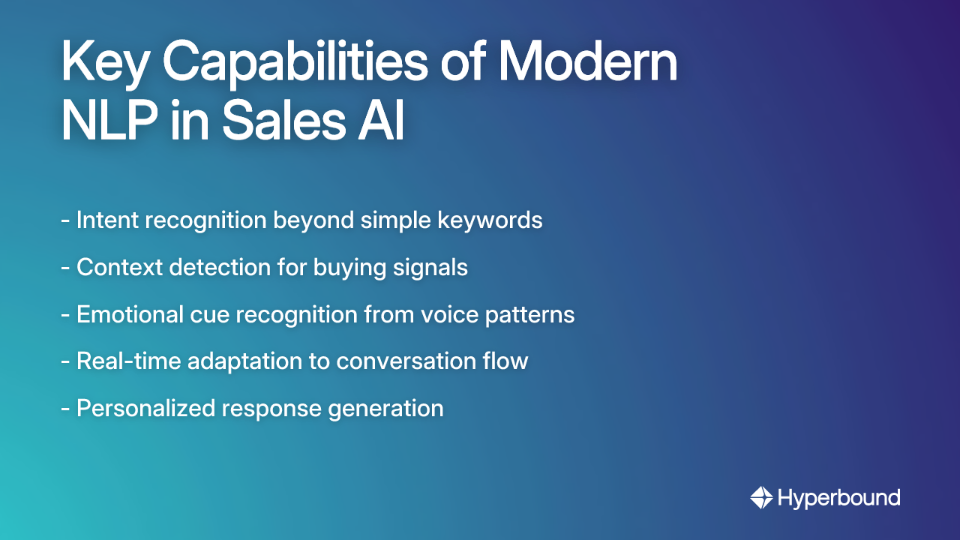
- They identify intent behind statements ("I'm not interested" vs. "I might be interested later")
- They detect context clues that indicate buying signals
- They recognize emotional cues in voice tone and pacing
This allows modern NLP engines to tailor conversations to individual customer needs, moving well beyond the "press 1 for sales" experiences of the past.
Dynamic Scripting with Generative AI
Gone are the days of rigid, obviously pre-written scripts. Today's AI telemarketing uses generative AI similar to ChatGPT to create responses in real-time:
- When a prospect asks an unexpected question, the AI can formulate a relevant answer
- If the conversation takes an unpredicted turn, the system can adjust its approach
- When objections arise, the AI can offer appropriate counterpoints based on the specific concern
This flexibility directly addresses the common complaint that AI interactions sound robotic and insincere.
Sentiment and Emotion Awareness
Perhaps most impressively, advanced AI systems can detect emotional signals in a customer's voice:
- Frustration triggers the AI to adjust its tone or offer to connect with a human agent
- Interest prompts the AI to provide more detailed information on relevant features
- Confusion leads the AI to slow down and explain concepts more clearly
This emotional intelligence helps solve what one Reddit user described as AI's inability to "handle complex and nuanced customer inquiries effectively." When the situation exceeds the AI's capabilities, the best systems know when to bring in human reinforcements.
Real-Time CRM Integration for Hyper-Personalization
AI telemarketing doesn't operate in a vacuum. Modern systems integrate directly with your customer relationship management (CRM) platform:
- During a call, the AI can access the customer's complete history
- It can reference past purchases, support tickets, or previous conversations
- It can update records in real-time as new information emerges
This integration enables statements like, "I see you recently purchased our basic package. How is that working for you?" — creating a level of continuity impossible with traditional automated systems.
The Engine Room: Core Technologies Driving Adaptation
Behind the conversational interface lies sophisticated technology that powers real-time adaptation. Understanding these systems helps explain why modern AI telemarketing represents such a significant leap forward.
Predictive Analytics and Ensemble Machine Learning
Adaptation begins before the first word is spoken. According to research published in SciOpen, advanced telemarketing systems use ensemble machine learning models to:
- Score and prioritize leads based on likelihood to convert
- Address the challenge of imbalanced datasets (where "no" answers far outnumber "yes" answers)
- Apply feature selection and oversampling techniques for better decision-making
The results are impressive. This research demonstrated a model achieving 98.6% accuracy in classifying potential customers—a 3% improvement over standard methods. That might sound small, but in high-volume telemarketing, it represents significant efficiency gains.
Continuous Improvement via Online Learning
Where traditional models become outdated as customer behavior changes, today's AI telemarketing employs what researchers call "online learning"—the ability to retrain and adapt as new data becomes available.
Every call provides valuable feedback that refines the model:
- Successful approaches are reinforced
- Failed strategies are deprioritized
- New patterns and customer preferences are incorporated
This same principle applies to coaching human agents. Platforms like Hyperbound use AI to analyze sales calls, identify winning behaviors, and provide personalized feedback. This creates a continuous learning loop for sales reps, ensuring they become more effective with each interaction, rather than letting their skills degrade over time.
A Framework for AI-Augmented Sales Coaching
For companies looking to boost their team's performance, implementing an AI-powered coaching program provides a structured path to success:
- Analyze: Use AI to analyze thousands of real sales calls to identify the specific behaviors that separate top performers from the rest.
- Practice: Create hyper-realistic AI roleplays based on those winning behaviors. This allows reps to practice challenging scenarios in a safe, repeatable environment.
- Coach: Deliver instant, objective feedback on both practice calls and real customer conversations, scored against your team's unique playbook.
- Scale: Roll out new messaging and best practices consistently across the entire team, ensuring everyone is ready for any conversation.
This framework, central to platforms like Hyperbound's AI Sales Coaching, ensures that AI is used to elevate human skill, leading to measurable improvements in performance.

From Theory to Profit: Real-World Impact of AI Coaching
While the technology is fascinating, what matters most to sales teams are results. AI-powered sales coaching and enablement platforms drive a compelling, data-backed story of improvement.
Key Benefits: Proven ROI and Efficiency Gains
By leveraging AI to analyze calls and train reps at scale, organizations can achieve significant outcomes:
- Reduced Ramp Time: New hires become quota-achieving team members faster by practicing in realistic scenarios.
- Improved Performance Metrics: Teams see measurable increases in booked meetings, pipeline generation, and close rates.
- Consistent Execution: Every sales rep, regardless of tenure, can master and deliver the right message at the right time.
- Scalable Coaching: Sales managers can coach more effectively, focusing on strategic guidance while AI handles repetitive call reviews and feedback.
These aren't hypothetical benefits—they're the documented outcomes of a data-driven approach to sales readiness.
Key Areas for AI-Coached Improvement
The applications of AI coaching extend across the entire sales cycle:
.png)
- Lead Generation and Qualification: Mastering the talk tracks that turn cold outreach into warm, qualified leads.
- Discovery and Demos: Nailing the questions that uncover deep customer pain points and effectively demonstrating value.
- Objection Handling: Practicing responses to tough objections until they become second nature.
- Upselling and Cross-Selling: Identifying and acting on opportunities to expand customer accounts.
- Renewals and Negotiations: Ensuring reps are prepared for high-stakes conversations that impact revenue retention.
The Human-AI Partnership: Navigating Concerns, Compliance, and Collaboration
Despite the impressive capabilities, legitimate concerns remain about AI in sales. Addressing these directly is essential for successful implementation.
Addressing the Fear of Replacement: AI As an Augmentative Tool
The most pervasive concern is job replacement. As one Reddit user put it, there's significant "fear of job replacement due to AI implementation."
The reality is more nuanced. Industry experts emphasize that AI works best as an augmentative tool rather than a replacement. The goal is a balanced approach where:
- AI handles repetitive, high-rejection tasks that cause burnout
- Human agents focus on complex negotiations and relationship building
- Teams achieve more with the same headcount, rather than achieving the same with fewer people
In this model, AI takes the "boring, high-volume stuff off your plate," making the job "less stressful," according to call center professionals.
Navigating the Legal Landscape
There's widespread "confusion regarding the legality of making calls... using AI." Enterprise-grade AI platforms address this by:
- Managing do-not-call lists automatically
- Recording consent appropriately
- Adhering to regulations like TCPA and GDPR
It's always recommended to engage with legal experts to ensure compliance with data privacy regulations—a critical step before implementation.
Solving the "Insincerity" Problem by Empowering Humans
Rather than relying on an AI-to-human handoff, the most effective approach is to make human conversations better from the start. The "insincerity" problem is solved not by better robots, but by better-trained people.
AI coaching platforms help reps sound more natural and confident by allowing them to:
- Practice handling difficult questions until their responses are fluid.
- Get feedback on their tone, pacing, and word choice.
- Master the art of active listening and empathetic responses.
This ensures that when a customer connects with a sales professional, the interaction is authentic, valuable, and builds trust—qualities that technology alone cannot replicate.
The Future Is Augmentation, Not Automation
Real-time adaptation transforms AI from a simple automation tool into a dynamic conversational partner. But the goal isn't to replace skilled sales professionals—it's to empower them.
By using AI to handle the repetitive work of call analysis and practice, platforms like Hyperbound allow sales teams to focus their energy on what humans do best: building strong client relationships, closing high-value deals, and driving revenue through authentic connection.
The future of sales isn't a choice between AI and humans. It's about AI augmenting humans, with each focusing on their strengths to create a more efficient, effective, and ultimately, more human sales experience.
Frequently Asked Questions
What is real-time AI telemarketing?
Real-time AI telemarketing uses advanced technologies like Natural Language Processing (NLP) and generative AI to engage in dynamic, human-like conversations that adapt to the customer's responses moment-by-moment. Unlike older robocalling systems that follow rigid scripts, modern AI can understand intent, detect emotional cues in a caller's voice, and generate relevant responses on the fly. It also integrates with CRM systems to personalize the conversation based on the customer's history.
Will AI replace human sales agents?
No, the goal of modern sales AI is not to replace human agents but to augment them by handling repetitive and draining tasks. The most effective model is a human-AI partnership. AI can manage high-volume, initial outreach or data analysis, which frees up human sales professionals to focus on building relationships, handling complex negotiations, and closing high-value deals. This makes the sales role less stressful and more strategic.
How does AI make sales calls sound more human?
AI achieves a more human-like quality in conversations through dynamic scripting with generative AI, sentiment analysis, and the ability to understand context. Instead of a fixed script, generative AI formulates responses in real-time based on the conversation's flow. It can also detect emotional signals like frustration or interest in a customer's voice and adjust its tone and approach accordingly, creating a more natural and empathetic interaction.
What is AI-powered sales coaching?
AI-powered sales coaching is a system that uses artificial intelligence to analyze real sales calls, identify the behaviors of top-performing agents, and create personalized training programs for the entire team. Platforms like Hyperbound use AI to provide hyper-realistic roleplay scenarios where reps can practice handling objections and difficult questions. The AI offers instant, objective feedback, helping reps master winning strategies and improve their performance in a safe, repeatable environment.
Why is AI sales coaching more effective than traditional methods?
AI sales coaching is more effective because it is scalable, data-driven, and provides consistent, personalized feedback that traditional methods cannot match. While a human manager can only review a limited number of calls, AI can analyze thousands, identifying precise, winning behaviors. It allows for consistent practice and reinforcement of best practices across the entire team, reducing new hire ramp time and measurably improving metrics like booked meetings and close rates.
Is using AI for sales calls legal?
Yes, using AI for sales calls can be legal, but it requires strict adherence to telecommunication regulations like the TCPA and GDPR. Reputable enterprise-grade AI platforms are designed with compliance in mind. They manage do-not-call lists, handle consent recording, and follow data privacy rules. However, it is always crucial for any business to consult with legal experts to ensure they are fully compliant with all relevant laws in their region.
How does AI handle complex or unexpected customer questions?
Advanced AI systems handle unexpected questions by using generative AI to formulate relevant answers in real-time, rather than relying on a pre-written script. These systems can understand the context and intent behind a question. For truly complex or nuanced inquiries that fall outside their capabilities, the best systems are designed to recognize their limits and seamlessly escalate the call to a human agent, ensuring the customer receives the best possible support.

Book a demo with Hyperbound


