

.png)
Summary
- A high-converting sales pitch consists of six core components: a hook, problem, value proposition, solution, social proof, and a clear call-to-action.
- A great script isn't enough; mastering pitch delivery and objection handling is critical, as pitches demonstrating deep research are 2.5x more likely to advance.
- The most effective way to improve is through practice. Advanced coaching platforms like Hyperbound's AI Sales Roleplays provide realistic scenarios to master delivery and handle objections without risking live deals.
You've probably heard the buzz about AI sales tools and maybe even thought, "Personally, I feel like it's a bit hyped up." You're not alone. Many sales professionals question whether these tools "can actually teach sales skills effectively" or if they're "awful at context-based coaching."
I get it. The skepticism is justified, especially when most AI tools simply generate generic scripts that fall flat in real conversations.
But here's the truth: creating a sales pitch that actually converts isn't about finding a magic AI script generator. It's about understanding what makes pitches effective based on real data, then mastering both the content AND delivery of your message.
This guide is different. Drawing from Hyperbound's analysis of thousands of actual sales conversations, we'll provide a data-backed framework for creating high-converting pitches. More importantly, we'll show you how to bridge the gap between a good script on paper and a great pitch that converts in real life.
According to Salesforce's State of Sales report, improving training is the #1 growth tactic for sales leaders. This underscores an important industry shift: the focus isn't just on better tools but on developing better skills.
Let's dive in.
The Anatomy of a Winning Sales Pitch
A sales pitch is a concise, persuasive message that communicates how you solve a buyer's specific pain points. Based on our analysis of thousands of successful sales conversations, every high-converting pitch contains these six core components:
.png)
1. The Hook
Grab attention immediately with a provocative question or surprising statistic. The best hooks relate directly to your prospect's current challenges.
Examples:
- "Did you know 60% of sales teams waste 40% of their training budget on programs that don't stick?"
- "Curious about how your competitors are closing deals 30% faster than industry average?"
2. The Problem
Clearly articulate the specific, relatable pain points your prospect is facing. Go beyond generic issues to show you truly understand their world.
Example: "Most sales teams today are stuck in a frustrating cycle: they invest heavily in training, but reps forget 70% of what they learned within a week, and managers don't have time to reinforce skills through consistent coaching."
3. The Value Proposition
Explain why your solution is the best fit, focusing on business outcomes, not just features. This is where you translate your offering into tangible value.
Example: "Our platform reduces new hire ramp time by 50% while increasing win rates by 30%, directly impacting your bottom line within the first quarter."
4. The Solution
Briefly outline how your product or service directly addresses the problem you just detailed. Be concise but clear about your approach.
Example: "Unlike traditional training that happens once and fades, our AI-powered platform provides continuous, personalized coaching that adapts to each rep's specific needs, reinforcing skills daily without consuming manager time."
5. The Social Proof
Build credibility and trust with evidence of success. Use testimonials, case studies, or mention well-known brands you've worked with.
Example: "Teams like Salesforce, HubSpot, and Oracle have used this approach to cut ramp time in half while boosting quota attainment by 35%."
This directly addresses the "Trust Objection" (e.g., "I've never heard of your company"), which is among the top reasons deals stall.
6. The Clear Call-to-Action (CTA)
End with a specific, unambiguous next step. Don't leave the prospect wondering what to do next.
Example: "Can we schedule a 15-minute call next week to show you how we've helped companies similar to yours achieve these results?"
The Data-Backed Process for Crafting Your Pitch
A great structure is useless without great content. Follow these steps to build a pitch that resonates deeply with your buyer:
Step 1: Research Your Target Account Thoroughly
Go beyond their company website. Review their LinkedIn profiles, recent press releases, financial reports, and social media. Understand their:
- Current initiatives and priorities
- Recent changes or challenges
- Decision-making process and key stakeholders
Our data shows that pitches demonstrating deep research are 2.5x more likely to advance to the next stage.
Step 2: Personalize Your Approach
Tailor your message for the specific role, industry, and even current events relevant to the prospect. This isn't just adding their name—it's showing you understand their unique situation.
For instance, when pitching to a CFO, focus on ROI and cost savings. For a VP of Sales, emphasize productivity and revenue impact. For a CTO, highlight integration ease and security.
Step 3: Frame Pitches Around Customer Needs & Storytelling
Share stories that resonate. Instead of saying "we improve efficiency," tell a story about a similar client who was struggling with X and achieved Y result.
Example: "A Fortune 500 tech company came to us with 120-day ramp times for new SDRs. After implementing our solution, they cut that to 65 days and saw a 24% increase in meetings booked."
From Script to Reality: Mastering Objection Handling
A perfect script can shatter on contact with the first objection. The difference between average and top performers often comes down to how effectively they handle pushback.
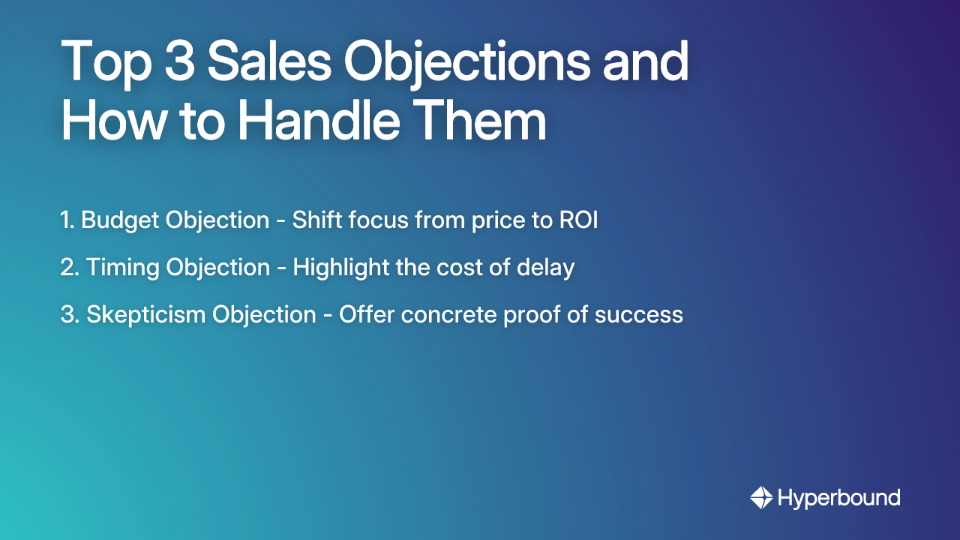
Here are the three most common objections you'll face and how to handle them based on our conversation analysis:
1. Budget Objection: "This is too expensive."
Technique: Shift the focus from price to ROI. Present case studies showing concrete cost savings or revenue generation.
Example Response: "I understand budget constraints are a concern. Many of our customers initially felt the same way. However, they found that for every $1 invested in our platform, they saw a $4.2 return within the first six months through improved productivity and higher close rates. Would it be helpful to walk through the ROI calculation for your specific situation?"
2. Timing Objection: "This is not a priority right now."
Technique: Empathize, validate the objection, but gently challenge the status quo by highlighting the cost of delay.
Example Response: "I completely understand priorities shift constantly. Many of our customers initially felt the same way. However, they discovered that delaying implementation was actually costing them $X per month in lost productivity and longer sales cycles. What other initiatives are currently taking priority for your team?"
3. Skepticism Objection: "I'm not sure this will work for us."
Technique: Acknowledge their concern, then offer concrete proof of similar situations where your solution succeeded.
Example Response: "That's a fair concern. In fact, Company X in your industry had the same hesitation. What convinced them was seeing a live demonstration with their actual sales scenarios. Would it be valuable to arrange something similar for your team?"
The AI Evolution: Moving Beyond Static Scripts to Dynamic Delivery
Here's where most sales professionals get stuck. They focus entirely on crafting the perfect script but neglect the equally important skill of delivery.
The Old Way: AI-Generated Scripts
Basic AI tools can help generate the script outlined above. They can analyze successful calls to create a template. This is a good start, but it's not where the real value lies.
The Problem: Static vs. Dynamic
A static script doesn't prepare you for a dynamic conversation. This is why users feel some AI tools lack "context based coaching" and that "real learning happens on the job" (Reddit discussion).
The best pitch on paper can fail if the delivery is weak, hesitant, or unable to adapt to buyer responses.
The New Way: AI-Powered Practice
This is where advanced AI coaching platforms like Hyperbound make the difference. They focus on delivery and adaptation by creating a safe, realistic environment where reps can:

- Master Any Scenario with AI Sales Roleplays
- Hyperbound's AI Sales Roleplays let you practice your pitch in hundreds of realistic scenarios. You can simulate conversations from cold calls to demos with different buyer personas (skeptical CFO, enthusiastic end-user), all customized to your specific products and methodologies.
- This provides a safe, repeatable environment to build muscle memory without risking quota. The best part? You can practice at 2am before a big meeting if needed - no scheduling required.
- Get Unbiased, Data-Driven Feedback
- After each practice session or real call, AI Real Call Scoring provides objective feedback on your performance. It evaluates talk-to-listen ratios, whether you hit key talking points, and how effectively you handled objections.
- This objective scoring helps identify patterns in your delivery that might be hindering your success.
- Accelerate Learning with Personalized Coaching
- The platform's AI Coaching feature delivers instant, personalized feedback aligned with your company's playbook. It identifies missed opportunities and weak responses, allowing you to self-correct and improve continuously.
Conclusion: Script + Delivery = Conversion
Creating a perfect AI sales pitch isn't just about finding the right words - it's about mastering their delivery. While basic AI can help with script creation, advanced platforms like Hyperbound solve the more critical challenge of delivery mastery through practice, feedback, and coaching.
By following the framework outlined in this guide and committing to regular practice with AI-powered roleplay, you can transform a good pitch into a great one that consistently converts.
Remember what the data tells us: the highest performers aren't just those with the best scripts - they're the ones who can deliver them confidently, handle objections smoothly, and adapt in real-time to buyer responses.
Ready to move beyond static scripts and master the art of dynamic pitch delivery? Learn more about Hyperbound's AI Sales Coaching Platform and take your sales conversations to the next level.
Frequently Asked Questions
What are the 6 components of a high-converting sales pitch?
A high-converting sales pitch must include six core components: a compelling Hook, a clear definition of the Problem, a strong Value Proposition, a concise Solution, credible Social Proof, and a clear Call-to-Action (CTA). This structure ensures you grab the prospect's attention, articulate their pain points, demonstrate your unique value, show how you solve their problem, build trust with evidence, and guide them to the next step.
How can AI help create and improve a sales pitch?
AI can help create a sales pitch by analyzing successful calls to generate a data-backed script, but its real value lies in improving delivery through AI-powered practice, role-playing, and objective feedback. Basic AI tools can provide a foundational script, but advanced platforms like Hyperbound create realistic practice scenarios to help you master objection handling, tone, and adaptability, which are crucial for converting a script into a successful conversation.
Why is practicing sales pitch delivery so important?
Practicing sales pitch delivery is crucial because even a perfect script can fail if delivered poorly. Consistent practice builds the confidence and adaptability needed to handle real-time buyer responses and objections effectively. Top performers excel not just because they have a good script, but because they can deliver it confidently. AI-powered roleplay provides a safe environment to build this "muscle memory" without risking live deals.
What are the most common sales objections and how should I handle them?
The three most common sales objections are related to Budget ("it's too expensive"), Timing ("not a priority"), and Skepticism ("will this work for us?"). You should handle them by shifting the focus to ROI, highlighting the cost of delay, and providing concrete social proof, respectively.
How do I personalize a sales pitch effectively?
To personalize a sales pitch effectively, you must thoroughly research your target account and tailor your message to the specific individual's role, their company's recent initiatives, and their industry's challenges. This goes beyond simply using their name; it means framing your solution in terms of the outcomes they care about most, such as ROI for a CFO or productivity for a VP of Sales.
What is the difference between an AI script generator and an AI coaching platform?
An AI script generator provides a static text-based pitch, while an AI coaching platform focuses on the dynamic delivery of that pitch through interactive practice, feedback, and skill reinforcement. A script is just the starting point. A coaching platform simulates real-world sales scenarios, allowing you to practice handling objections and receive objective, data-driven feedback on your performance, bridging the gap between knowing what to say and knowing how to say it effectively.
Book a demo with Hyperbound


