.png)


.png)
Summary
- Behavioral interviews use past actions to predict future performance, making structured storytelling with the STAR method (Situation, Task, Action, Result) essential for success.
- Instead of memorizing answers to every possible question, create a core bank of 5-6 versatile stories covering key themes like teamwork, problem-solving, and adaptability.
- AI-powered tools overcome common preparation hurdles by providing instant feedback and realistic mock interviews to help you refine your stories and build confidence under pressure.
- For sales professionals, practicing with tools like Hyperbound's AI Sales Roleplays can provide tailored scenarios to master industry-specific behavioral questions.
You've landed the interview for your dream job. You've researched the company, polished your resume, and prepared for technical questions. But then comes the part that makes even seasoned professionals sweat: behavioral interview questions.
"Tell me about a time when you faced a significant challenge at work..."
Your mind goes blank. You frantically search your memory for a relevant story, but under pressure, all you can muster is a rambling, unfocused anecdote that doesn't showcase your true abilities.
If this scenario sounds familiar, you're not alone. As one job seeker confessed, "Brainstorming stories was the hardest part at first." Others struggle with finding practice partners, lamenting that "scheduling mock interviews with friends was tricky."
But what if you could have a patient interview coach available 24/7, providing immediate feedback and helping you craft compelling stories? That's now possible thanks to AI-powered interview preparation tools.
This guide will show you how to combine the classic STAR method with cutting-edge AI technology to master behavioral interviews and walk into your next interview with confidence.
Understanding Behavioral Interviews: The Why and What
Behavioral interview questions aren't random conversational prompts—they're strategic tools designed to predict your future performance based on past behavior. When an interviewer asks you to "describe a time when you had to make a difficult decision," they're not just making small talk; they're evaluating your decision-making process, values, and how you handle pressure.
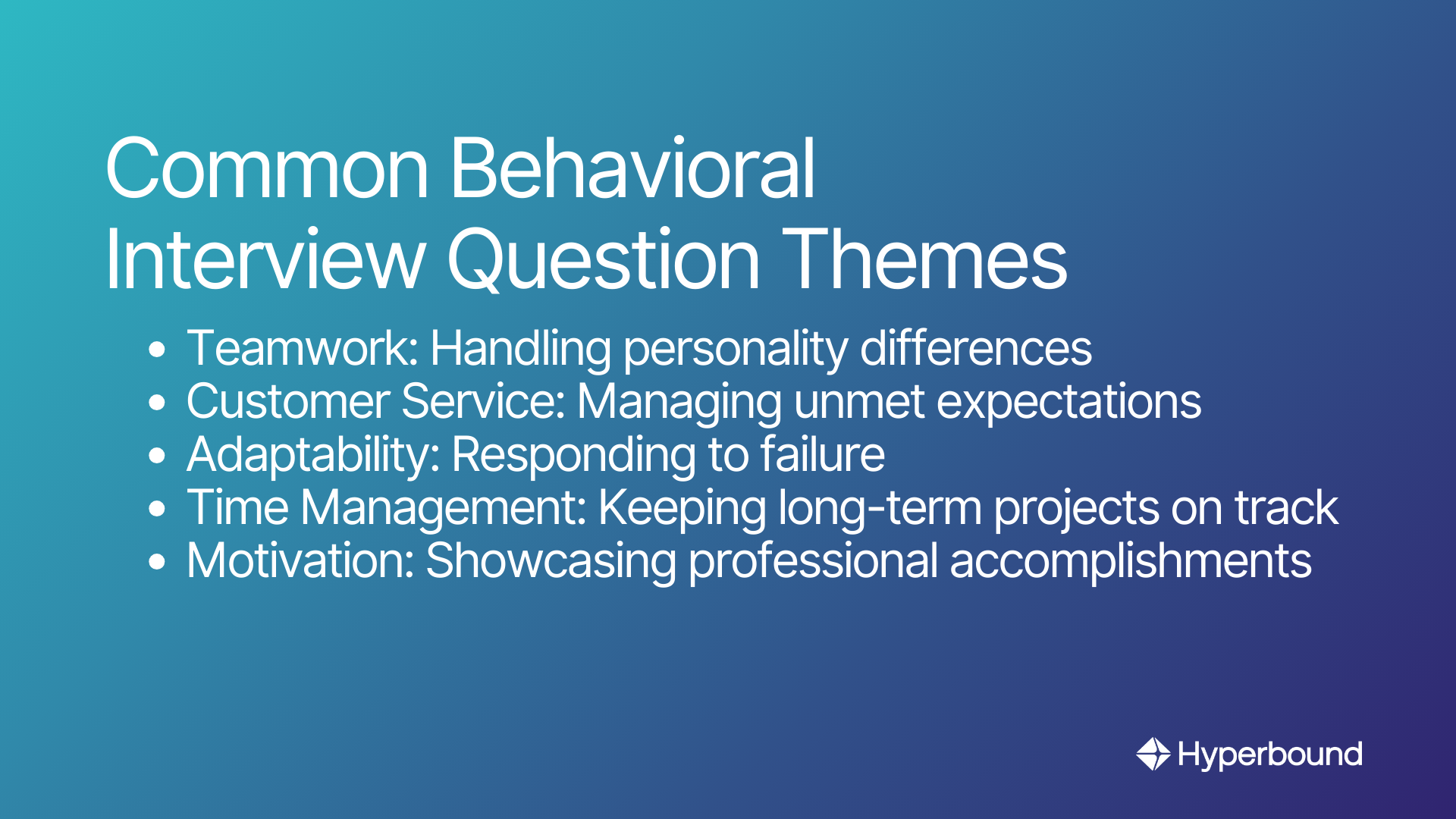
According to The Muse, common themes in behavioral questions include:
- Teamwork: "Tell me about a time when you had to work closely with someone whose personality was different from yours."
- Customer Service: "Give an example of a time you didn't meet a client's expectation."
- Adaptability: "Tell me about a time you failed. How did you deal with it?"
- Time Management: "Describe a long-term project you kept on track."
- Motivation and Values: "What is your proudest professional accomplishment?"
These questions demand specific, structured responses—vague generalities or hypothetical answers won't cut it. You need to tell compelling, results-focused stories from your actual experience.
The Foundation: Crafting Your Stories with the STAR Method
The STAR method is the gold standard framework for answering behavioral questions. It provides a clear structure that keeps you focused and ensures you deliver all the information an interviewer needs to evaluate your response.
STAR stands for:
- Situation: Set the scene and provide context for your story.
- Task: Describe your responsibility or role in the situation.
- Action: Detail the specific steps you took to address the task.
- Result: Share the outcomes of your actions and what you learned.
For example, if asked about handling a difficult team member, a weak answer might be: "I had a colleague who was always negative. I just tried to be positive and eventually things improved."
A STAR-structured response would instead look like:
Situation: "In my previous role as project manager at XYZ Company, I was leading a six-person team on a critical client deliverable with a tight deadline."
Task: "One team member consistently missed internal deadlines and expressed pessimism during team meetings, affecting morale."
Action: "I scheduled a private one-on-one meeting to understand the root causes of their behavior. I discovered they were overwhelmed by personal issues and unclear expectations. I worked with them to create a more manageable workload, provided clearer guidelines, and checked in regularly to offer support."
Result: "Within two weeks, their timeliness improved by 90%, and team morale noticeably increased. We delivered the project on time, and the client extended their contract, resulting in $200,000 of additional revenue."
While the STAR method is powerful, many candidates still struggle with common pitfalls, such as:
- Being too vague or general
- Focusing on negative aspects without showing growth
- Using "we" instead of "I" and failing to highlight personal contributions
- Rambling or providing irrelevant details
This is where AI tools offer a game-changing advantage.
The Game Changer: How AI Revolutionizes Interview Prep
Traditional interview preparation has significant limitations. You might practice answers in front of a mirror, but you can't evaluate yourself objectively. Friends might help with mock interviews, but they rarely provide detailed, constructive feedback. And career coaches, while valuable, can be expensive and have limited availability.
AI interview tools address these challenges by offering:
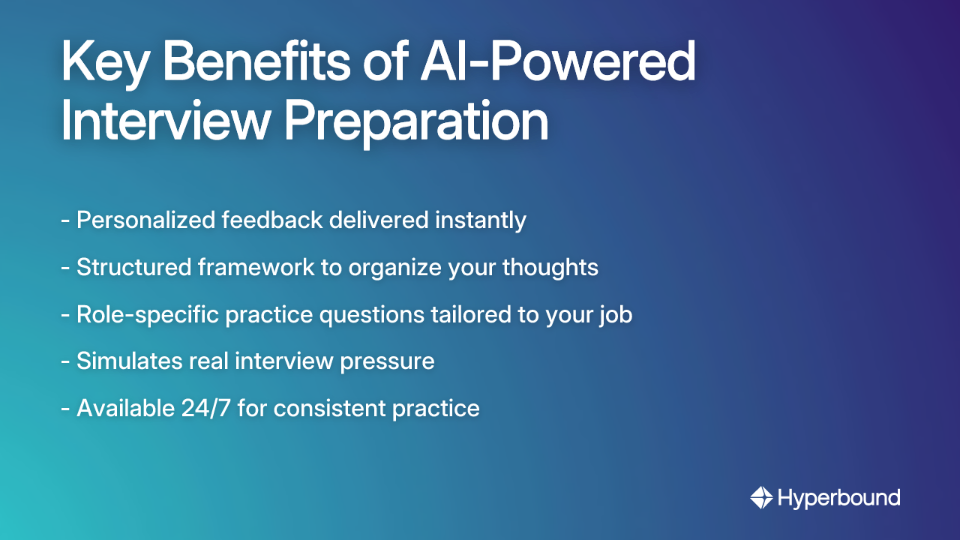
Personalized, Immediate Feedback
After each practice response, AI platforms analyze your answer for structure, relevance, clarity, and impact. As one user noted, these tools "give feedback right after each answer," allowing you to make immediate improvements rather than repeating the same mistakes.
Cognitive Load Reduction
When you're nervous, structuring a coherent story becomes challenging. AI tools help organize your thoughts using frameworks like STAR, reducing the mental burden of formatting your response while under pressure. This "cognitive overload reduction" is a significant advantage during high-stress situations like interviews.
Realistic Mock Interviews
AI can generate role-specific questions based on your target job, creating tailored practice sessions that simulate real interview conditions. This helps you get "used to thinking and speaking under pressure," a crucial skill for behavioral interviews.
Real-Time Guidance During Actual Interviews
Some advanced platforms even offer real-time support during actual interviews, with features like live transcription and smart prompts to ensure confident, structured answers.
Your Step-by-Step AI Practice Plan
Now that you understand the power of AI for interview preparation, here's a practical plan to leverage these tools effectively:
Step 1: Build Your Core Story Bank
Instead of preparing for every possible question (which is overwhelming and inefficient), focus on creating 5-6 versatile, well-crafted stories. As one candidate advised, "If you're short on time, 5–6 well-polished stories that can flex across questions are better than trying to cover all 16 principles lightly."
These core stories should cover common themes like:
- Leadership and influence
- Teamwork and collaboration
- Problem-solving and innovation
- Handling failure or conflict
- Customer focus
- Time management and prioritization
For each story, jot down the basic facts and outcomes without worrying about structure yet.
Step 2: Structure Your Narratives with AI
Next, transform your raw story ideas into polished STAR responses using an AI tool. The process is simple:
- Select a common behavioral question relevant to your story.
- Input your raw story notes into the platform.
- Review the AI-structured response that organizes your experience using the STAR method.
- Refine and personalize the response to match your voice and style.
Step 3: Simulate Real-World Pressure with AI Mock Interviews
Regular practice under realistic conditions is essential for interview success. Use AI mock interview features to:
- Test your delivery and pacing
- Practice maintaining eye contact (if using video)
- Work on eliminating filler words and hesitations
- Get comfortable telling your stories concisely
AI-powered platforms offer simulated interview environments that mimic the pressure of real interviews, helping you build confidence through repetition.
Step 4: Analyze Feedback and Refine Your Answers
Use the AI's feedback to make concrete improvements to your responses. Focus on:
- Personal Contribution: "Be specific about your own contributions rather than defaulting to 'we.'" Interviewers want to understand YOUR role, not just team accomplishments.
- Quantified Results: "Include outcomes with metrics whenever possible; even rough estimates make a difference." Numbers make your impact tangible and memorable.
- Clear Context: "It's crucial to start each story with clear context" to engage the interviewer and establish relevance to the question.
Putting It All Together: A Winning Formula
Mastering behavioral interviews is achievable with the right approach. The formula is simple: combine the proven STAR framework with consistent AI-powered practice.
Let's revisit the challenges we discussed at the beginning:
- "Brainstorming stories was the hardest part" → AI tools help identify and structure your experiences into compelling narratives.
- "Scheduling mock interviews with friends was tricky" → AI provides on-demand practice without scheduling conflicts.
- "Keeping each story aligned with the question" → AI feedback ensures your responses remain relevant and focused.
This hybrid approach removes guesswork, builds confidence, and ensures you can "walk through your stories clearly and with confidence," making the best possible impression on interviewers.
Start Your AI-Powered Preparation Today
Behavioral interviews don't have to be anxiety-inducing ordeals. With AI tools as your practice partner, you can transform from nervous and unprepared to confident and compelling.
Remember these key takeaways:
- Build a versatile story bank covering common behavioral themes
- Use AI to structure your stories with the STAR method
- Practice regularly with AI mock interviews to simulate real conditions
- Refine your answers based on AI feedback, focusing on personal impact and quantifiable results
The candidates who stand out in behavioral interviews aren't necessarily those with the most impressive experiences—they're the ones who can articulate their experiences most effectively. With AI-powered practice, you can ensure your true capabilities shine through, turning behavioral questions from obstacles into opportunities to showcase your value.
Begin your preparation today, and approach your next interview with the confidence that comes from knowing you're thoroughly prepared to answer whatever behavioral questions come your way.
Frequently Asked Questions
What is a behavioral interview question?
A behavioral interview question is a question that asks you to describe a past work experience to demonstrate a specific skill. Interviewers use these questions to predict your future performance based on your past actions. Instead of asking hypothetical questions, they'll ask for specific examples related to themes like teamwork, adaptability, problem-solving, and time management.
Why is the STAR method important for answering behavioral questions?
The STAR method is important because it provides a clear, structured framework for your answers, ensuring you cover all the key information an interviewer needs. STAR stands for Situation, Task, Action, and Result. This structure helps you tell a compelling and concise story, preventing you from rambling or omitting crucial details like the outcome of your actions. It keeps your response focused on your specific contributions and their impact.
How exactly can AI help with behavioral interview preparation?
AI can help with behavioral interview preparation by providing 24/7 practice, generating role-specific questions, offering instant feedback, and helping you structure your stories using frameworks like STAR. AI-powered tools act as a personal interview coach. They reduce the cognitive load of organizing your thoughts under pressure, simulate realistic mock interviews to build your confidence, and analyze your responses for clarity, impact, and relevance.
How many stories should I prepare for a behavioral interview?
It's best to prepare 5-6 versatile, well-polished stories that can be adapted to various questions. Quality is more important than quantity. Rather than trying to prepare for every possible question, focus on developing a core story bank that covers key themes like leadership, teamwork, problem-solving, and handling failure. A strong, flexible story can often be used to answer multiple different types of questions.
What are the most common mistakes to avoid in behavioral interviews?
The most common mistakes include being too vague, failing to highlight your personal contributions (using "we" instead of "I"), and not quantifying the results of your actions. Other pitfalls are rambling without a clear structure, focusing too much on the negative aspects of a challenge without showing what you learned, and not providing enough context at the beginning of your story for the interviewer to understand the situation.
Can I use the same story to answer different behavioral questions?
Yes, you can absolutely use the same core story to answer different questions, as long as you tailor the focus to what is being asked. A single strong experience can often demonstrate multiple skills. For example, a story about a challenging project could highlight your time management, teamwork, or problem-solving skills. When you reuse a story, make sure to emphasize the specific actions and results that are most relevant to the question at hand.
Book a demo with Hyperbound


